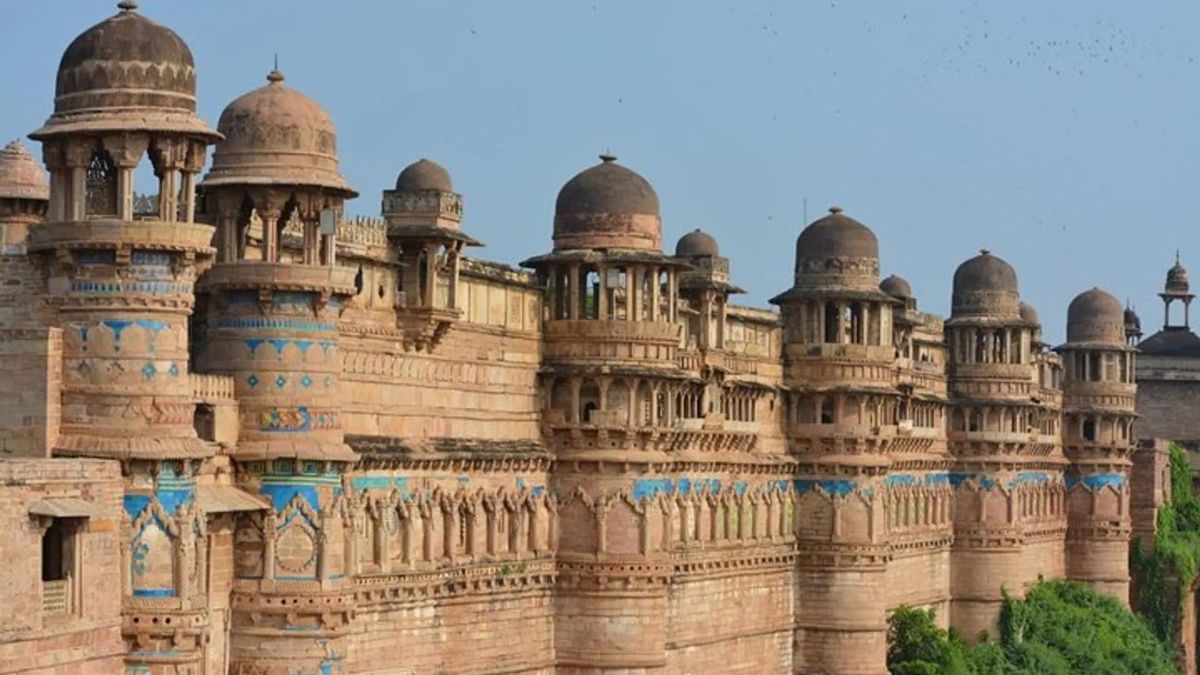
Gwalior, located in the heart of Madhya Pradesh, is a city steeped in history and culture, making it one of the most captivating places to visit in India.
The city’s skyline is dominated by the impressive Gwalior Fort, a hilltop fortress that has stood the test of time for centuries. Considered one of the most impregnable forts in the country, it is a must-see for anyone exploring places to visit in Gwalior.
The fort complex includes intricate temples, palaces, and the famed Sas Bahu Temples, showcasing remarkable architecture from different eras.
Another iconic landmark among the top places to visit in Gwalior is the Jai Vilas Palace. This 19th-century palace reflects a blend of Tuscan, Italian, and Corinthian styles and now functions as a museum displaying royal artifacts, chandeliers, and vintage items used by the Scindia family.
For those with an interest in music and history, the Tomb of Tansen, one of the nine jewels in Emperor Akbar’s court, is an essential stop. It also serves as the venue for the annual Tansen Music Festival, drawing music lovers from all over.
Gwalior also offers spiritual and natural retreats that attract visitors year-round. The Sun Temple, inspired by the Konark Sun Temple in Odisha, is a serene place of worship and a great example of modern architecture in the city.
Nature lovers can visit Phool Bagh and the Gwalior Zoo, both peaceful green spaces ideal for family outings. With a combination of majestic forts, royal palaces, cultural landmarks, and tranquil gardens, Gwalior stands out as one of the most diverse and enriching places to visit in central India.
Also Read: 15 Best Places to Visit in Bhopal
Gwalior Fort
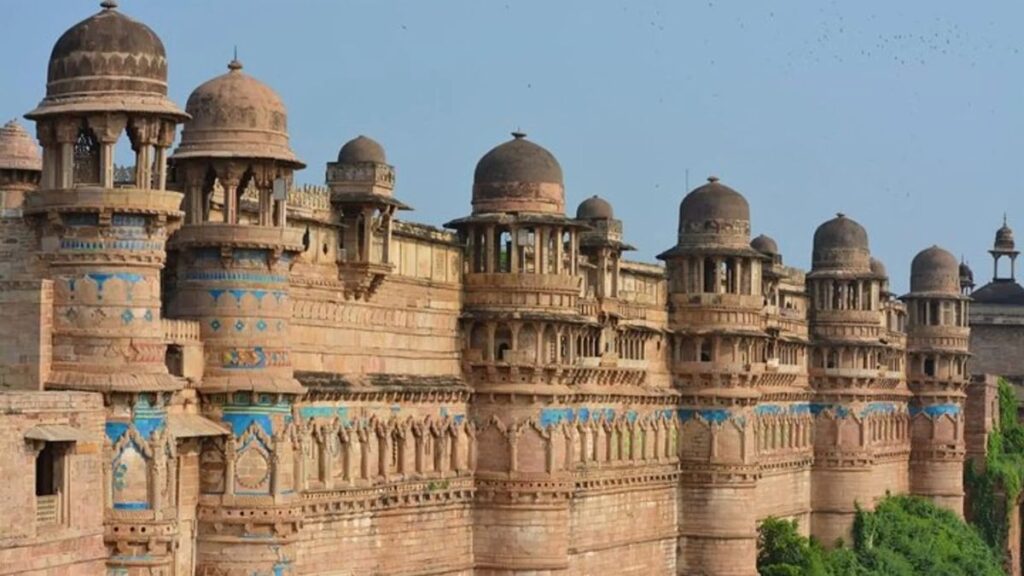
Gwalior Fort is one of the most iconic places to visit in Gwalior, known for its grandeur, history, and architectural brilliance.
Perched on a sandstone hilltop, this massive fort has stood tall for over a thousand years, witnessing the rule of several dynasties, including the Tomars, Mughals, and Marathas.
Often referred to as the “Gibraltar of India,” the fort offers panoramic views of the city and houses numerous historical structures, including palaces, temples, and water tanks.
Among the top attractions within the fort are the Man Singh Palace, with its distinctive blue-tiled façade, and the Sas Bahu Temples, renowned for their intricate stone carvings. The Teli Ka Mandir, an ancient Hindu temple, is another architectural gem inside the fort complex.
As one of the most important places to visit in Gwalior, this fort not only reflects the rich cultural legacy of the region but also provides a deep insight into India’s medieval history.
A visit to Gwalior is incomplete without exploring this magnificent fort that remains a symbol of pride and resilience.
2 | Sun Temple
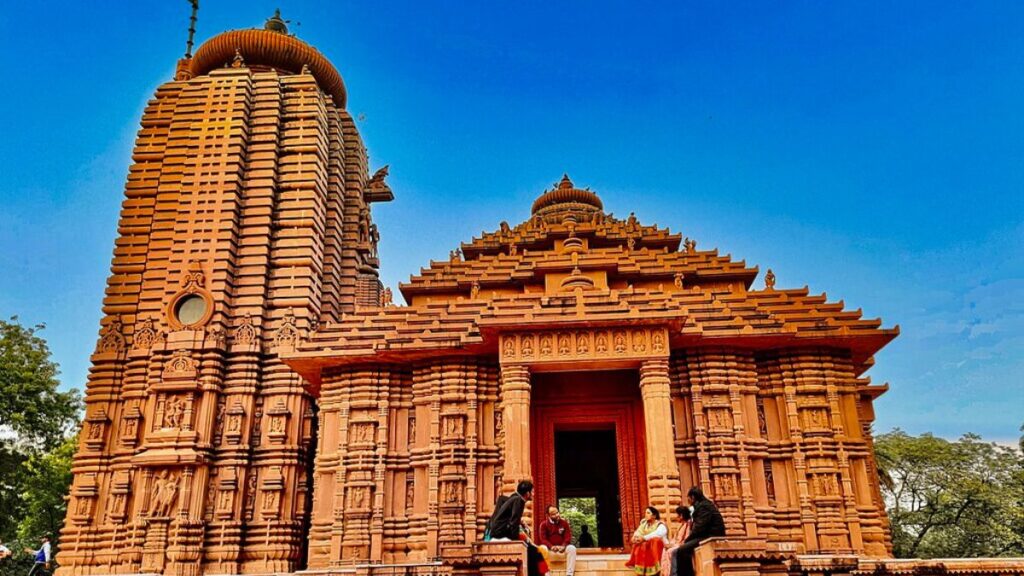
The Sun Temple is one of the most serene and beautifully designed places to visit in Gwalior. Inspired by the famous Sun Temple of Konark in Odisha, this temple is a modern architectural marvel constructed in red sandstone and white marble.
Dedicated to the Sun God (Surya), the temple’s structure features intricate carvings and a chariot-like design, making it not only a place of worship but also a visual delight for architecture enthusiasts.
Set amidst well-maintained gardens, the Sun Temple offers a peaceful environment away from the city’s bustle. It attracts both devotees and tourists looking to explore spiritual and artistic places to visit in Gwalior.
The temple is especially stunning during sunrise and sunset when the sunlight enhances the beauty of the stonework.
Whether you’re on a spiritual journey or an architectural tour, the Sun Temple is a must-visit spot that showcases the blend of devotion and design in Gwalior.
3 | Gwalior Zoo (Gandhi Zoological Park)

Gwalior Zoo, officially known as Gandhi Zoological Park, is one of the most family-friendly places to visit in Gwalior. Established in 1922 by the royal Scindia dynasty, the zoo is located within the lush green premises of Phool Bagh Garden.
It houses a wide variety of animals, including white tigers, lions, leopards, hyenas, crocodiles, deer, monkeys, and a colorful collection of birds. With its peaceful environment and educational value, the zoo is an ideal spot for nature lovers, children, and wildlife enthusiasts alike.
As one of the oldest and most well-maintained zoological parks in the region, Gwalior Zoo has become a key highlight among the places to visit in Gwalior.
The zoo features information boards and QR-coded displays, allowing visitors to learn about the animals in both Hindi and English. It offers a perfect blend of leisure, learning, and natural beauty, making it a must-visit destination for those exploring the cultural and recreational side of Gwalior.
Also Read: 9 Famous Temples in Ujjain You Must Visit
4 | Tomb of Tansen
The Tomb of Tansen is one of the most significant historical places to visit in Gwalior, especially for those interested in music and Mughal history.
Located near the tomb of his spiritual guru Muhammad Ghaus, this site honors Tansen, one of the greatest musicians in Indian history and one of the nine gems in Emperor Akbar’s court.
The tomb is a simple yet elegant structure, reflecting the Indo-Islamic architectural style and surrounded by a serene garden setting.
This sacred and peaceful spot is not only a resting place but also a cultural landmark. Every year, the Tansen Music Festival is held here, attracting classical music lovers and performers from across the country.
As one of the top places to visit in Gwalior, the tomb offers visitors a chance to connect with India’s rich musical legacy and historical depth.
The site serves as a quiet tribute to the legendary musician whose melodies still echo through the corridors of Indian classical music.
5 | HH Maharaja Sir Jiwajirao Scindia Museum
The HH Maharaja Sir Jiwajirao Scindia Museum, housed in a wing of the magnificent Jai Vilas Palace, is one of the most distinguished places to visit in Gwalior.
Commissioned in 1874 by Maharaja Jayajirao Scindia and converted into a museum in 1964 by Rajmata Vijaya Raje Scindia in memory of her husband, Sir Jiwajirao, the museum beautifully blends European architectural elegance—Tuscan, Italian, and Corinthian styles—with Indian royal grandeur.
Spread across approximately 35–40 rooms, it showcases a captivating array of royal artifacts, including rare furniture, paintings, manuscripts, coins, textiles like the famed Chanderi, and weaponry spanning centuries.
Among the most enchanting exhibits are the massive Durbar Hall chandeliers—each weighing a staggering 3.5 tonnes—hung only after elephants had tested the ceiling’s strength.
The highlight is undoubtedly the silver toy train that once served snacks and drinks during royal banquets, traversing the dining table on its miniature tracks.
Visitors can also explore unique features like an indoor swimming pool for royal children, Napoleon’s table, crystal furniture, and a royal kitchen with French and English elements
Guided tours are highly recommended to fully appreciate the stories behind these treasures and the Scindia legacy.
Priced reasonably (around ₹100 for Indians, ₹600 for foreign nationals), the museum is open 10am–5pm, closed on Monday or Wednesday depending on the season.
Visiting takes about 1–2 hours. It’s one of the most enriching places to visit in Gwalior, allowing you to step into the royal world of the Scindias and witness a vibrant chapter of Indian princely history.
6 | Jai Vilas Palace
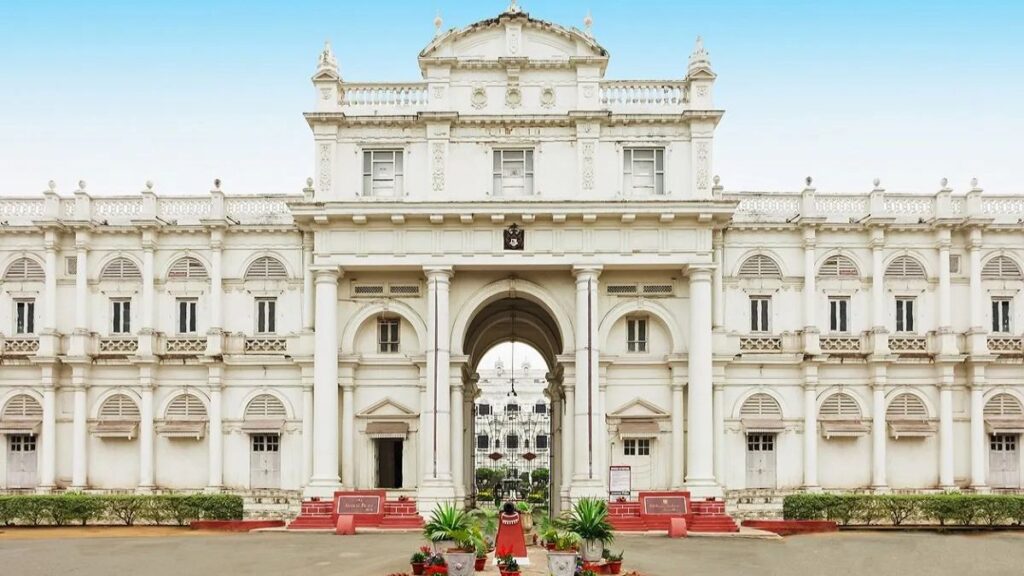
Jai Vilas Palace is one of the grandest places to visit in Gwalior, built in 1874 by Maharaja Jayajirao Scindia as a symbol of princely opulence.
Designed by Sir Michael Filose, the three‑storey palace showcases a stunning fusion of Tuscan, Italian‑Doric, and Corinthian architectural styles.
Covering around 1.24 lakh sq ft and featuring about 400 rooms, it is a marvel of European elegance in the heart of central India.
Highlights include the opulent Durbar Hall, its ceiling adorned with around 560 kg of gold and lit by a pair of massive 12.5 m‑high, 3.5‑tonne chandeliers—rumored to have been tested for safety by hoisting elephants on the roof
A section of the palace (around 35–40 rooms) was converted into the HH Maharaja Sir Jiwajirao Scindia Museum, which opened in 1964
The museum houses an eclectic mix of royal memorabilia—from a silver ‘dining train’ that once served cigars and brandy, to Napoleon’s tableware, Mughal-era swords used by Aurangzeb and Shah Jahan, rare Chanderi textiles, vintage royal automobiles, hunting howdahs and palanquins, crystal fountains, and antique furniture imported from Europe.
Visiting this historic site is best during cooler months (October–March), and it takes about 2–3 hours to fully explore the palace, museum, and lush gardens—making it a must‑visit place for anyone exploring Gwalior
Also Read: 15 Best Places to Visit in Orchha
7 | Man Singh Palace (Man Mandir)
Man Singh Palace—also known as Man Mandir or the Chit Mandir (“Painted Palace”)—is one of the most breathtaking places to visit in Gwalior. Constructed between 1486 and 1516 by Raja Man Singh Tomar, the palace showcases stunning pre-Mughal architecture adorned with vivid blue, green, and yellow tiles.
These tiles form intricate mosaics featuring ducks, elephants, crocodiles, tigers, and peacocks—a visual delight that earned it the nickname “Painted Palace”
The four‑storey sandstone structure includes two subterranean levels kept cool, possibly serving as escape routes or cold retreats, and later used as prisons during the Mughal era with notable prisoners like Aurangzeb’s brother Murad.
Inside, visitors can explore two open courtyard floors surrounded by ornate rooms, music halls, and carved corridors. The ceilings boast elaborate jali (lattice) work and vibrant frescoes depicting mythological scenes and courtly life—evident in the Chitrashala or “picture gallery”
Located within the Gwalior Fort complex, the palace shares the ticket window with Sas Bahu Temples and Teli Ka Mandir. Many travelers also recommend catching the enchanting light-and-sound show held in the evening amid the palace’s imposing walls—a must for anyone looking to experience Gwalior’s layered history in a memorable setting.
8 | Gujari Mahal Archaeological Museum
Gujari Mahal Archaeological Museum is one of the most fascinating places to visit in Gwalior, nestled at the foot of the Gwalior Fort’s eastern gate. Originally built in the 15th century by Raja Man Singh Tomar for his queen Mrignayani, this palace was later converted into a museum in 1922.
It showcases an impressive collection of archaeological treasures—from ancient Hindu and Jain sculptures dating back to the 1st and 2nd centuries BCE, including the exquisite Shalabhanjika statue from Gyaraspur, to terracotta figurines, coins, inscriptions in Brahmi, Devanagari, and Persian scripts, as well as rare Bagh cave fresco replicas.
With 28 galleries displaying over 6,000 artefacts, the museum offers a deep dive into India’s ancient art and manuscripts.
As a must-visit place in Gwalior, Gujari Mahal stands out for its rich historic narrative and architectural charm.
Visitors can wander through the serene courtyard, explore underground chambers that once housed pipelines supplying water from the Rai River, and admire open-air display areas filled with stone pillars, bronze images, and weaponry.
Its location within the fort complex offers scenic views of the surrounding landscape, and the museum operates from 10 AM to 5 PM, closed on Mondays (and sometimes Fridays), with entry fees around ₹20 for Indians and ₹400 for foreigners, plus a nominal charge for photography.
Whether you’re an art history enthusiast or just exploring places to visit in Gwalior, this museum is a rich repository of cultural heritage not to be missed.
9 | Teli Ka Mandir
Teli Ka Mandir, nestled within the historic Gwalior Fort, is one of the prime places to visit in Gwalior. Erected in the 8th–9th century under the Gurjara-Pratihara dynasty—likely during the reign of Mihira Bhoja—the temple is distinct for its towering 30 m rectangular sanctum and a rare barrel-vaulted Dravidian-style roof atop a Nagara-style structure.
Its entrance is framed by intricately carved reliefs of river goddesses, Garuda (Vishnu’s mount), coiled serpents, mythological couples, and Shakta and Shaiva deities—making it a visual treat and architectural anomaly in North Indian temple design.
This majestic place to visit in Gwalior also bears fascinating stories of transformation: local lore claims oil merchants donated funds for its construction, explaining its colloquial name “Oil‑man’s Temple,” while others trace its naming to Telang Brahmins or a link to Telangana.
Historically, it suffered, desecrated by Iltutmish in the 13th century, later serving as a British-era coffee shop before Major Keith led restoration in the late 19th century.
Open daily from 8 AM to 6 PM (entry ₹20), a visit takes 30–60 minutes—an essential stop among the places to visit in Gwalior, blending spiritual heritage with architectural wonder.
Also Read: 20 Best Places to Visit in Jaipur
10 | Saas Bahu Temples
The Sas Bahu Temples are among the most impressive places to visit in Gwalior, nestled within the eastern walls of the Gwalior Fort.
These 11th‑century twin temples—“Sas” and “Bahu”—were built between 1090–1093 by King Mahipala of the Kachchhapaghata dynasty.
Dedicated to Lord Vishnu (with the smaller temple honoring Lord Shiva), the grander Sas temple once soared over 100 feet but today remains an extraordinary two‑storey mandapa and porch richly adorned with carvings.
The exterior is alive with sculpted panels of Garuda, Brahma, Vishnu, Shiva, river goddesses, Krishna‑leela scenes, geometric motifs, dancing figures, and animals—a stunning showcase of North‑Indian Bhumija and Nagara architecture.
Visiting the Sas Bahu Temples is a journey through time: explore the sprawling jagati platform (approximately 100 × 63 ft), stroll through the intricately carved pillars and ceilings of the mandapa, and enjoy sweeping views of Gwalior from the Bahu temple’s vantage points.
Though the original shikharas and garbhagrihas are gone, the surviving architectural details speak of a grand spiritual vision and artistic finesse.
With no separate ticket required (just the fort entry), these temples make for a must‑visit place in Gwalior, blending exquisite craftsmanship, sacred symbolism, and historical depth in one unforgettable experience.
11 | Tomb of Ghaus Mohammed
11 | Padavali and Bateshwar Temples
12 | Roop Singh Stadium
13 | Gurudwara Data Bandi Chhod
14 | Gopachal Parvat
15 | Kuno National Park
16 | Italian Garden
17 | Chhatris of Scindia Dynasty
18 | Samadhi of Rani Lakshmi Bai
19 | Tighra Dam
20 | Tansen Samaroh
Phool Bagh
Memorial of Rani Laxmibai