Jaipur, the vibrant capital of Rajasthan, is filled with fascinating places to visit that showcase its royal heritage and architectural splendor. Known as the Pink City, Jaipur is home to grand palaces, historic forts, and bustling bazaars.
Some of the most iconic places to visit in Jaipur include the majestic Amber Fort, the elegant City Palace, and the uniquely designed Hawa Mahal, which offers a glimpse into the city’s royal past.
For history and culture lovers, Jaipur offers a rich variety of experiences. The Jantar Mantar, a UNESCO World Heritage Site, is an astronomical marvel, while Nahargarh Fort and Jaigarh Fort offer stunning views of the city.
Other notable places to visit in Jaipur include Albert Hall Museum, Jal Mahal, and Birla Mandir, each reflecting a different facet of the city’s charm and legacy.
Whether you’re interested in exploring ancient architecture, enjoying traditional Rajasthani cuisine, or shopping for handicrafts in colorful markets, Jaipur has something for everyone. These diverse places to visit in Jaipur make it a must-see destination for travelers seeking history, culture, and unforgettable experiences.
Also Read: 19 Best Places to Visit in Udaipur
List of Popular Places to Visit in Jaipur
Amber Fort

Amber Fort is one of the most iconic places to visit in Jaipur, known for its majestic architecture and rich historical significance.
Located about 11 kilometers from the city center, this grand fort was built in the 16th century by Raja Man Singh I and later expanded by successive rulers of the Kachwaha dynasty.
Constructed with red sandstone and marble, Amber Fort showcases a stunning blend of Rajput and Mughal architectural styles, complete with intricately carved gates, courtyards, palaces, and temples.
Among the top places to visit in Jaipur, Amber Fort captivates visitors with attractions like the Sheesh Mahal (Mirror Palace), Diwan-e-Aam, Diwan-e-Khas, and Sukh Niwas, where cool winds once flowed over a water cascade to keep the palace pleasant.
The fort also offers breathtaking views of Maota Lake and the surrounding hills. Whether you choose to reach it by jeep, walk, or take the traditional elephant ride, visiting Amber Fort provides a memorable glimpse into the regal past of Jaipur.
City Palace

City Palace is one of the most magnificent places to visit in Jaipur, offering a captivating blend of Rajasthani and Mughal architecture.
Located in the heart of the Pink City, this grand palace complex was built by Maharaja Sawai Jai Singh II in the 18th century and served as the royal residence of the Jaipur rulers.
The palace complex includes stunning courtyards, gardens, temples, and buildings like Mubarak Mahal, Chandra Mahal, and the Diwan-i-Khas, each reflecting the opulence and craftsmanship of the era.
As one of the top places to visit in Jaipur, City Palace not only showcases beautiful architecture but also houses museums displaying royal costumes, weapons, artifacts, and artworks that narrate the history of the city’s royal family.
Visitors can explore the elegant Peacock Gate, enjoy panoramic views from Chandra Mahal (with a special ticket), and immerse themselves in the cultural legacy of Jaipur.
A visit to City Palace is a must for anyone seeking to experience the regal heritage and architectural brilliance of Rajasthan.
Hawa Mahal

Hawa Mahal is one of the most iconic places to visit in Jaipur, celebrated for its unique architecture and cultural significance. Also known as the “Palace of Winds,” it was built in 1799 by Maharaja Sawai Pratap Singh and designed by Lal Chand Ustad.
The five-storey structure is made of red and pink sandstone, featuring 953 small windows or jharokhas, which allowed royal women to observe street festivals without being seen, in accordance with the customs of the time.
Among the top historical places to visit in Jaipur, Hawa Mahal stands out with its honeycomb-like façade that resembles the crown of Lord Krishna.
The intricate latticework not only provides a visual treat but also allows cool breezes to pass through, making the interior comfortable during the hot summers.
Located near the City Palace and Jantar Mantar, Hawa Mahal is a must-visit destination that offers insight into Jaipur’s royal heritage and architectural genius.
Also Read: 15 Best Places to Visit in Jaisalmer
Jantar Mantar
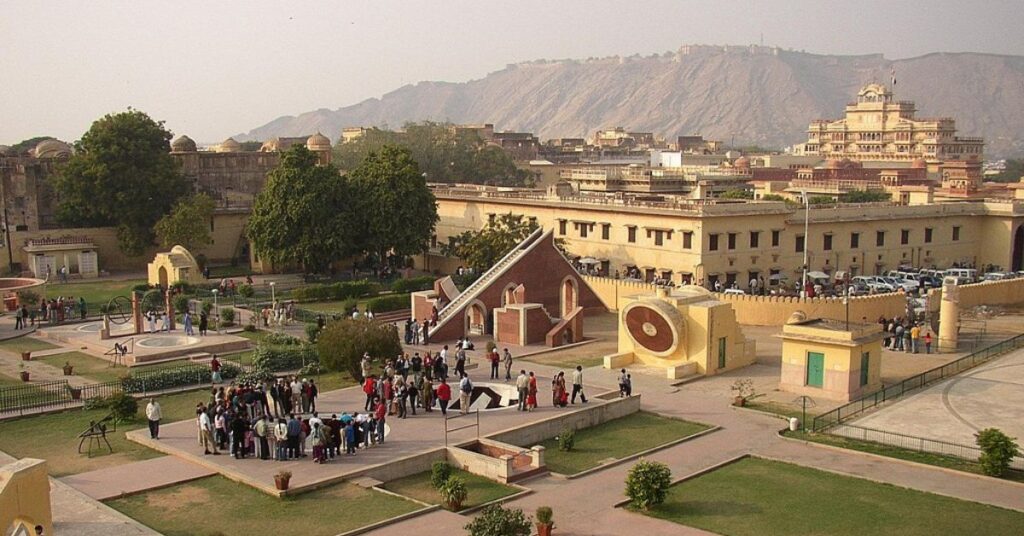
Jantar Mantar is one of the most fascinating places to visit in Jaipur, especially for those interested in astronomy, science, and history. Built by Maharaja Sawai Jai Singh II in the 18th century, this UNESCO World Heritage Site features a remarkable collection of nineteen architectural astronomical instruments.
These structures were designed to measure time, track celestial bodies, and predict eclipses with surprising accuracy—centuries before modern technology.
Among the many places to visit in Jaipur, Jantar Mantar stands out for its scientific significance and architectural ingenuity. The most prominent instrument here is the Samrat Yantra, the world’s largest stone sundial.
Visitors are often amazed by the scale and precision of the instruments, which reflect the advanced understanding of astronomy in ancient India. A visit to Jantar Mantar offers a unique experience, combining educational value with the rich cultural legacy of Jaipur.
Nahargarh Fort

Nahargarh Fort is one of the most scenic and historically rich places to visit in Jaipur. Perched on the Aravalli hills, the fort was originally built in 1734 by Maharaja Sawai Jai Singh II as a defensive retreat.
Overlooking the Pink City, Nahargarh Fort offers panoramic views of Jaipur, especially enchanting during sunrise and sunset, making it a favorite spot for photographers and nature lovers.
Among the notable places to visit in Jaipur, Nahargarh Fort stands out for its blend of history, architecture, and natural beauty.
The fort features beautifully decorated rooms, corridors, and the impressive Madhavendra Bhawan, which served as the royal residence.
Today, it also houses a museum and a café, adding to the experience for modern-day visitors.
Whether you’re exploring Jaipur’s royal past or simply seeking a peaceful getaway with stunning views, Nahargarh Fort is a must-visit destination.
Albert Hall Museum
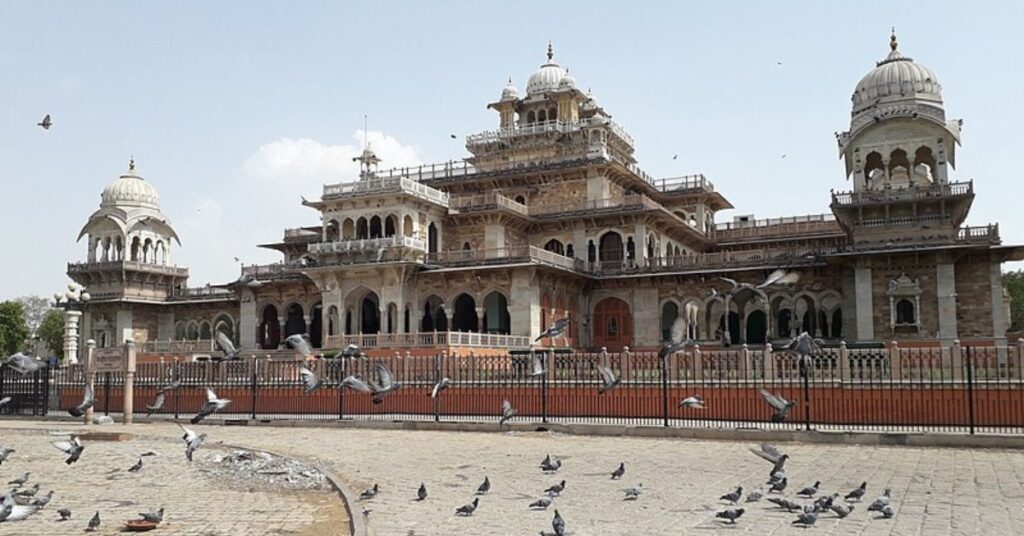
Albert Hall Museum is one of the most captivating places to visit in Jaipur, especially for those interested in history, art, and culture.
Located in the heart of the city within Ram Niwas Garden, this iconic museum was established in 1887 and is the oldest museum in Rajasthan.
Designed by Sir Samuel Swinton Jacob, its Indo-Saracenic architecture is as impressive as the treasures it holds inside.
As one of the top cultural places to visit in Jaipur, Albert Hall Museum houses an extensive collection of artifacts, including ancient coins, royal garments, traditional paintings, weapons, and sculptures.
Highlights include the Egyptian mummy and intricately designed marble art pieces that reflect the region’s rich heritage.
Whether you’re a history enthusiast or a curious traveler, a visit to Albert Hall Museum offers a deep and enriching insight into Jaipur’s royal and artistic past.
Also Read: 25 Best Places to Visit in Pushkar
Jaigarh Fort
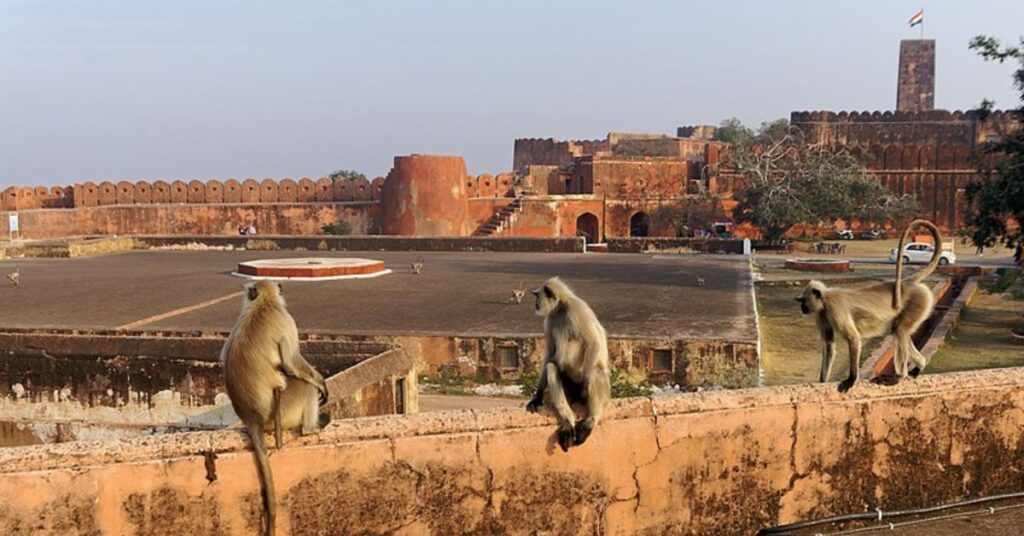
Jaigarh Fort is one of the most formidable and historically significant places to visit in Jaipur. Located on the Cheel ka Teela (Hill of Eagles) in the Aravalli range, this fort was built in 1726 by Maharaja Sawai Jai Singh II to protect the nearby Amber Fort.
Known for its robust walls, military architecture, and panoramic views of the city and surrounding landscape, Jaigarh Fort offers a glimpse into the military prowess of the Rajput rulers.
Among the most intriguing places to visit in Jaipur, Jaigarh Fort is home to the world’s largest cannon on wheels, the Jaivana Cannon, which draws history enthusiasts from far and wide.
The fort also features a museum, water reservoirs, armory chambers, and grand courtyards that reflect the valor and strategic brilliance of Rajput architecture.
A visit to Jaigarh Fort is a must for those who want to explore Jaipur’s royal legacy and enjoy breathtaking views from one of its highest vantage points.
Birla Temple or Laxmi Narayan Temple
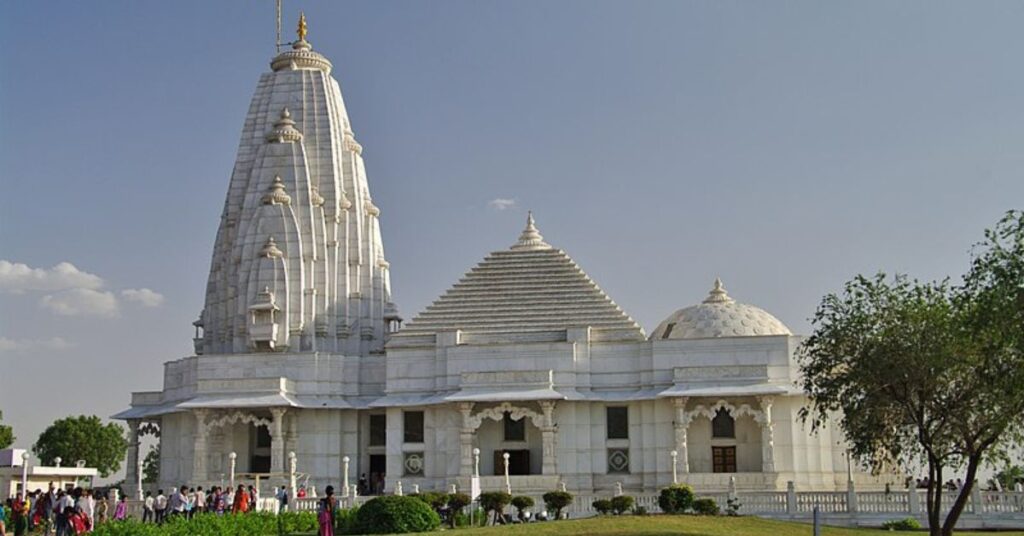
Birla Temple, also known as Laxmi Narayan Temple, is one of the most serene and spiritual places to visit in Jaipur. Situated at the base of Moti Dungri Hill, this modern white marble temple is dedicated to Lord Vishnu (Narayan) and Goddess Laxmi.
Built in 1988 by the Birla family, the temple is known for its stunning architecture, peaceful ambiance, and beautifully landscaped surroundings.
Among the must-see places to visit in Jaipur, Birla Temple stands out for its intricate carvings, stained glass windows, and exquisite idols. The walls of the temple are adorned with quotes and figures from various religions, reflecting a message of unity and harmony.
Whether you visit in the morning for a quiet darshan or in the evening when the temple is beautifully lit, Birla Temple offers a calming and spiritually uplifting experience in the heart of Jaipur.
Jai Mahal
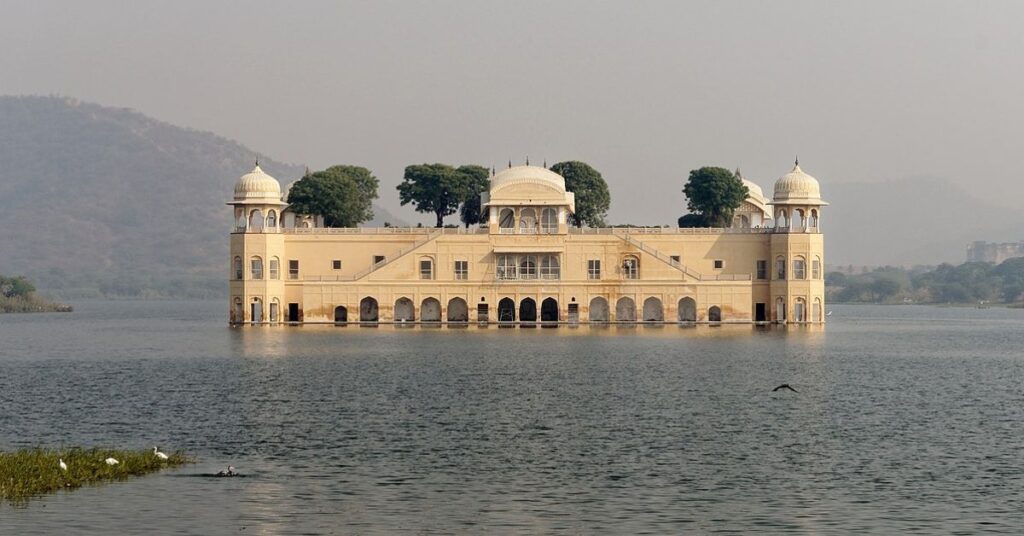
Jal Mahal is one of the most picturesque and enchanting places to visit in Jaipur. Situated in the middle of Man Sagar Lake, this beautiful palace appears to float on water, offering a mesmerizing view, especially during sunrise and sunset.
Built in the 18th century by Maharaja Madho Singh I as a hunting lodge and summer retreat, Jal Mahal is a fine example of Rajput and Mughal architectural fusion.
Among the top places to visit in Jaipur, Jal Mahal draws visitors for its serene setting, stunning backdrop of the Aravalli hills, and peaceful ambiance.
While entry inside the palace is restricted, the view from the lakeside promenade is a favorite spot for photography, leisurely walks, and enjoying local street food.
A visit to Jal Mahal adds a magical and tranquil touch to any Jaipur itinerary, making it a must-see destination in the Pink City.
Sisodia Rani Palace and Garden
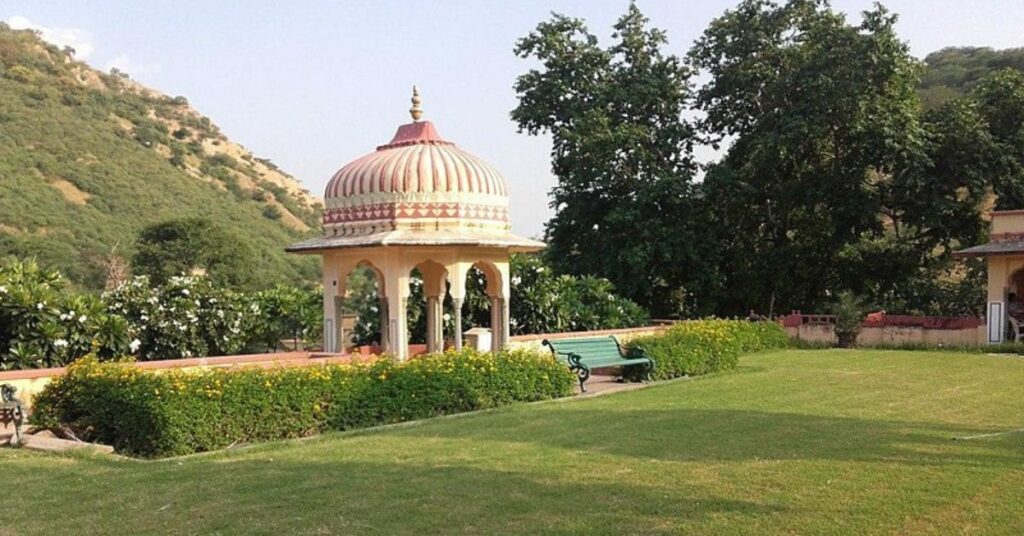
Sisodia Rani Palace and Garden is among the most picturesque places to visit in Jaipur, known for its blend of Mughal and Rajput architectural styles.
Built in 1728 by Maharaja Sawai Jai Singh II for his queen, Sisodia Rani, this royal retreat is nestled amidst lush greenery and features multi-tiered gardens, water channels, and pavilions adorned with beautiful murals depicting scenes from Lord Krishna’s life.
For those seeking serene and romantic places to visit in Jaipur, Sisodia Rani Palace and Garden offers a perfect escape from the city’s hustle.
Located a few kilometers from the city center on the Jaipur-Agra highway, the site is a visual treat and reflects the regal elegance of Jaipur’s heritage. It’s a must-visit for history lovers, nature enthusiasts, and photographers alike.
Galtaji Temple or Monkey Temple

Galtaji Temple is one of the most serene and spiritually enriching places to visit in Jaipur. Nestled amidst the Aravalli hills, this ancient Hindu pilgrimage site is renowned for its natural springs, sacred water tanks, and beautiful temple architecture.
The temple complex is dedicated to Saint Galav and features shrines of Lord Hanuman, Lord Rama, and the Sun God. A highlight of the temple is the Galta Kund, a water tank that never dries, where devotees bathe as part of religious rituals.
The setting within a narrow rocky valley adds to its peaceful and picturesque ambiance, making it a favorite among both pilgrims and tourists.
Among the must-see places to visit in Jaipur, Galtaji Temple stands out for its unique blend of spirituality and natural beauty. The temple is also famously known as the “Monkey Temple” due to the large population of friendly macaques that inhabit the area.
These monkeys, along with the intricate frescoes and scenic hilltop views, offer a one-of-a-kind experience.
Visitors often enjoy a short trek to the Sun Temple nearby, which provides breathtaking views of the Jaipur skyline during sunrise or sunset.
Whether you’re seeking spiritual solace or a peaceful retreat, Galtaji Temple is a memorable stop on any Jaipur itinerary.
Panna Meena Ka Kund
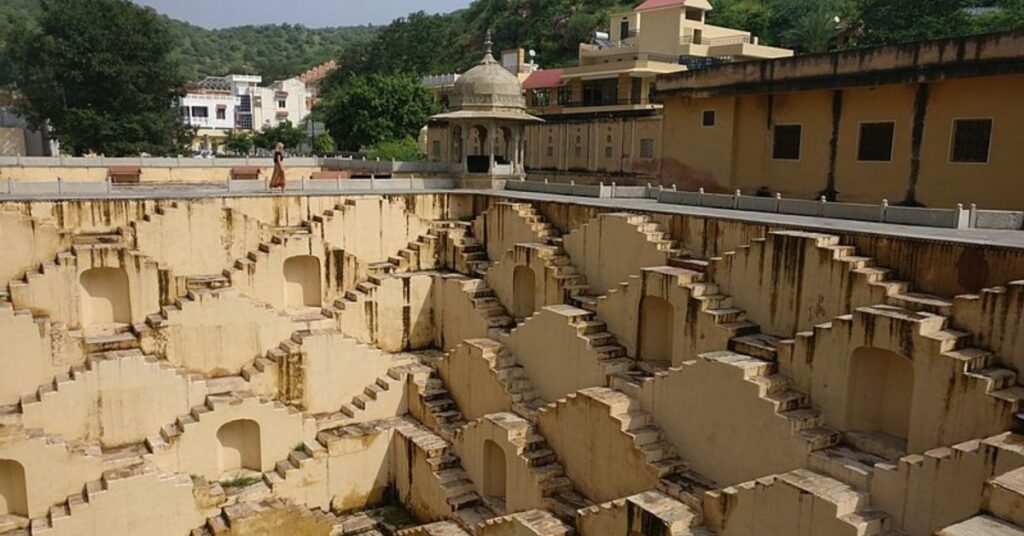
Panna Meena Ka Kund is one of the most iconic places to visit in Jaipur, located just a short walk from the magnificent Amer Fort in historic Amer town.
This 16th-century stepwell, also known as Panna Meena Baori, is a beautifully restored eight‑story marvel with crisscrossing steps on three sides and elegant chhatri pavilions at its corners.
Originally built as an ingenious water-harvesting and communal gathering site, it remains filled with water throughout the year—offering a serene retreat where locals once fetched water, socialized, and even bathed during the hot summer months.
Design-wise, Panna Meena Ka Kund stands out among the places to visit in Jaipur for its mesmerizing symmetry. The geometric precision of the stairs and landings creates a visual marvel, especially when sunlight and shadow texture the steep descent.
Photography enthusiasts flock here for its dramatic lines and reflections. The stepwell is free to visit and typically open from sunrise to sunset year-round.
Plan your visit between October and March to enjoy mild weather and softer light—this site makes a perfect stop when exploring places to visit in Jaipur alongside Amer Fort, Jaigarh, and Nahargarh Fort.
Gaitore ki Chhatriyan
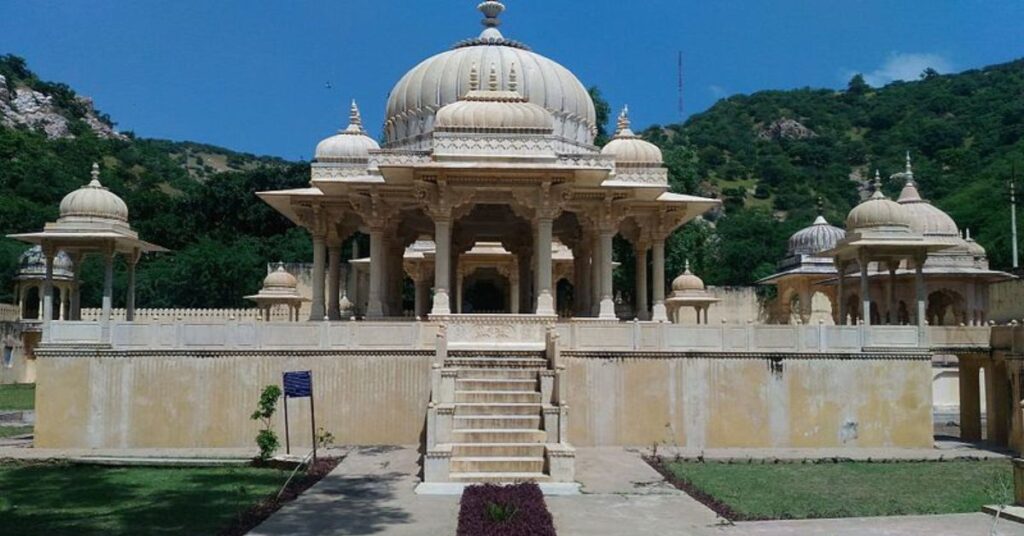
Gaitore Ki Chhatriyan is one of the most evocative places to visit in Jaipur, standing at the foothills of Nahargarh Fort as a regal tribute to the city’s Kachwaha dynasty.
Established by Maharaja Sawai Jai Singh II in the early 18th century, this royal cremation ground features intricately carved cenotaphs—each crowned with an ornate chhatri (umbrella-shaped dome)—honoring successive maharajas like Jai Singh II, Madho Singh II, and Sawai Ram Singh II.
The blend of white marble and golden sandstone, in classic Rajput‑Mughal style, creates a breathtaking visual rhythm against the Aravalli backdrop.
Each chhatri is uniquely decorated—to reflect the ruler it commemorates—featuring peacock motifs, mythological scenes, battle carvings, and delicate latticework.
A visit to Gaitore Ki Chhatriyan is like stepping into a serene open-air palace—one of the lesser-known yet deeply atmospheric places to visit in Jaipur.
The tranquil setting offers a gentle respite from the city’s bustle, with soft light playing off the domes and arches, making it especially enchanting during early morning or golden hour.
Open daily from about 9:30 AM to 5 PM, entry is modest (around ₹30), and the ticket is often included in the composite City Palace pass, along with other heritage sites.
Combine it with visits to adjacent gems like Garh Ganesh Temple and Nahargarh Fort for a more enriching Jaipur itinerary—or simply wander the chhatri-lined courtyards, soak in the quiet grandeur, and watch the city’s story etched in stone.
Rambagh Palace

Rambagh Palace is one of the most prestigious places to visit in Jaipur, known as the city’s “Jewel of Jaipur.”
Built in 1835 as a garden‑house for a royal wet nurse, it later transformed into a hunting lodge and, by the early 20th century, became the Maharaja of Jaipur’s principal residence thanks to upgrades by Sir Samuel Swinton Jacob.
Spanning 47 acres of Mughal-style gardens, the palace combines Rajput and Mughal architecture—featuring sandstone facades, marble cupolas, ornate jalis (lattice screens), and lush lawns with fountains.
Now managed by Taj Hotels, its grandeur is reflected in 78 rooms and suites, including signature Peacock and Maharani Suites, each beautifully appointed with antiques, frescoes, and period furniture.
As both a place to visit in Jaipur and a luxury experience, Rambagh Palace offers a host of regal activities and dining experiences. Highlights include high tea on the lawn where peacocks stroll by, fine dining at Suvarna Mahal, and drinks at the unique Steam Carriage bar and Polo Bar.
Guests can also enjoy royal carriage rides, bespoke yoga sessions, spa therapies at Jiva Grande, and guided heritage walks covering nearby City Palace, Amber Fort, and Hawa Mahal.
Notably acclaimed as the world’s top hotel by TripAdvisor in 2023, Rambagh Palace stands out among Jaipur attractions for its unmatched blend of royal legacy, architecture, hospitality, and immersive cultural experiences
Bapu Bazar

Bapu Bazar is one of the vibrant places to visit in Jaipur, offering a true slice of Rajasthani culture right in the heart of the Pink City’s old walled area, between the Sanganer and New Gates.
The market is a paradise for shoppers seeking authentic Rajasthani goods—think camel‑leather Mojari shoes, colorful Bandhej and Leheriya textiles, intricate lac bangles, artificial jewelry, marble decor, and Jaipuri quilts—all at bargain-friendly prices if you haggle wisely.
Open daily from around 11 AM to 10 PM with free entry, it’s especially lively in the cooler months of November to March.
Beyond its shopping allure, Bapu Bazar is also a sensory feast. The narrow lanes buzz with vendors, artisans, and bargain-hunters, and richly colored shopfronts painted in Jaipur’s signature pink create a captivating atmosphere.
Don’t miss the street-food stalls offering local treats like kachori, golgappas, and falooda kulfi—perfect little breaks during your stroll.
With its mix of traditional crafts, cultural flavors, and upbeat ambiance, Bapu Bazar makes an essential stop among the top places to visit in Jaipur—especially if you’re looking for souvenirs, bargains, and an immersive local experience.
Amar Jawan Jyoti
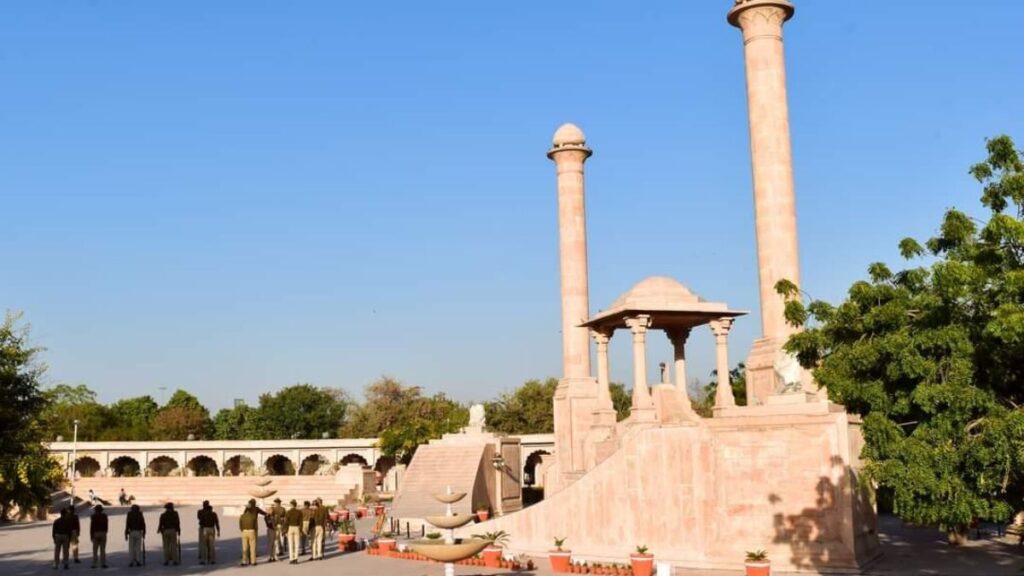
Amar Jawan Jyoti is a poignant place to visit in Jaipur, serving as the city’s principal war memorial dedicated to the brave soldiers who laid down their lives, especially during the Indo‑Pakistani War of 1971.
Situated on Jan Path near the Vidhan Sabha Bhawan, this monument features an inverted rifle topped with a war helmet, set upon a black marble pedestal surrounded by four eternally burning torches—symbols of undying valor and patriotism.
Constructed in 1971–72 under the initiative of then‑Prime Minister Indira Gandhi, the memorial was built in record time and remains an ever‑lit tribute, fueled by piped gas, and open daily, welcoming visitors from early morning until nightfall.
As one of the notable places to visit in Jaipur, Amar Jawan Jyoti offers a solemn yet captivating atmosphere, enhanced by well‑maintained gardens and evening illuminations in the Indian flag’s colors.
Visitors often stay for the bilingual light-and-sound show, which narrates heroic tales of Rajasthan’s military history through moving visuals and patriotic compositions.
A small onsite museum deepens the experience with war memorabilia, while peaceful benches and pathways invite quiet reflection.
Free entry, round‑the‑clock access, and proximity (about 5 km) from Jaipur Junction make it an easily accessible and spiritually stirring stop on any Jaipur itinerary—one that celebrates sacrifice, pride, and remembrance.
Raj Mandir Cinema
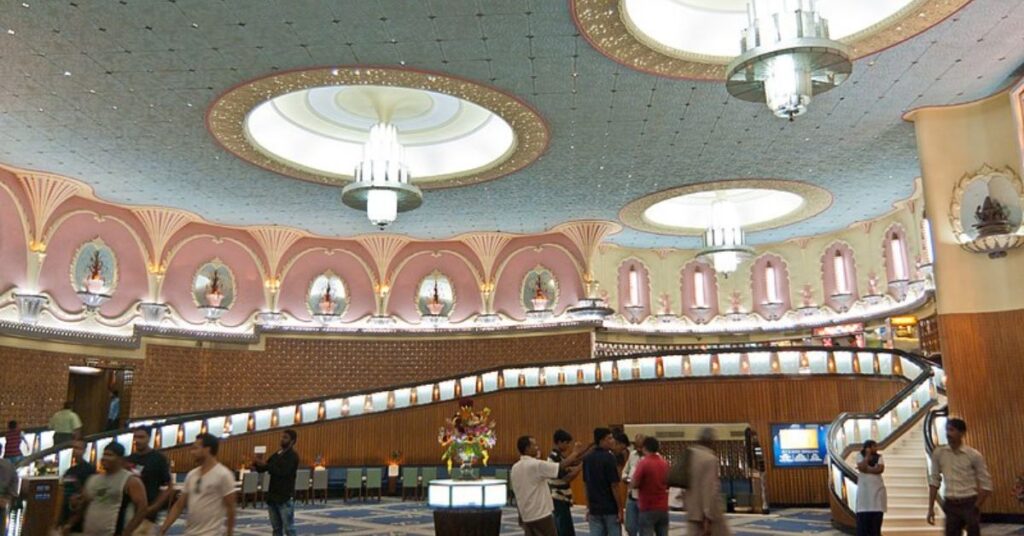
Raj Mandir Cinema is one of the most iconic places to visit in Jaipur, often dubbed the “Pride of Asia” for its opulent, palace‑like design and immense cultural appeal.
This legendary single‑screen theater, built in June 1976, was envisioned by Mehtab Chand Golcha and designed by W. M. Namjoshi in the Streamline Moderne (Art Moderne) style. Boasting over 1,165 seats and grand interiors adorned with chandeliers, curved staircases, velvet curtains, and intricate ceiling decor, it’s a cinematic landmark where architecture and entertainment merge seamlessly.
Located at Panch Batti on Bhagwan Das Road—near the bustling M.I. Road junction—it’s conveniently accessible via bus, auto, cab, or e‑rickshaw.
For visitors exploring places to visit in Jaipur, Raj Mandir offers a unique experience that goes beyond just watching a Bollywood movie. The hall is equipped with Dolby Atmos and SLS speakers—the first in Rajasthan—enhancing the audio‑visual experience on a mammoth 70 mm screen.
Inside, audiences are treated to boisterous, communal energy, with hooting, cheering, and snacks adding to the charm—a slice of old‑school Indian cinema culture still alive today.
With shows typically at 12:30 PM, 3:30 PM, 6:30 PM, and 9:30 PM and tickets ranging from ₹150 to ₹500 across gemstone‑themed seating categories (Pearl, Ruby, Emerald, Diamond), it’s both an entertaining outing and a cultural touchpoint.
Whether you’re a local or tourist, a visit to Raj Mandir is a must-add to your Jaipur itinerary for a memorable fusion of regal architecture and cinema spectacle.
Jawahar Circle
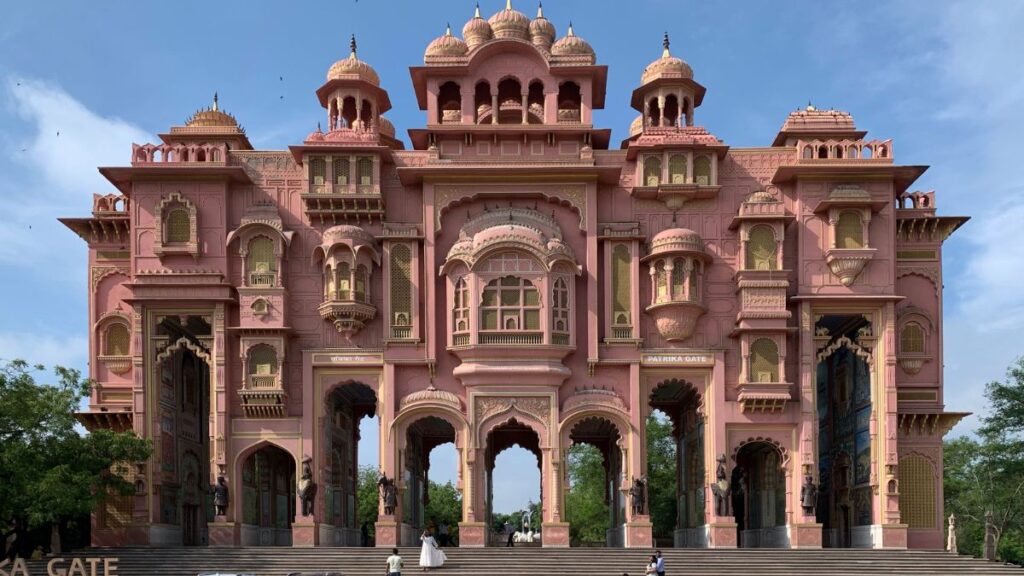
Jawahar Circle is one of the top places to visit in Jaipur—an oasis of greenery and leisure nestled in the city’s heart along Malviya Nagar near Sanganer Airport. Spanning a massive 452 m diameter and a 1,420 m circumference, it’s reputed to be Asia’s largest circular park.
Developed by the Jaipur Development Authority in 2009 at a cost of around ₹17 crore, this beautifully landscaped space features concentric jogging paths, vibrant rose gardens, children’s play areas, and ample seating that make it a favorite for both morning walkers and evening strollers.
What truly sets Jawahar Circle apart is its musical fountain show, held every evening at 7 PM.
A spectacular display with over 270 dynamic water effects, illuminated by more than 316 colored lights, it theatrically combines water, light, music—and even video projections on a watery screen—creating a mesmerizing experience for families and tourists alike.
Entry is nominal (₹10 for Indians, ₹20 for foreigners), and the park remains open from early morning (5 AM or 6 AM) till around 9 PM, making jawahar circle a delightful stop on any Jaipur visit itinerary.
Jawahar Kala Kendra
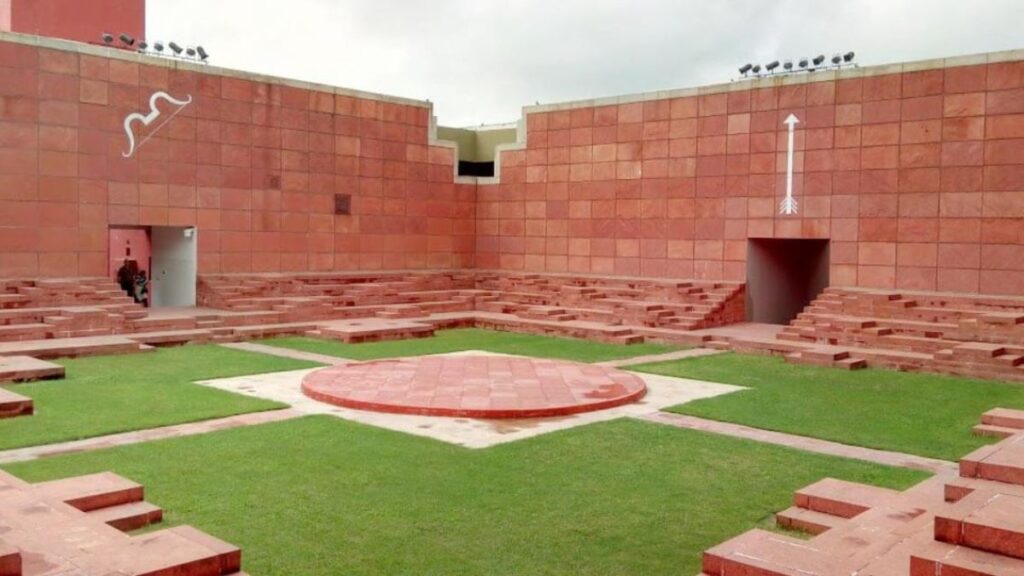
Jawahar Kala Kendra (JKK) is one of the most distinctive places to visit in Jaipur, a cultural complex and architecture marvel designed by Charles Correa and built between 1986–1992.
Inspired by Jaipur’s ancient Navagraha (nine‑planet) city plan, JKK is laid out as nine interlocking squares, each symbolizing a planet and serving functions like galleries, theatres, a library, museum, café, and open‑air amphitheatre.
Constructed from local red sandstone and white marble, it echoes Rajasthan’s architectural heritage while prioritizing courtyards, natural light, and breathability.
Visiting JKK offers more than sightseeing—it’s a vibrant cultural hub to visit in Jaipur. Inside, the “Sandarbh” library holds over 14,000 books, while Alankar Museum showcases traditional artefacts like woodwork, ceramics, miniature paintings, and more.
The open‑air “Madhyavarti” amphitheatre and indoor stages Rangayan and Krishnayan host festivals like Navras and Lokrang, along with theatre, music, and dance performances year‑round.
JKK also features Shilpgram—a crafts village with six huts representing Rajasthani regions—where fairs and workshops let you dive into folk traditions.
End your visit at the charming Indian Coffee House café—a favorite haunt of artists and thinkers—while enjoying dosas, idlis, and coffee in a serene courtyard.
Open daily (typically 10 AM–9 PM), free entry, JKK is a must‑visit place in Jaipur for architecture enthusiasts, culture lovers, and creative souls alike.