Delhi, the bustling capital of India, is home to numerous green spaces that provide much-needed respite from the city’s fast-paced life. The parks in Delhi are not just places for recreation but also reflect the city’s rich heritage and love for nature.
From historic gardens to modern landscape parks, these spaces are ideal for morning walks, yoga sessions, or simply enjoying a peaceful afternoon surrounded by greenery.
One of the most iconic parks in Delhi is Lodhi Garden, known for its lush lawns and historic tombs from the Lodhi dynasty. Nehru Park in Chanakyapuri is another favorite, offering expansive green areas, musical events, and fitness zones.
Meanwhile, Deer Park in Hauz Khas is loved for its natural trails, a beautiful lake, and the chance to spot deer and birds in a city setting. These parks serve as breathing spaces that enhance the quality of life for Delhiites.
Apart from these, the Garden of Five Senses stands out as a unique experiential space, blending nature, art, and design. With themed sections, sculptures, and a variety of plant species, it attracts both locals and tourists.
Whether you’re a fitness enthusiast, a nature lover, or someone looking for a peaceful escape, the parks in Delhi offer something for everyone, making them essential to the city’s landscape and culture.
List of Must Visit Parks in Delhi in 2025
Lodhi Garden
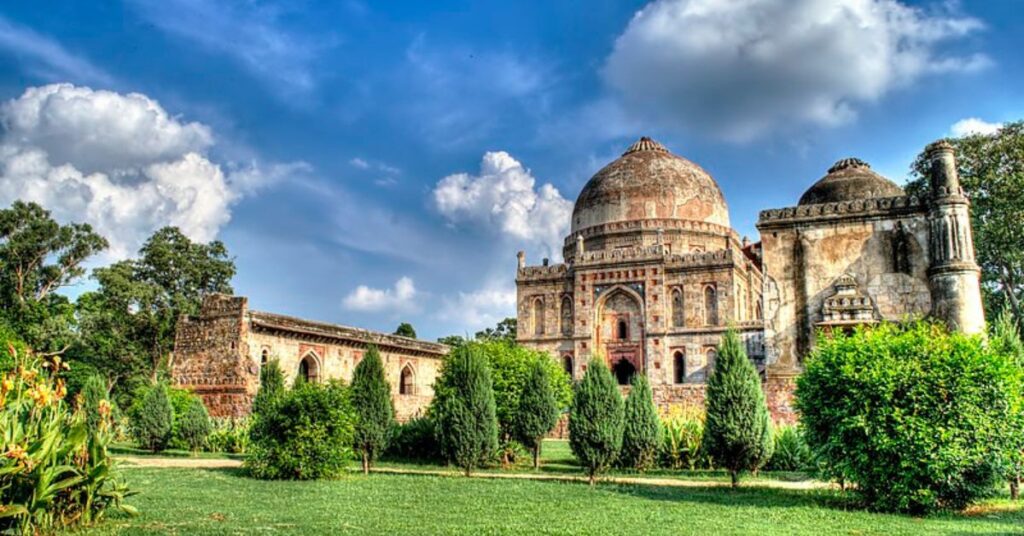
Lodhi Garden is one of the most iconic parks in Delhi, blending rich history with natural beauty. Located near Khan Market and Safdarjung’s Tomb, this 90-acre expanse is home to beautifully landscaped gardens and several important architectural monuments from the Lodhi and Sayyid dynasties.
Among the highlights are the tombs of Muhammad Shah and Sikandar Lodi, as well as the impressive Bara Gumbad and Shish Gumbad. These structures add a majestic, historical charm to the otherwise serene environment, making Lodhi Garden a unique heritage park in Delhi.
The park is a popular spot for morning walkers, yoga practitioners, and families seeking a peaceful retreat. Well-maintained walking tracks, open green spaces, water bodies, and a variety of flowering plants and trees attract not only fitness enthusiasts but also nature lovers and bird watchers.
As one of the most accessible parks in Delhi, it serves as a green sanctuary amid the hustle and bustle of the city.
What sets Lodhi Garden apart from other parks in Delhi is its combination of Mughal-era architecture and modern landscaping. It also features a bonsai park, butterfly zones, and a glasshouse.
Whether you are looking to explore Delhi’s history, enjoy a morning jog, or relax under the shade of century-old trees, Lodhi Garden offers a perfect blend of nature, culture, and tranquility.
- Visiting Hours:
- April to September: 5:00 AM – 8:00 PM (Daily)
- October to March: 6:00 AM – 8:00 PM (Daily)
- Entry Fee: Free
- Best Time to Visit: Early mornings or late afternoons to avoid the midday heat
Amrit Udyan (Erstwhile Mughal Garden)
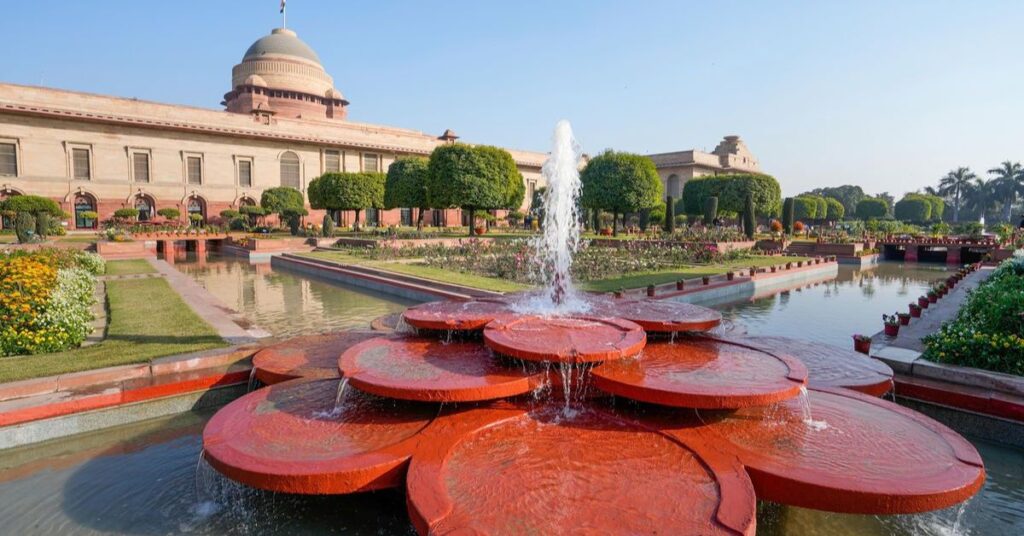
Amrit Udyan, formerly known as the Mughal Garden, is one of the most exquisite parks in Delhi, located within the Rashtrapati Bhavan complex. Known for its breathtaking layout inspired by Persian and Mughal styles, the park is famous for its symmetrical design, water channels, and a wide variety of flowering plants, especially roses and tulips.
This beautifully maintained garden opens to the public during the annual Udyan Utsav, attracting thousands of visitors each year. As one of the most iconic parks in Delhi, Amrit Udyan offers a blend of formal gardens, bonsai collections, herbal sections, and serene walking paths, making it a must-visit for nature lovers and photography enthusiasts alike.
Amrit Udyan not only showcases horticultural excellence but also reflects India’s evolving identity, symbolized through its recent renaming. Among all the parks in Delhi, it stands out for its historical significance, seasonal beauty, and grand setting within the Presidential Estate.
- Visiting Details for 2025:
- Open to the Public: February 2 to March 30, 2025
- Timings: 10:00 AM – 6:00 PM (last entry at 5:15 PM)
- Entry & Booking:
- Entry: Free
- Entry Gate: Gate No. 35, near North Avenue
- Booking: Online reservations can be made at visit.rashtrapatibhavan.gov.in. Walk-in visitors can register at facilitation counters or self-service kiosks near Gate No. 35
- Shuttle Service: Complimentary shuttle buses run every 30 minutes from Central Secretariat Metro Station to Gate No. 35 between 9:30 AM and 6:00 PM
- Best Time to Visit: Early mornings or late afternoons to avoid crowds
Garden of Five Senses, Saidul Ajaib
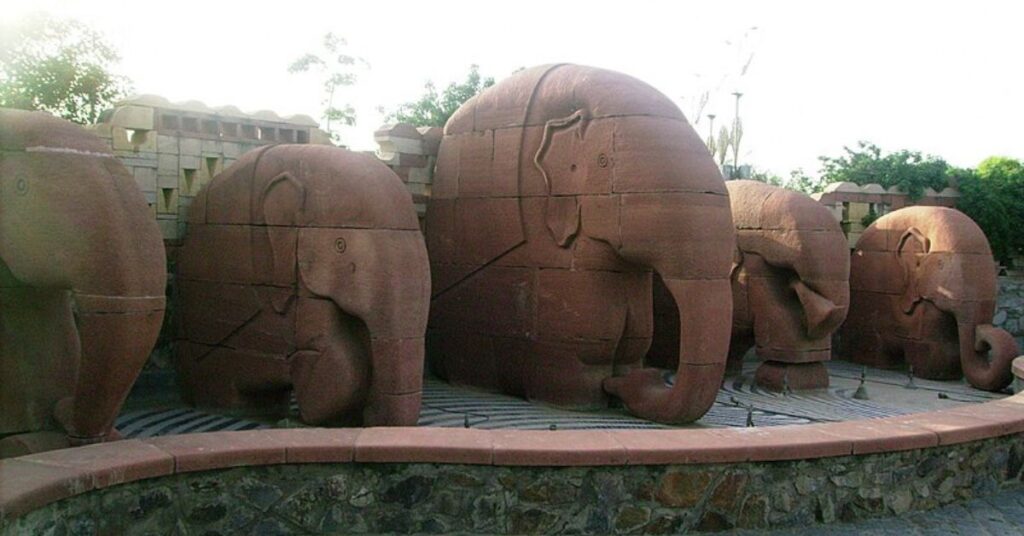
The Garden of Five Senses in Saidul Ajaib, near Saket, is one of the most creatively designed parks in Delhi. Spread over 20 acres, this park blends natural beauty with artistic elements, making it a unique destination among other parks in Delhi.
It is not just a place for leisurely strolls but also a space that stimulates all five senses—sight, smell, touch, sound, and taste—through its thoughtful layout and attractions.
This park in Delhi features beautifully landscaped gardens, cascading water features, stone sculptures, and themed areas like the Mughal Garden, bamboo courts, herb gardens, and solar energy park.
The vibrant colors of seasonal flowers, fragrant shrubs, and the rhythmic sounds of birds create an immersive experience for visitors. The garden is also a venue for cultural events, food festivals, and exhibitions, adding to its dynamic atmosphere.
Ideal for families, couples, and nature lovers, the Garden of Five Senses stands out among the many parks in Delhi for its artistic charm and sensory appeal. Whether you’re seeking peace or artistic inspiration, this park offers a refreshing retreat from the city’s bustle.
- Visiting Hours:
- Summer (April–September): 9:00 AM – 7:00 PM (Daily)
- Winter (October–March): 9:00 AM – 6:00 PM (Daily)
- Entry Fees: Adults: ₹35, Children (up to 12 years): ₹15, Senior Citizens: ₹15, Differently-abled Visitors: Free,
- Photography: Charges applicable for commercial shoots; rates vary
- Best Time to Visit: Early mornings or late afternoons to avoid the midday heat and crowds
Also Read: 20 Best Places to Visit in Noida
Central Park, Rajiv Chowk

Central Park, located in the heart of Connaught Place at Rajiv Chowk, is one of the most centrally situated parks in Delhi. It offers a refreshing green escape amid the bustling commercial hub of the city.
Spread across several acres, the park is known for its beautifully maintained lawns, artistic landscaping, and the iconic Indian national flag that flies high in the center. As one of the most accessible parks in Delhi, it serves as a peaceful retreat for both office-goers and tourists.
This park is not just a place to relax; it’s also a cultural hotspot. Central Park features an open-air amphitheatre that hosts music performances, cultural events, and public gatherings, making it stand out among other parks in Delhi.
The pathways lined with fountains, flowering plants, and shaded benches invite visitors to enjoy leisurely strolls or quiet moments of reflection. Its location directly above the Rajiv Chowk Metro Station adds to its convenience and popularity.
Among the many parks in Delhi, Central Park is unique for blending urban infrastructure with natural beauty. It acts as a green lung in the city’s core and offers scenic views, especially during evening hours when the fountains are lit up.
Whether you’re looking for a short break, a romantic walk, or a peaceful spot to unwind, Central Park provides an ideal setting right in the middle of the capital’s vibrant life.
- Timings: 5:00 AM – 8:00 PM (Daily)
- Entry Fee: Free
- Best Time to Visit: Early mornings for a peaceful experience or evenings to enjoy the illuminated fountains
Mehrauli Archaeological Park, Mehrauli
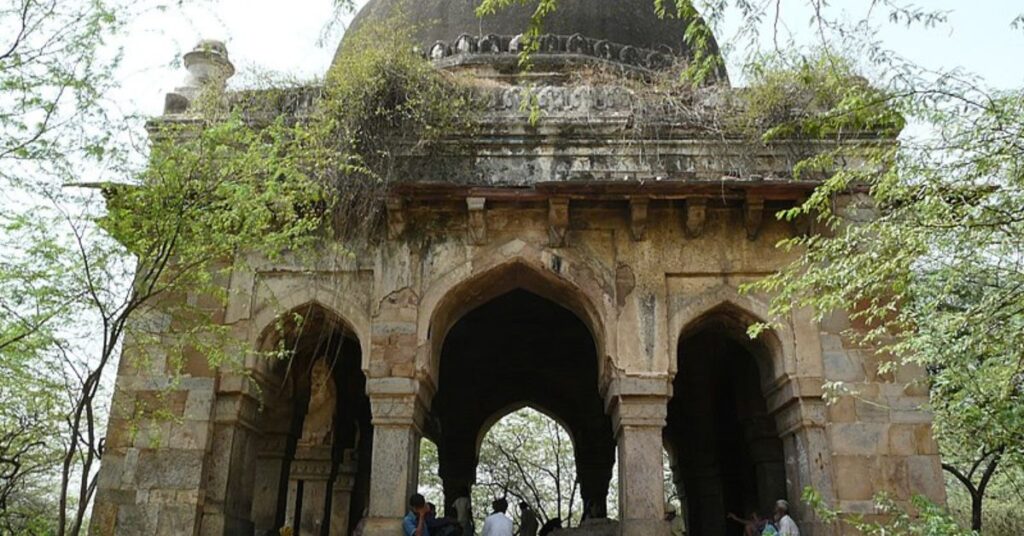
Mehrauli Archaeological Park is a sprawling 200‑acre green oasis in South Delhi, adjacent to the iconic Qutub Minar complex.
It’s among the most significant parks in Delhi for history lovers, with over 100 monuments that chronicle Delhi’s evolution—from the 11th‑century Tomar-built Lal Kot fort to architectural relics from the Sultanate, Mughal, Lodi, and British periods.
As the only site in Delhi with 1,000 years of continuous occupation, the park offers a unique journey through the city’s layered past.
Among the standout structures are the Tomb of Balban (c. 1287), notable for India’s first true arch and dome.
The red‑sandstone Jamali‑Kamali Mosque and Tomb (1528–1535), an exquisite example of early Mughal Sufi architecture.
and heritage step‑wells like the Lodi-era Rajon Ki Baoli and Gandhak Ki Baoli, which not only display intricate design but also served as social and spiritual gathering places.
You’ll also find atmospheric ruins of mausoleums, pleasure pavilions, mosques, and British-era follies set amidst lush vegetation—creating a serene yet evocative park in Delhi that feels like a living museum.
Managed through collaborations between INTACH, the DDA, and Delhi Tourism since the late 1990s, the park now features restored monuments, way‑markers, and heritage trails, ideal for leisurely exploration or guided walks.
Compared to other parks in Delhi, this one uniquely blends archaeology and greenery—whether you’re seeking a quiet picnic amid ruins, a cultural stroll through living history, or a weekend retreat rich in stories.
- Timings: 5:30 AM to 6:30 PM (Daily)
- Entry Fee: Free
- Nearest Metro Station: Qutub Minar (Yellow Line), approximately 1.5 km away
India Gate Lawns (Kartavya Path)
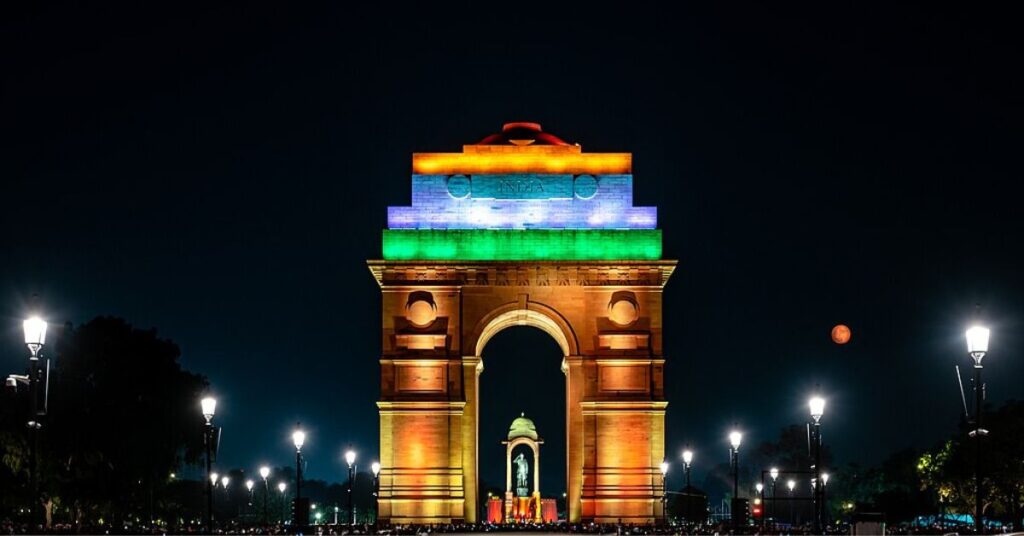
India Gate Lawns, now part of the expansive Kartavya Path, form one of the most iconic parks in Delhi. Stretching over approximately 42 acres around the majestic India Gate, this verdant expanse offers stunning views of the 42‑meter-high war memorial designed by Sir Edwin Lutyens.
With lush lawns, tree-lined avenues, and graceful fountains, this green space provides Delhiites and visitors alike a perfect escape within the city .
Following the 2022 Central Vista redevelopment, these lawns were revitalized under the newly named Kartavya Path.
Upgrades included resurfaced granite walkways, canal-side pedestrian bridges, designated vending zones, restroom blocks, underpasses, improved lighting, CCTV surveillance, and over 400 benches.
These enhancements have transformed the lawns into a well‑structured and accessible park in Delhi, offering a blend of leisure and civic pride.
Today, Kartavya Path comes alive with cultural vibrancy—weekend festivals like Kalanjali, featuring music, dance, street theater, and folk art—invite the public to interact with India’s heritage and contemporary arts in an open-air setting.
While the lawns see heavy crowds on weekends—sometimes leading to temporary cordoning off to let the grass rejuvenate the area remains a cherished park in Delhi, perfect for evening strolls, family outings, and immersive cultural experiences.
- Timings: The area is accessible 24/7, allowing visitors to experience its beauty at any time
- Boating: 2:00 PM to 9:00 PM (Daily). Closed on Mondays
- Light Show: The light and sound show takes place from 7:00 PM to 9:30 PM, illuminating the monument and surrounding area
- Entry Fee: There is no entry fee to visit the India Gate Lawns
- How to Reach:
- Nearest Metro Station: Central Secretariat (Yellow and Violet Lines)
- By Road: Accessible via Rajpath; parking facilities are available nearby
- Best Time to Visit: Early mornings or late evenings to avoid the midday heat and crowds
National Rose Garden, Chanakyapuri

Nestled in the diplomatic enclave of Chanakyapuri, the National Rose Garden—also known as the National Indo‑Africa Friendship Rose Garden—stands as one of the most enchanting parks in Delhi.
Open daily from early morning to evening, this meticulously maintained 3‑acre space showcases over 60–65 varieties of roses sourced from around the world, including rare green and black blooms that add an air of mystery to its vibrant landscapes.
Ideal for a leisurely stroll, romantic outing, or family picnic, its carpet of multicolored blossoms and sparkling fountains make it one of Delhi’s most picturesque green spots.
Designed to be both a botanical showcase and a cultural symbol, the park features beautifully laid-out flower beds, wandering pathways, and serene water features that invite visitors to pause and soak in the fragrance and beauty.
Beyond its floral allure, the garden holds deeper significance, celebrating India’s diplomatic ties—housing dedicated sections like the India‑Africa Friendship Rose Garden (honouring ties inaugurated in 2015) and a BRICS-themed section featuring roses from partner nations.
These elements make the space more than just a park in Delhi—it’s a living testament to international friendship and botanical diversity.
Among parks in Delhi, the National Rose Garden stands out for its seasonal charm and peaceful ambiance. The best time to visit is between December and February, when the roses are in full bloom and the air filled with heady perfume.
Whether you’re a botanist admiring rare species, a photographer capturing golden-hour hues, or a family indulging in a playful afternoon amid roses and butterflies, this garden provides a tranquil escape from urban life—melding floral splendor with cultural significance in the heart of the capital.
- How to Reach:
- Nearest Metro Stations: Sri M. Vishweshwaraiah Moti Bagh (Pink Line), Lok Kalyan Marg (Yellow Line)
- By Road: Located on Satya Marg, the garden is easily accessible by car or auto-rickshaw
Also Read: 25 Best Places to Visit in Nainital
Indraprastha Park or Millennium Park, Sarai Kale Khan
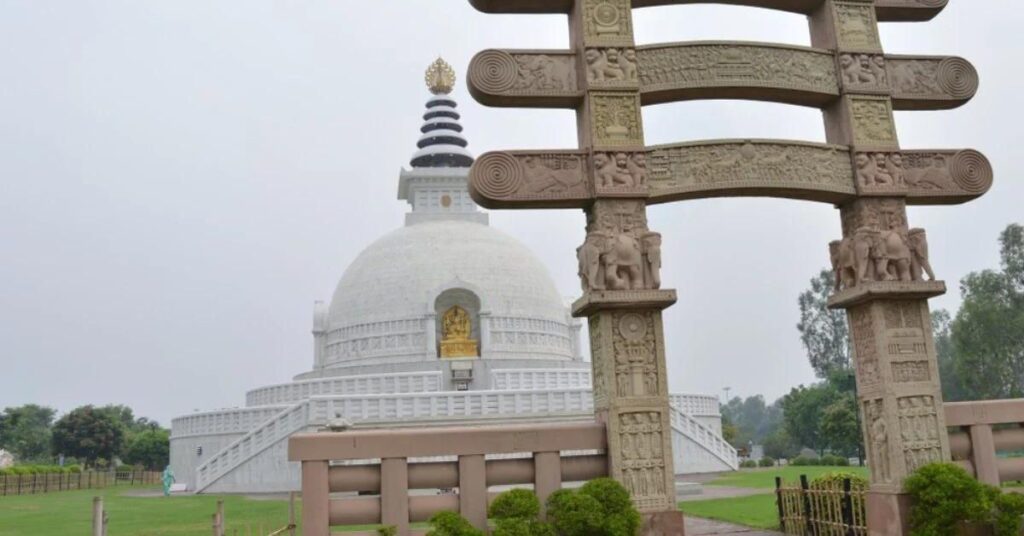
Indraprastha Park—also known as Millennium Park—is a sprawling park in Delhi located along Ring Road near Sarai Kale Khan.
Transformed from a landfill into a verdant urban oasis in 2004 by the DDA, it covers around 84 acres (34 ha) across a 2.7 km stretch.
The park is thoughtfully divided into themed zones—such as the Smriti Van, Fragrant Garden, Bougainvillea Garden, Topiary Garden, and Foliage Garden—each with its own character, yet seamlessly interwoven into the whole landscape.
This park in Delhi offers a delightful mix of attractions: a children’s play area, open‑air amphitheatre, musical fountains, jogging trails, and a food court .
Highlighting the park’s serene atmosphere is the Vishwa Shanti Stupa (World Peace Pagoda), inaugurated in 2007 by the Dalai Lama, alongside a Japanese garden—perfect for quiet reflection.
Whether families picnicking, joggers on the paths, or couples enjoying romantic strolls, the park caters to diverse visitors seeking respite from the city’s bustle.
Uniquely among parks in Delhi, Millennium Park symbolizes ecological renewal—turning wasted landfill into a flourishing green space—and cultural harmony, with its Buddhist stupa and zones fostering both leisure and learning.
Open daily from 6:00 AM to 7:15 PM with free entry, it’s easily accessible from Sarai Kale Khan Metro and nearby buses. Ideal for morning walks, family outings, or tranquil evenings, this park stands as one of Delhi’s most engaging and eco‑conscious green gems.
- Visiting Hours: 6:00 AM – 7:15 PM (Daily)
- Entry Fee: Free
- How to Reach:
- By Metro: The nearest metro station is Hazrat Nizamuddin
- By Bus: DTC buses operate routes connecting the park to various parts of the city
- By Car: The park is accessible via the Ring Road, with ample parking facilities available
9 | Sunder Nursery, Nizamuddin West
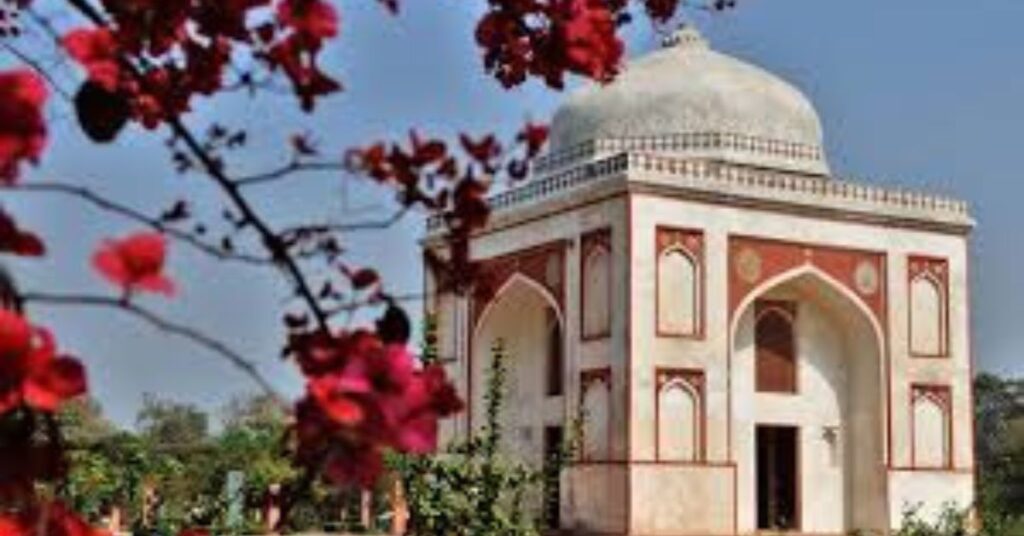
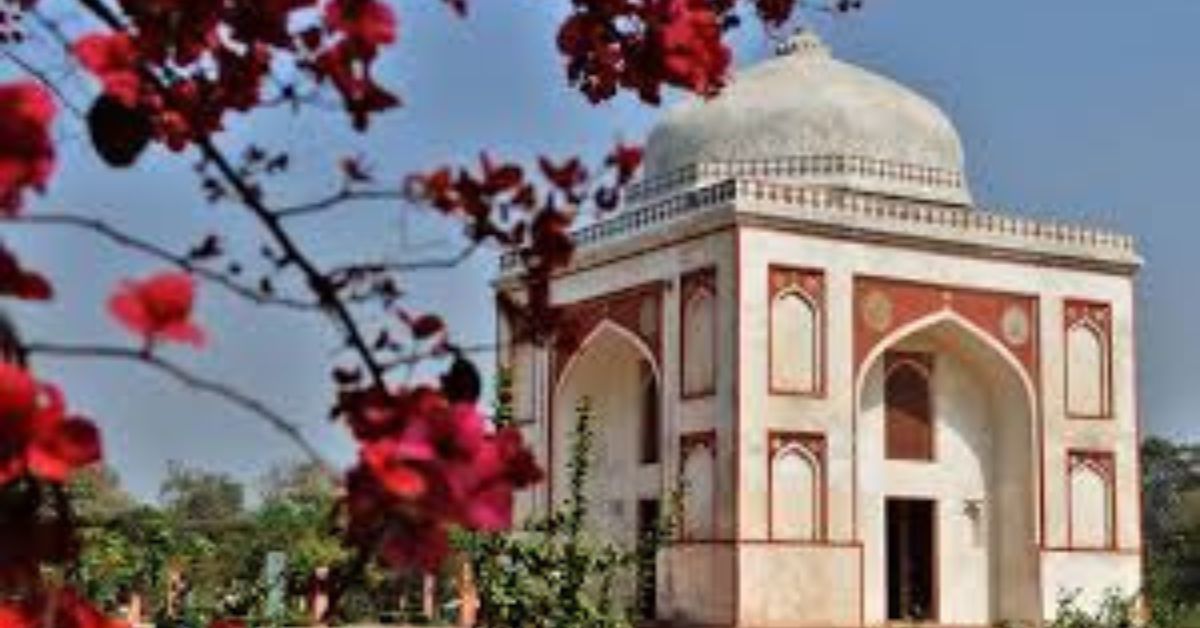
Sunder Nursery, nestled adjacent to Humayun’s Tomb in Nizamuddin West, is one of the premier parks in Delhi, blending heritage and horticulture across a sprawling 90-acre landscape.
Originally the 16th-century Azim Bagh and later a British botanical nursery, it underwent a decade of restoration led by the Aga Khan Trust for Culture in partnership with CPWD, ASI, and SDMC, reopening to the public in 2018.
This beautifully landscaped public park offers serene pathways, water canals, and restored Mughal monuments like Sunder Burj and Lakkarwala Burj, earning acclaim in TIME’s 2018 list of “World’s Greatest Places.”
Unlike more conventional parks in Delhi, Sunder Nursery stands out as Delhi’s first arboretum, with over 300 tree species, 80+ bird types, 36 butterfly species, and diverse habitat zones including kitchen gardens and a biodiversity reserve.
Visitors enjoy winding quartzite and sandstone trails, children’s natural play areas, amphitheaters, bonsai enclosures, and thematic gardens such as lotus, herb, and secret gardens.
The site harmonizes cultural heritage and environmental education—through heritage walks, bird‑watching, and agro‑learning featuring seasonal vegetables—all within a thoughtfully conserved urban green space.
This historic-green hybrid makes Sunder Nursery one of the most unique parks in Delhi—a tranquil haven where history, biodiversity, and recreation coalesce.
Open daily from sunrise to sunset with modest entry fees (around ₹50 for adults, ₹25 for children/seniors), it welcomes families, nature lovers, heritage buffs, and anyone seeking peace in the city.
Locals on Reddit praise its relaxed vibe—picnics, strolling with pets, even casual dining from Domino’s at the gate—and draw attention to its well‑maintained greenery and evening charm .
If you’re exploring Delhi’s parks, Sunder Nursery offers an enriching blend of natural calm, urban design, and living history.
- Timings: 7:00 AM – 10:00 PM (Daily). Last entry at 9:00 PM
- Entry Fees: Adults (Indian/SAARC): ₹50, Children (5–12 years): ₹25, Senior Citizens (60+): ₹25, Foreign Nationals: ₹200, Children under 5 & Differently-abled Visitors: Free
Deer Park, Hauz Khas
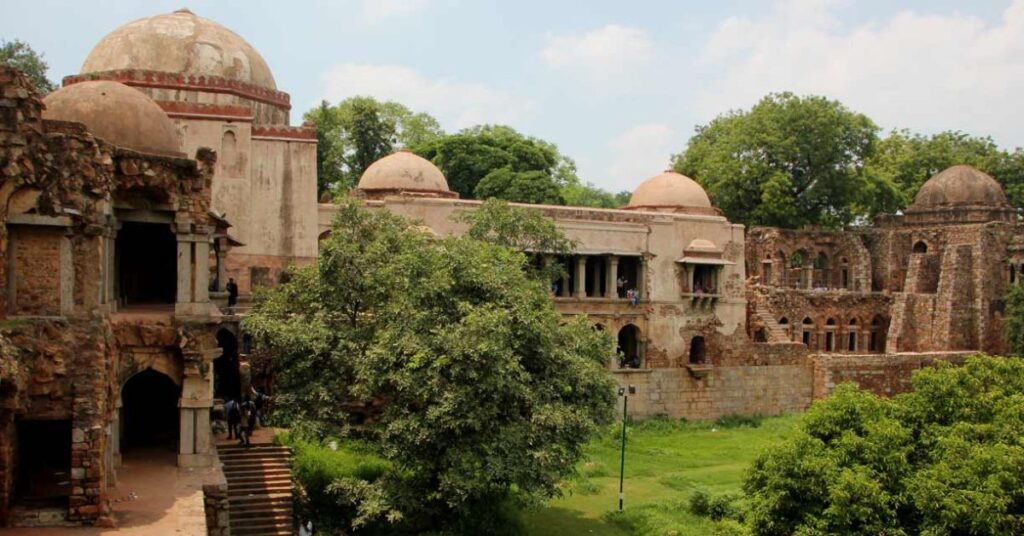
Deer Park in Hauz Khas is one of the best-known parks in Delhi, sprawling across about 60 acres of lush greenery, wetlands, and woodland.
Originally part of the Hauz Khas water reservoir built by Alauddin Khilji in the 13th century and later restored by Firoz Shah Tughlaq, the park is now maintained by the Delhi Development Authority.
Open daily from dawn until early evening, it offers a free, green retreat perfect for morning jogs, leisurely strolls, picnics, and encounters with peacocks, ducks, rabbits – and of course, deer in their designated enclosure .
What sets this park in Delhi apart is its harmonious blend of natural and historical elements.
Visitors can wander scenic trails under tall neem and peepal trees, gaze at historic monuments such as the Lodi-era mosques and 13th-century “bald dome” pavilion, and stroll along the lakeside path surrounding the Hauz Khas reservoir.
The Deer Park is also a mini biodiversity zone—perfect for birdwatchers spotting kingfishers, parakeets, and barbet amidst the shaded groves.
Equally popular with locals and tourists, this park in Delhi offers a change of pace from the city’s hustle. It’s metro-accessible (Hauz Khas station on the Yellow or Magenta line), pet-friendly, and ideal for relaxation at any time of day.
Though a 2023 initiative saw many deer relocated to Rajasthan and Asola Bhatti forest for decongestion, Deer Park remains open for free public access, focused on preserving its rich greenery and historical charm.
Whether you’re keen on nature walks, heritage exploration, or simply indulging in a peaceful picnic by the lake, Deer Park stands tall among the top parks in Delhi—a green heart in the urban core.
- Timings:
- Summer (April–September): 5:00 AM – 8:00 PM
- Winter (October–March): 5:30 AM – 7:00 PM
- Entry Fee: There is no entry fee for visitors
- How to Reach: Nearest Metro Station is Hauz Khas Metro Station (Yellow and Magenta Lines)
- Best Time to Visit: Early mornings or late afternoons offer the best experience, with cooler temperatures and active wildlife
Buddha Jayanti Park, Delhi Ridge
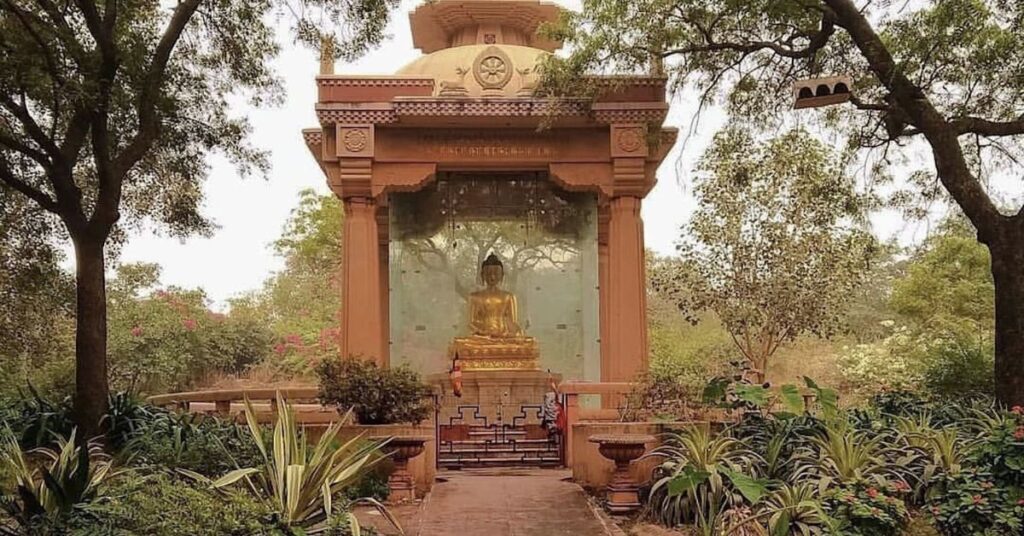
Buddha Jayanti Park, nestled in the heart of Delhi Ridge’s Central Reserve Forest, is one of the most serene parks in Delhi. Created in 1966 to mark the 2,500th anniversary of Lord Buddha’s enlightenment, it spans around 81 acres, making it one of the larger urban green spaces in the capital.
At its centre stands an elegant Pavilion housing a gilded statue of Lord Buddha, gifted by the Tibetans, poised on a man-made island encircled by reflective water and a Parikrama (circumambulatory path) outlined with colored stone rings symbolising the elements.
The park is more than a visual retreat—it’s a spiritual and ecological haven. Among verdant lawns, winding pathways, water channels, and floral beds, you’ll find a sapling of the Bodhi Tree—descended from the sacred original and planted by PM Lal Bahadur Shastri in 1964—adding profound historical and spiritual resonance.
Rich in biodiversity, the park attracts birds like lapwings, kingfishers, barbets, and parakeets, while stones such as Jamun, Peepal, Gulmohar, Babool, and Amaltas lend seasonal color and shade.
Functioning as both a park in Delhi and a quiet sanctuary, Buddha Jayanti Park draws joggers, morning walkers, nature lovers, Buddhist devotees, and couples seeking calm away from the city’s pulse.
It’s open daily from around 6 AM to 8:30 PM with free entry and parking. Community efforts—like planting 1,000+ Amaltas trees led by environmentalist Neeraj Gupta—highlight its ongoing role in Delhi’s ecological restoration.
Whether you’re after a peaceful nature walk, meditation by reflective pools, or a floral-aligned stroll through historical symbolism, this park stands as a lush, living testament to peace and heritage.
- Timings: 6:00 AM – 8:30 PM (Daily)
- Entry Fee: Free
- How to Reach: Nearest Metro Stations: Dhaula Kuan (Airport Express Line) and Jhandewalan (Blue Line) are approximately 4 km away
- Best Time to Visit: Early mornings or late evenings offer a cooler and more tranquil experience, especially during Delhi’s hot summer months
Also Read: 30 Best Places to Visit in Delhi
Nehru Park, Chanakyapuri
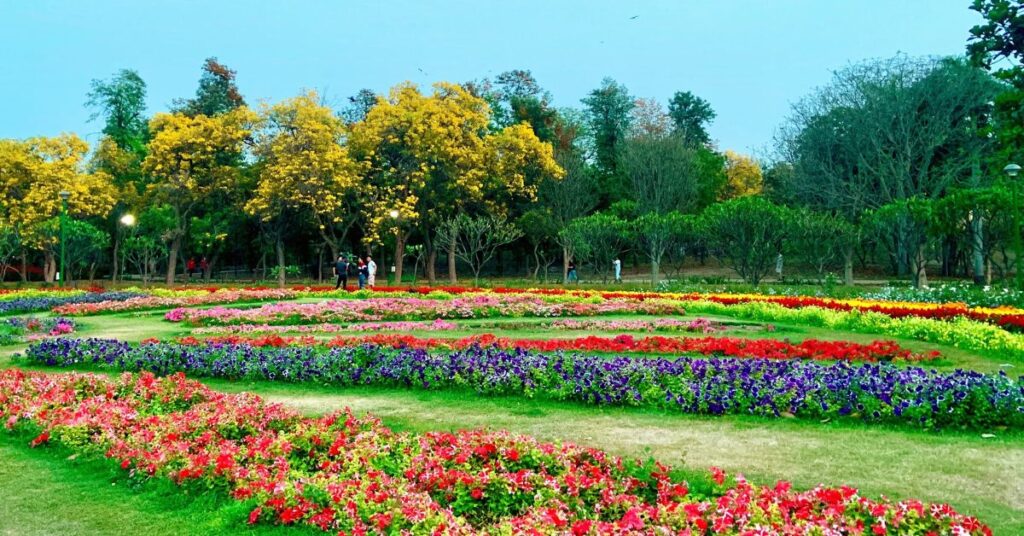
Nehru Park in Chanakyapuri is one of the most beloved parks in Delhi, renowned for its expansive green lawns and vibrant cultural life.
Created in 1969 as a tribute to India’s first Prime Minister, Jawaharlal Nehru, the park spans approximately 80 acres within the diplomatic enclave.
It’s carefully landscaped with a diverse array of trees—such as neem, gulmohar, palm, ashoka, champa, and pines—and seasonal flowerbeds, offering a lush sanctuary from Delhi’s urban bustle.
More than just a green escape, Nehru Park stands out among parks in Delhi as a dynamic cultural venue. It hosts the famous ‘Morning Ragas’ and ‘Evening Ragas’ concerts under NDMC’s “Music in the Park” series, along with SPIC MACAY performances, the Bhakti Festival, and open-air art exhibitions.
Recent upgrades include a rejuvenated pond with improved fountains and walking paths, plus the Srijan Art Gallery—a new open-air space supporting emerging talent.
For health, leisure, and relaxation, Nehru Park delivers. Its concrete trails and jogging circuits are especially favored by runners and yogis, with free yoga sessions regularly held on the lawns.
Visitors also enjoy bird-watching, dog-friendly zones, picnic spots, playgrounds, shaded pavilions, a lakeside fountain, and a life-size statue of Lenin that reflects the park’s historical ties.
With no entry fee and generous hours—from early morning to around 8–9 PM—it’s one of the most accessible and cherished parks in Delhi.
- Timings: 5:00 AM – 9:00 PM (Daily)
- Entry Fee: Free for all visitors
- Nearest Metro Stations: Lok Kalyan Marg (Yellow Line) and Sarojini Nagar (Pink Line)
Talkatora Garden, Mother Teresa Crescent
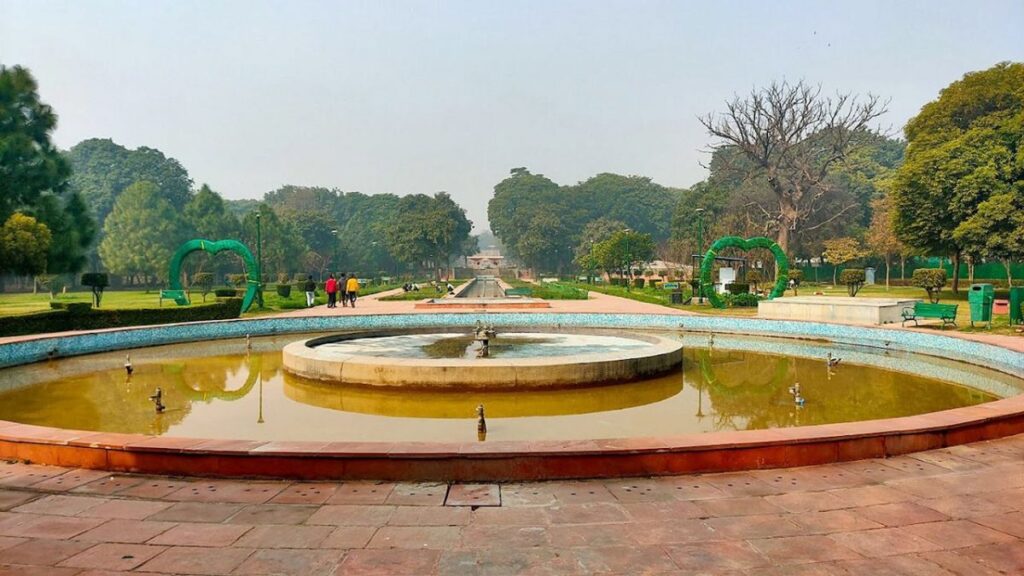
Talkatora Garden, situated on Mother Teresa Crescent in central Delhi, is a historic Mughal‑era oasis turned into one of the city’s serene parks in Delhi.
Its name, derived from “tal” (tank) and “katora” (bowl), refers to an old water reservoir nestled within a natural depression formed by the Ridge—echoing its past as a medieval swimming pool and ornamental tank.
Today, terraced lawns, colourful flowerbeds, and restored water channels make it a vibrant green space amid urban bustle.
Beyond its botanical charm, Talkatora Garden is alive with community activity. Managed by NDMC, it hosts horticultural shows, cultural events, picnics, and family outings—especially in spring when blossoms and their fragrance peak .
A children’s play area, open‑air gym, amphitheatre (Sur‑Taal), and adjacent Talkatora Indoor Stadium (with badminton, table‑tennis, swimming, even Commonwealth Games history) turn this into more than just a park in Delhi—it’s a year‑round recreation hub.
Most compelling is the layer of history beneath the greenery: remnants of Mughal embankments and pavilions—possibly Firoz Shah Tughlaq-era constructions—still mark the landscape, while the area witnessed pivotal battles like the 1737 Maratha raid and skirmishes in 1738 and 1857.
For those exploring parks in Delhi, Talkatora offers a unique blend of horticulture, heritage, leisure, and community—all in one urban bowl.
- Timings:
- Summer (April–September): 5:00 AM – 8:00 PM
- Winter (October–March): 6:00 AM – 8:00 PM
- Entry Fee: Free for all visitors
- Nearest Metro Station: Patel Chowk
- Best Time to Visit: Early mornings or late afternoons offer a cooler and more tranquil experience, especially during Delhi’s hot summer months
Swarn Jayanti Park or Japanese Park, Rohini
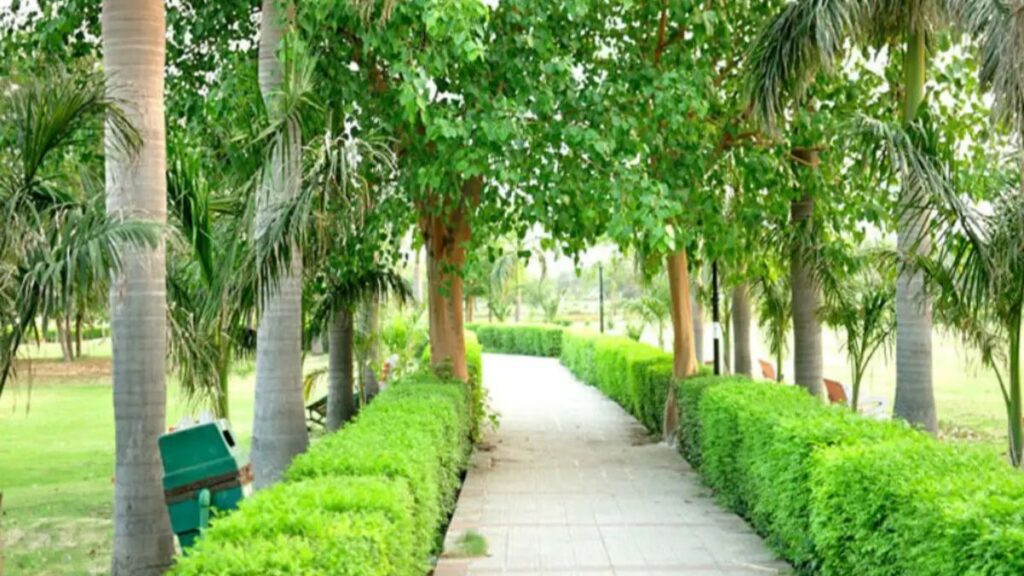
Swarn Jayanti Park, popularly known as Japanese Park, is one of the largest and most cherished parks in Delhi, located in Sector 10/11, Rohini.
Spanning an impressive 237–250 acres, it was inaugurated in 1997 to mark India’s Golden Jubilee and thoughtfully styled with Japanese-inspired features alongside Mughal, topiary, and sculpture gardens.
Lush lawns, manicured pathways, tranquil lakes with boating, and varied zones—from zen-like rock gardens to floral patches—make it a serene escape in Northwest Delhi.
The park offers a wide range of recreational amenities, making it a true community hub. Visitors can enjoy jogging tracks and cycling trails, dedicated children’s playgrounds, open-air fitness zones and skating arenas, plus a replica jet and sculpture installations .
Seasonal highlights include bustling flower festivals in spring, cultural fairs, and boating on the lakes via paddle and shikara boats—ideal for family outings or peaceful evenings..
Visiting details: Open daily from ~5 AM to 8 – 11 PM (most sources say until evening, DDA listing shows 8:30 PM, others extend to 11 PM) . Entry is free, with a token fee for boating.
The nearest metro stops are Rohini West and Rithala on the Red Line (within ~1 km)
With ample parking, seating, restrooms, kiosks, and serene water bodies, it’s popular for picnics, jogging, nature walks, and bird-watching (including egrets and storks).
- Timings: 5:00 AM – 11:00 PM (Daily)
- Entry Fee: Free for all visitors
Asola Wildlife Sanctuary, Asola
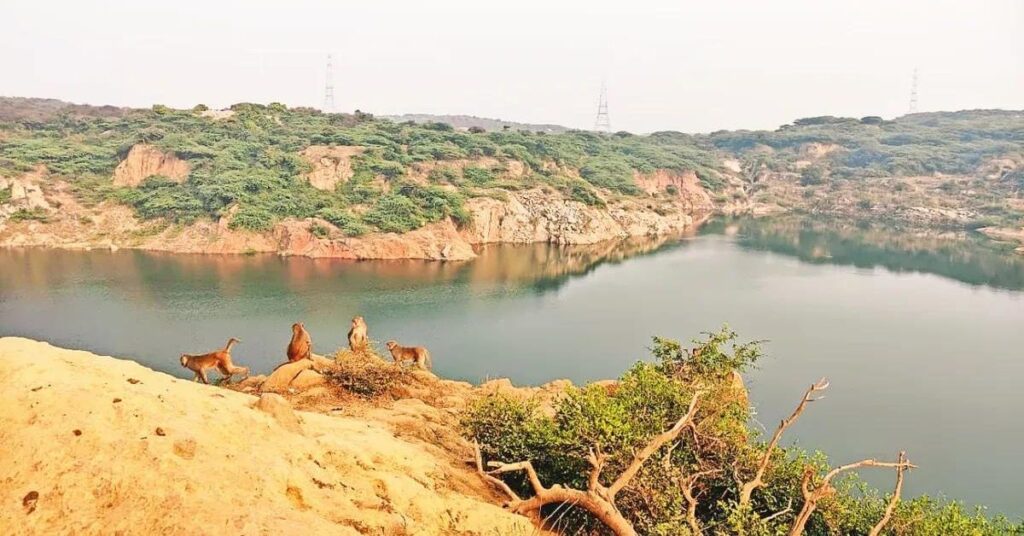
Asola Bhatti Wildlife Sanctuary—commonly called Asola Wildlife Sanctuary—is one of the largest natural parks in Delhi, sprawling over about 6,874 acres (32.7 km²) on the Southern Ridge of the Aravalli hills, along the Delhi-Haryana border.
Established in 1986 and expanded over time, it protects one of the last remnants of semi-arid Aravalli forest within the city’s boundaries, making it a vital green lungs and biodiversity hotspot .
The sanctuary offers a very different park-type experience: rugged trails, rocky outcrops, seasonal lakes from abandoned quarries, and a thriving ecosystem. It’s home to over 200 bird species, including peafowl, sandgrouse, black francolins, raptors, and migratory birds in winter .
It also shelters mammals like nilgai (blue bulls), blackbuck, jackals, jungle cats, porcupines, and even a small leopard population—camera traps confirmed eight leopards, with cubs sighted recently, and conservation efforts aim to grow their numbers.
Beyond wildlife, the park also features extensive ecological facilities. The Conservation Education Centre offers guided nature walks, seven themed trails (like Blue-bull, Sparrow, Palash trails), a butterfly park and an Aravalli Forest Centre, and a 16 km “Neeli Jheel” cycle or self-drive track with viewpoints and signage about local flora and fauna.
It is managed as a model urban wildlife sanctuary, featuring watchtowers, ongoing restoration projects to revive native microhabitats, and buffer-zone protection from mining and development.
- Timings: 7:00 AM to 3:00 PM (Tuesday to Sunday). Closed on Mondays
- Entry Fee: Free
Also Read: 20 Best Places to Visit in Jaipur
Bharat Darshan Park, Punjabi Bagh
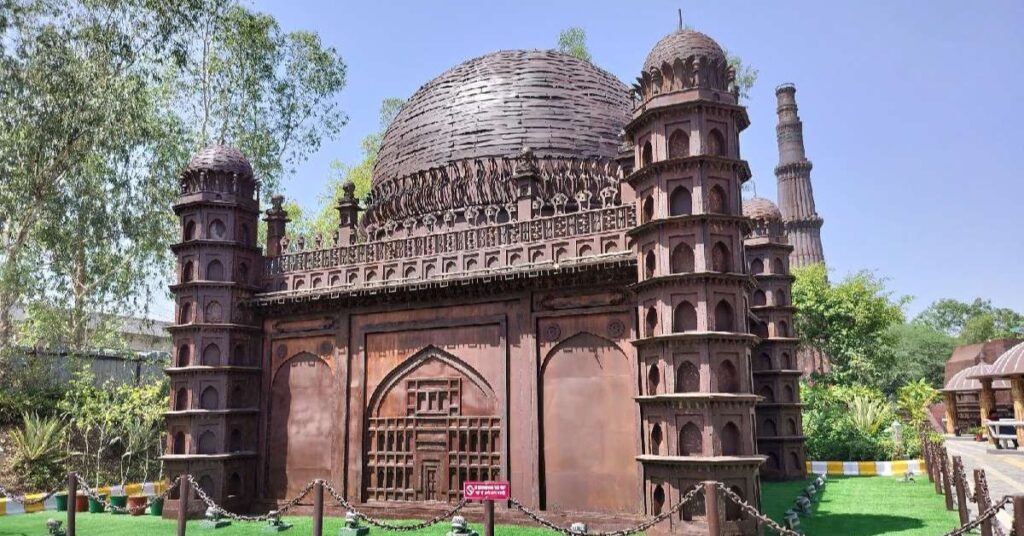
Bharat Darshan Park in Punjabi Bagh is a unique concept among parks in Delhi—an eco‑art space where scrap transforms into miniature marvels of India’s architectural heritage.
Spread over about 8.5 acres, the Park features 22 replicas—including the Taj Mahal, Qutub Minar, Konark Temple, Mysore Palace, Meenakshi Temple, and Gateway of India—painstakingly crafted from roughly 350 tonnes of metal waste by around 200 artists in just 22 months.
Powering its eco‑vision, the Park uses solar panels and a sewage treatment plant for lighting and irrigation, embodying Swachh Bharat’s “waste to value” spirit.
As one of the newer parks in Delhi, Bharat Darshan Park is well‑equipped for families and visitors—boasting a 1.5 km walking track, amphitheatre, children’s play area, food court, benches, fountains, and vibrant lighting whose evening glow enhances the scrap‑built monuments.
Entry fees are tiered to encourage visits—Adult tickets cost ₹100 (daytime) or ₹150 (evening), children’s tickets are ₹50/₹75, with concessions for seniors and school groups; park hours run from 10 AM–10 PM daily except Mondays.
- Timings: 10:00 AM – 10:00 PM (Tuesday to Sunday). Closed on Mondays
- Entry Fee:
- Adults: ₹100 (Weekdays) / ₹150 (Evenings & Weekends)
- Children (3–12 years): ₹50 (Weekdays) / ₹75 (Evenings & Weekends)
- Senior Citizens (Above 60): ₹50 (Weekdays) / ₹75 (Evenings & Weekends)
- Children Below 3 Years: Free
- School Students: ₹40–₹60 (depending on group size)
- How to Reach: Nearest Metro Station is Punjabi Bagh West Metro Station (Green and Pink Lines)
Humayun’s Tomb Park, Nizamuddin East
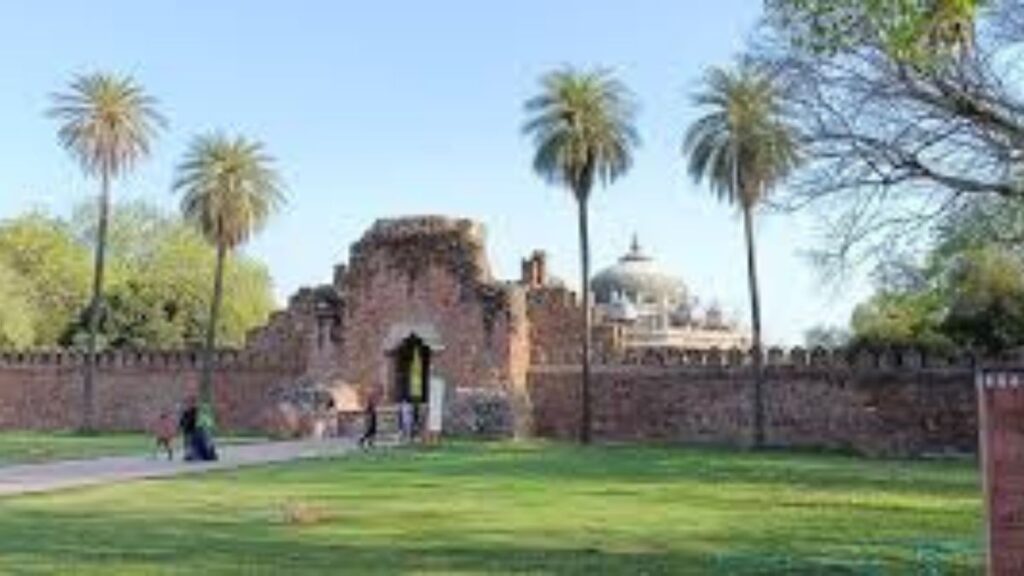
Humayun’s Tomb Park is a splendid example of Mughal-era parks in Delhi, set in a perfectly symmetrical Persian-style Char Bagh (four-part garden) around the grand mausoleum built in the 1560s by Hamida Banu Begum for Emperor Humayun.
It spans roughly 12–13 hectares (about 30 acres) and retains the grid of water channels and fountains symbolizing the rivers of paradise, with the iconic red sandstone-and-white-marble tomb at its center.
A monumental restoration led by the Archaeological Survey of India and Aga Khan Trust from 1997 to 2003 revived the park’s original features—reworking the water circulation system using gravity-flows with precise gradients, replanting lawns and over 2,500 native trees (such as mango, neem, jasmine), and resurrecting dormant fountains.
These efforts strengthened the park’s UNESCO World Heritage status granted in 1993, preserving its design integrity and blending historical authenticity with lush greenery.
Today, Humayun’s Tomb Park is open daily from sunrise to sunset and attracts visitors for both its architectural majesty and serene ambiance.
Beyond the main tomb, the complex includes several accompanying garden-tombs—such as Isa Khan’s tomb, Arab Serai, Barber’s Tomb—each integrated into the greenery, creating a layered heritage park in Delhi.
Whether for heritage tours or peaceful strolls amid shaded water channels and flowering lawns, it remains one of Delhi’s most historic and beautiful parks.
- Entry Fees: Indians: ₹40, Foreigners: ₹600, Video filming: ₹25
- Visiting Hours: The park is open daily from sunrise to sunset, with the tomb itself accessible from 7:00 AM to 7:00 PM. The best time to visit is in the morning when the garden is serene and well-maintained
Kalkaji District Park, Kalkaji
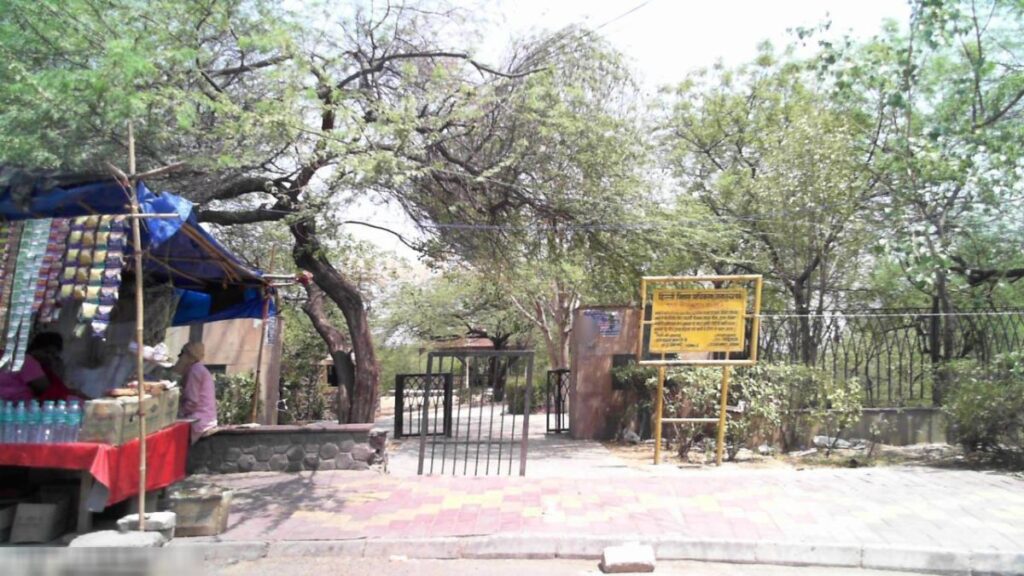
Kalkaji District Park, nestled near Nehru Place and Kalkaji Mandir, is a leafy park in Delhi known for its terraced lawns, water bodies, and well‐maintained jogging trails.
Spanning several acres just off Capt. Gaur Marg, it draws locals and office-goers from nearby Nehru Place for serene walks, morning exercises, or peaceful reading breaks in a green oasis amid urban bustle.
This park in Delhi offers useful amenities: open-air gym equipment, running tracks of about 1–1.5 km, children’s play zones, benches, restrooms, and shaded paths—making it ideal for families, fitness enthusiasts, and seniors alike.
It’s well connected via Govindpuri and Nehru Enclave metro stations (Magenta Line) and several bus routes, plus ample footfall due to nearby markets and Nehru Place’s commercial hubs.
Currently, the Delhi MCD is planning a revamp—funded under AMRUT—with new insect-themed play structures, pergolas, seating decks, garden huts, shade canopies, and inclusive facilities for differently-abled users, aiming to transform the space into a vibrant urban park of the future.
This redevelopment, expected to complete within months, is set to enhance safety and aesthetics in one of Kalkaji’s most popular parks in Delhi.
Roshanara Bagh

Roshanara Bagh is a historic Mughal-era park in Delhi, sprawling across approximately 57 acres in Shakti Nagar near Kamla Nagar and Delhi University’s North Campus.
Built around the 1650s by Princess Roshanara Begum—daughter of Shah Jahan—it exemplifies classic Mughal charbagh design with symmetrical waterways, raised canals bordered by flowering plants, and a central white marble pavilion marking her tomb.
Its layout and horticultural elegance place it among the grand heritage parks in Delhi.
After years of neglect, the garden has undergone extensive restoration led by the MCD since 2022: the four‑acre lake was desilted and refilled via a sewage treatment plant, path walkways were upgraded, and new bamboo huts, children’s play zones, and benches were installed.
Additionally, a “Jal Shakti Park” themed for water conservation was added, along with plans for a world-class nursery, watchtower, cafeteria, and playgrounds—a clear evolution from neglected Mughal garden to rejuvenated urban park in Delhi.
Today, Roshanara Bagh thrives as a multifunctional green space. It retains its historic charm with the central baradari tomb and water channels, while offering modern public benefits: boating on the restored lake, educational horticultural facilities, play areas, and community recreation.
As one of the more quietly rediscovered parks in Delhi, it blends Mughal heritage, ecological revival, and urban recreation—making it ideal for history buffs, bird-watchers, joggers, and families alike.
National Zoological Park, Mathura Road
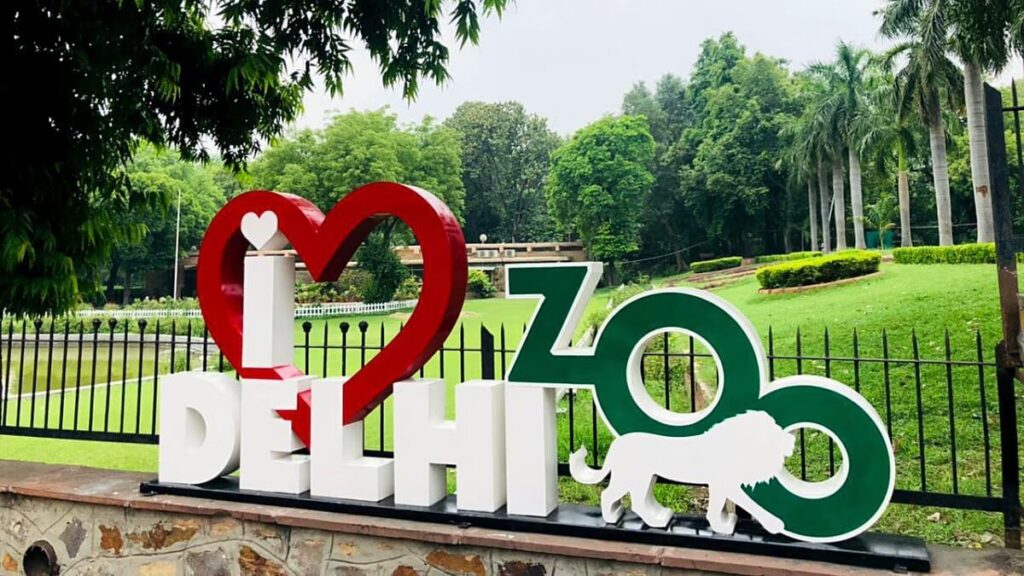
The National Zoological Park on Mathura Road—affectionately known as Delhi Zoo—is one of the most expansive and cherished parks in Delhi, spanning approximately 176 acres within the city’s heart near Purana Qila.
Opened in 1959 and recognized in 1982 as a model zoo, it is famed for its moated, bar-less enclosures and lush greenery housing over 1,300 animals and 127 species of mammals, birds, and reptiles.
This unique zoo-park hybrid offers more than shade and landscapes—it’s an immersive wildlife experience.
Visitors can spot majestic Bengal tigers (including white tigers), Asiatic lions, Indian rhinos, hippos, elephants, jaguars, and a diverse aviary; the reptile house showcases pythons, crocodiles, gharials, and cobras .
Conservation efforts are central: the zoo leads breeding programs for endangered species such as tigers, lions, rhinos, and the rare sangai deer.
Recent news highlights the birth of three white tiger cubs, signaling the zoo’s ongoing success in wildlife conservation.
A visit here blends leisure, education, and nature. Facilities include battery-operated trolleys, a toy train, cafeterias, maps, cloakrooms, accessible pathways, and rain shelters—all designed for family-friendly exploration.
Timings follow a two-slot system (morning and afternoon) and the park closes on Fridays.
Entry is very affordable for Indian residents (around ₹40), though foreign nationals are charged more.
Visitors should plan for a 2–3 hour stay to fully enjoy the winding trails, animal enclosures, and green corridors.
- Visiting Hours:
- Summer (1st April – 15th October): 8:30 AM – 5:30 PM (Ticket booking closes at 5:00 PM)
- Winter (16th October – 31st March): 9:00 AM – 4:30 PM (Ticket booking closes at 4:00 PM)
- Closed on Fridays
- Entry Fees:
- Indian Visitors: Adults: ₹80, Children (5–12 years): ₹40, Children (0–5 years): Free, Senior Citizens (60+ years): ₹40
- Foreign Visitors (SAARC countries): Adults: ₹200, Children (5–12 years): ₹100, Children (0–5 years): Free
- Foreign Visitors (Other countries):Adults: ₹400, Children (5–12 years): ₹200, Children (0–5 years): Free
Sultanpur Bird Sanctuary, Gurgaon
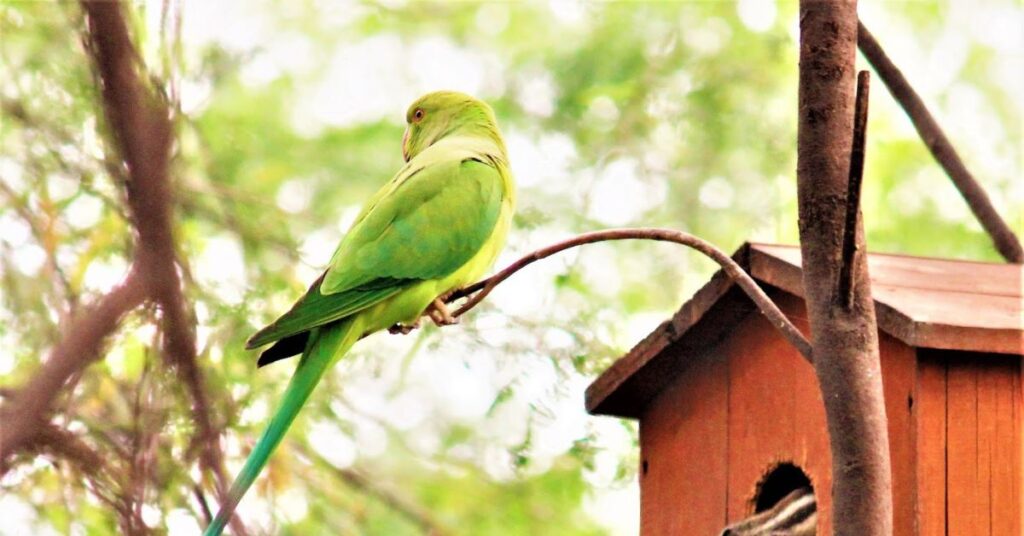
Sultanpur Bird Sanctuary—also known as Sultanpur National Park—is a significant natural park near Delhi, located about 46 km from Delhi and just 15 km from Gurgaon.
Mounted around a scenic lake, this sanctuary spans roughly 1.43 km² (142 ha) and is renowned as a park in Delhi’s broader region that attracts birders and nature enthusiasts throughout the year.
The sanctuary offers a rich and diverse avian experience, hosting more than 250 bird species. In winter, over 100 migratory species arrive—from Siberia, Europe, and Central Asia—including Siberian cranes, greater flamingos, rosy pelicans, black-winged stilts, and northern pintails.
Meanwhile, resident birds like painted and white-throated storks, egrets, kingfishers, parakeets, and black francolins enrich the landscape year-round.
Unlike manicured city gardens, this park in Delhi offers a wild, immersive wildlife environment. Visitors can explore four elevated watch towers for optimal bird viewing, extensive walking trails taking 1–2 hours, and an Interpretation Centre honoring ornithologist Dr. Salim Ali.
Facilities include well-maintained restrooms, drinking water, parking, and an on-site tourist complex offering lodging and dining.
Entry is very affordable—₹5 for Indians, ₹40 for foreigners, with a ₹10 camera fee—and the sanctuary operates from 7 AM to 4:30 PM, closing on Tuesdays.
For anyone interested in wildlife, conservation, or simply escaping the city’s pace, Sultanpur stands out among parks near Delhi for its stunning biodiversity, serene lagoons, and year-round interest.
Winter visits are especially rewarding, when migratory flocks paint the skies—just be sure to go early, carry binoculars, and enjoy a quiet, nature-filled few hours.
- Visiting Hours: 7:00 AM to 4:30 PM (Daily). Special permission required for entry before 7:00 AM. Apply at least 2 days in advance to the Divisional Wildlife Officer. Closed on Tuesdays
- Entry Fees: Indian Nationals: ₹5 per person, Foreign Nationals: ₹40 per person, Still Camera: ₹25, Video Camera: ₹500,
- Parking: Vehicles must be parked outside the sanctuary; parking charges apply