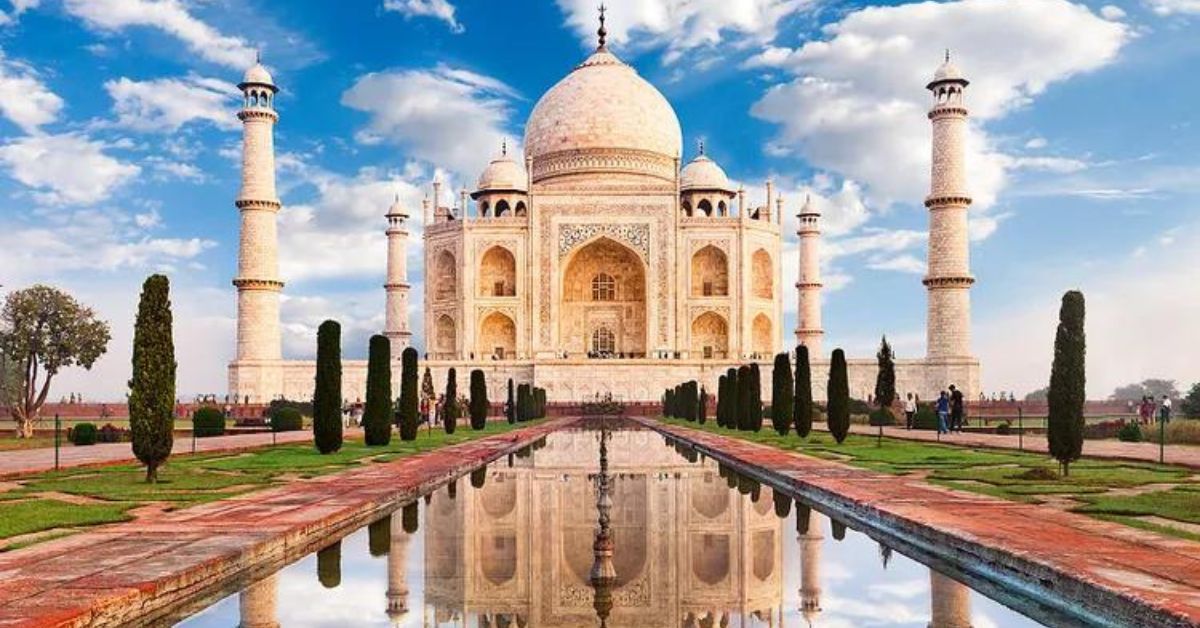
Places to Visit in Agra are a perfect blend of architectural brilliance, rich history, and cultural heritage. The most iconic monument in the city is undoubtedly the Taj Mahal, a UNESCO World Heritage Site and one of the Seven Wonders of the World.
Built by Emperor Shah Jahan in memory of his wife Mumtaz Mahal, this white marble mausoleum stands as a symbol of eternal love and attracts millions of visitors every year. The beauty of the Taj Mahal at sunrise and sunset is a breathtaking experience that tops every traveler’s list.
Another must-see among the places to visit in Agra is the Agra Fort, a magnificent red sandstone structure that once served as the main residence of the Mughal emperors.
This UNESCO World Heritage Site houses several impressive buildings, such as the Jahangir Palace, Khas Mahal, and the Diwan-i-Khas, offering a glimpse into the opulent lifestyle of the Mughal royalty. The fort’s strategic design and grandeur reflect the architectural mastery of the era and make it a fascinating stop for history lovers.
Apart from the Taj and the Fort, places to visit in Agra also include the serene Mehtab Bagh, located across the Yamuna River, which offers a splendid view of the Taj Mahal from a different angle.
Visitors can also explore Tomb of Itimad-ud-Daulah, often referred to as the “Baby Taj,” which is an exquisite marble tomb that predates the Taj Mahal and showcases intricate inlay work.
The bustling markets of Agra, like Sadar Bazaar and Kinari Bazaar, are perfect for shopping traditional handicrafts, leather goods, and local sweets, adding a vibrant local flavor to the sightseeing experience.
Also Read: 20 Best Places to Visit in Ayodhya
List of Famous Places to Visit in Agra
Tajmahal
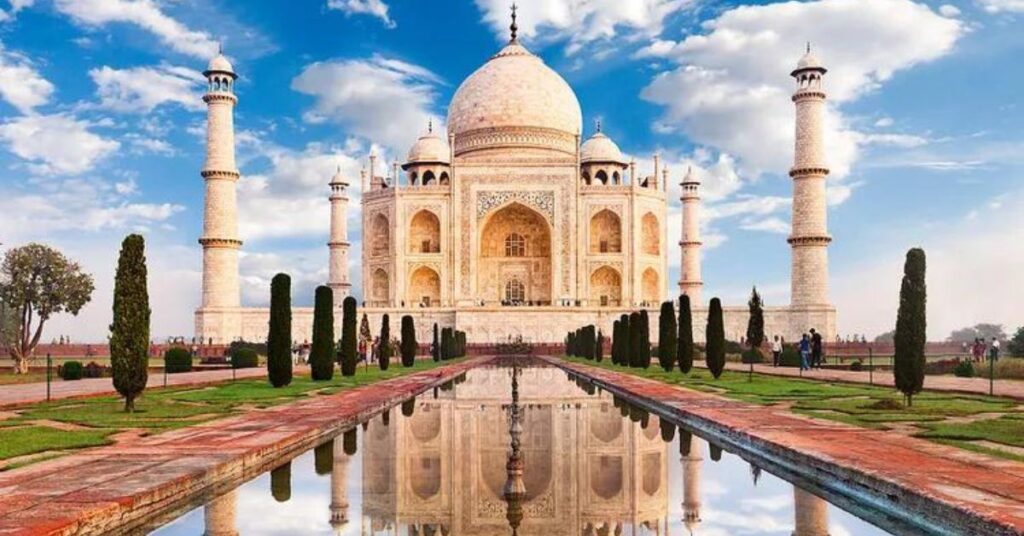
The Taj Mahal stands as one of the most iconic places to visit in Agra, drawing millions of visitors from around the world. Built by the Mughal Emperor Shah Jahan in memory of his beloved wife Mumtaz Mahal, this white marble mausoleum is a symbol of eternal love.
Located on the banks of the Yamuna River, the Taj Mahal is renowned for its stunning architecture, intricate carvings, and the symmetry of its design. The play of light on its marble surface at different times of the day adds to its charm, making it a must-see monument for history lovers, architects, and romantics alike.
Among the places to visit in Agra, the Taj Mahal tops the list not just for its beauty but also for its cultural and historical significance. Recognized as a UNESCO World Heritage Site, it represents the pinnacle of Mughal architecture, blending Persian, Islamic, and Indian styles.
Visitors can stroll through its lush gardens, admire the fine marble inlay work, and explore the surrounding complex that includes a mosque and guest house. Whether visiting at sunrise or sunset, the Taj Mahal leaves an indelible impression on all who experience its grandeur.
Agra Fort
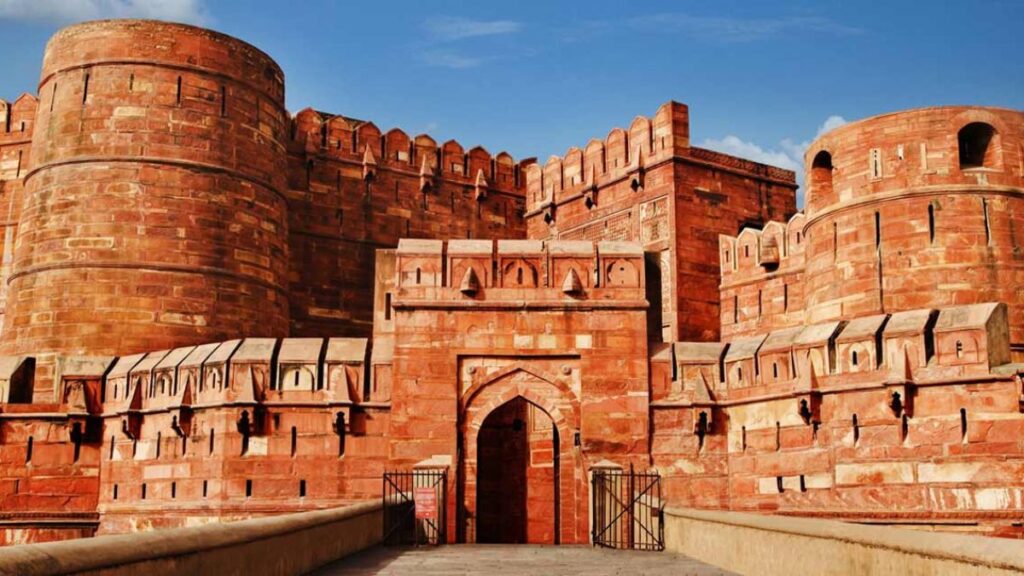
Agra Fort is one of the most impressive places to visit in Agra, offering a glimpse into the grandeur of the Mughal Empire. This massive red sandstone fort was commissioned by Emperor Akbar in 1565 and later enhanced by his successors, including Shah Jahan.
Enclosed within its high walls are several beautiful structures such as the Jahangir Mahal, Khas Mahal, Diwan-i-Khas, and Diwan-i-Aam. The architecture of Agra Fort reflects a seamless fusion of Islamic and Hindu styles, showcasing the artistic brilliance of the Mughal era.
Among the historical places to visit in Agra, Agra Fort holds a special place due to its strategic importance and royal legacy. It served as the main residence of the Mughal emperors until the capital shifted to Delhi.
The fort also offers a fascinating view of the Taj Mahal from its balconies, especially from the Musamman Burj, where Shah Jahan was imprisoned by his son Aurangzeb.
With its rich history and architectural elegance, Agra Fort provides visitors with a deep understanding of India’s regal past.
Mehtab Bagh
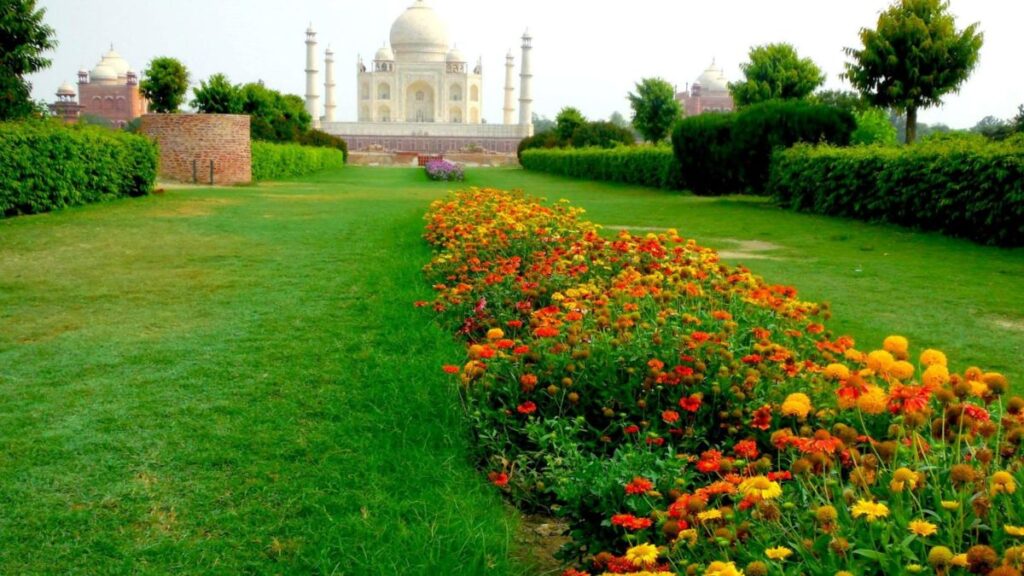
Mehtab Bagh is a serene and scenic garden located on the northern banks of the Yamuna River, directly opposite the Taj Mahal, and is one of the underrated yet beautiful places to visit in Agra.
Originally built by Emperor Babur as the last in a series of eleven Mughal gardens, Mehtab Bagh offers a perfectly aligned view of the Taj Mahal, especially stunning during sunset.
The garden is meticulously laid out with pathways, fountains, and pavilions that reflect the grandeur of Mughal landscaping traditions.
Among the peaceful places to visit in Agra, Mehtab Bagh stands out as a tranquil retreat away from the bustling crowds. It provides an ideal spot for photography and relaxation while offering an unmatched perspective of the Taj Mahal without obstruction.
The garden is also an important archaeological site, as it played a significant role in the original architectural planning of the Taj Mahal complex.
A visit to Mehtab Bagh not only enhances your Taj Mahal experience but also offers insight into the thoughtful design aesthetics of the Mughal era.
Also Read: 20 Best Places to Visit in Varanasi
Itimad-ud-Daulah
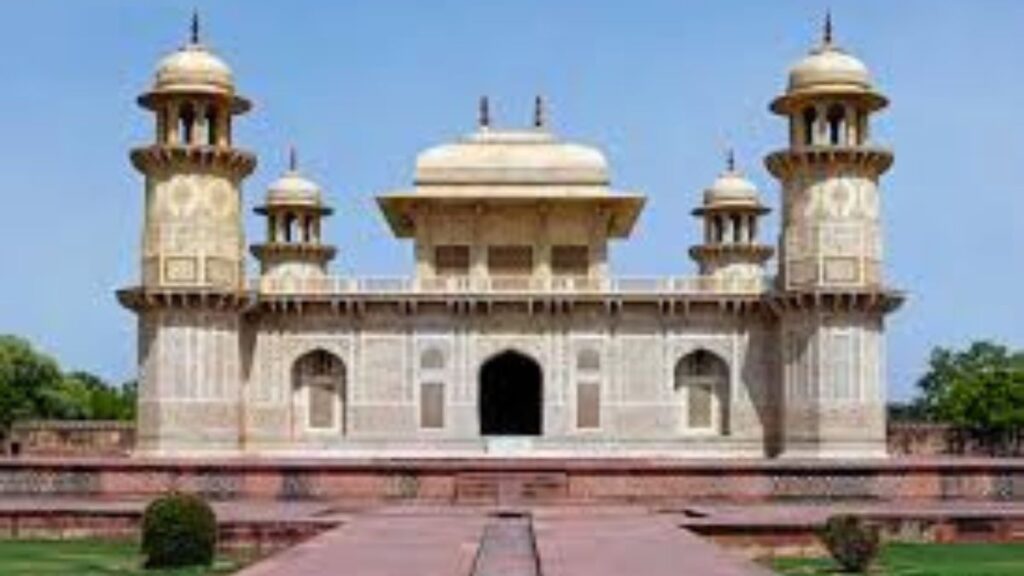
Itimad-ud-Daulah, often referred to as the “Baby Taj,” is one of the most exquisite places to visit in Agra, known for its delicate craftsmanship and historical importance.
Built by Nur Jahan, the wife of Emperor Jahangir, in memory of her father Mirza Ghiyas Beg, this tomb predates the Taj Mahal and is considered a precursor to its grand design.
Constructed entirely of white marble and adorned with intricate inlay work, Itimad-ud-Daulah marks a transition in Mughal architecture from red sandstone to marble.
Among the many places to visit in Agra, Itimad-ud-Daulah stands out for its elegance and serene atmosphere. Situated on the eastern bank of the Yamuna River, the monument is surrounded by a charming garden laid out in the classical Charbagh style.
The tomb’s detailed lattice screens, floral motifs, and symmetrical design showcase the artistic finesse of Mughal artisans. A visit to this site provides a quieter, more intimate look at Mughal art and architecture, making it a must-see for history enthusiasts and architecture lovers alike.
Gurudwara Guru Ka Taal
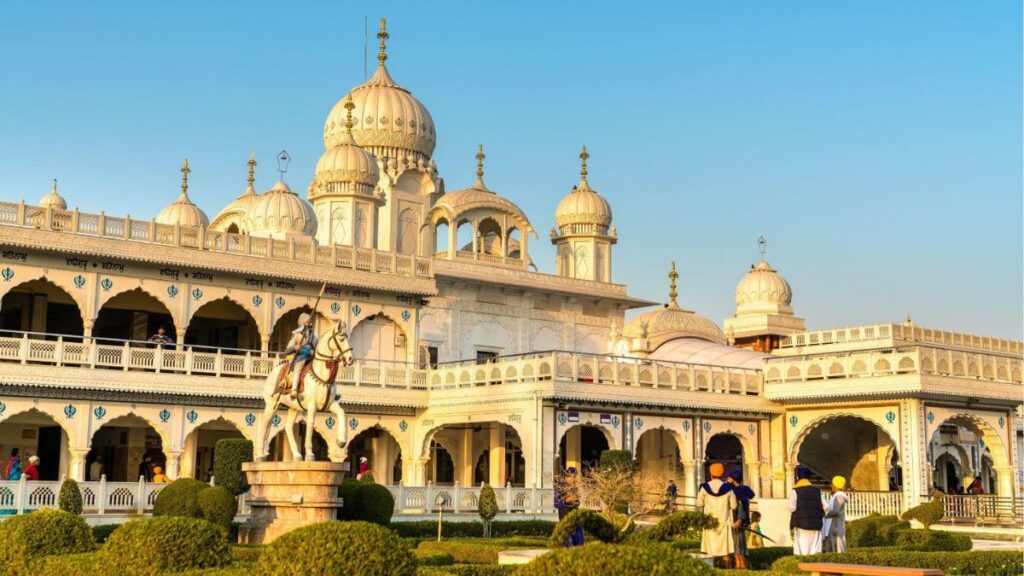
Gurudwara Guru Ka Taal is a revered Sikh pilgrimage site and one of the spiritually significant places to visit in Agra. Built in memory of the ninth Sikh Guru, Guru Tegh Bahadur, this Gurudwara marks the spot where he voluntarily offered himself for arrest to Aurangzeb.
The structure, originally a water reservoir dating back to the 17th century, was later transformed into a beautiful Gurudwara with white marble domes, intricately carved pillars, and serene surroundings that reflect peace and devotion.
Among the sacred places to visit in Agra, Gurudwara Guru Ka Taal holds deep historical and religious value for devotees and visitors alike. It not only commemorates an important moment in Sikh history but also stands as a symbol of sacrifice and faith.
Pilgrims from across the country visit this site to pay their respects, especially during special occasions and Gurpurabs. The peaceful ambiance, combined with its architectural beauty and historical legacy, makes it a unique and enriching stop for those exploring Agra beyond its Mughal monuments.
Fatehpur Sikri
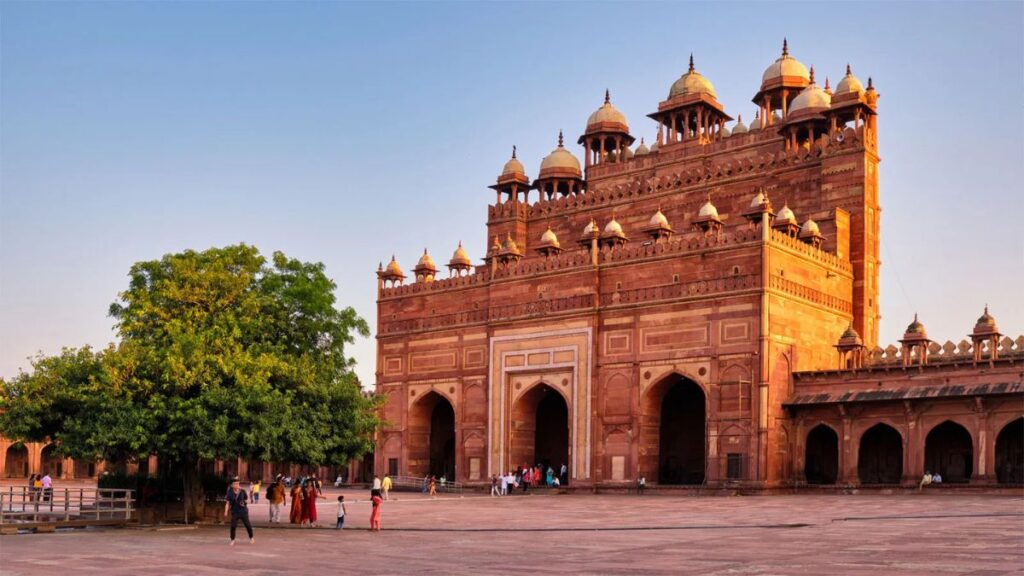
Fatehpur Sikri is a majestic UNESCO World Heritage Site and one of the most captivating places to visit in Agra. Built by Emperor Akbar in the 16th century, this former Mughal capital is an architectural masterpiece showcasing a blend of Persian, Islamic, and Indian styles.
The complex includes stunning structures such as Buland Darwaza, Jama Masjid, Panch Mahal, and the Tomb of Salim Chishti, each reflecting the artistic grandeur of the Mughal era.
Though the city was abandoned due to water scarcity, its well-preserved buildings continue to narrate the glory of Akbar’s vision and rule.
Among the many historical places to visit in Agra, Fatehpur Sikri offers a unique experience by presenting an entire city frozen in time. Walking through its palaces, courtyards, and mosques gives visitors a deep sense of the cultural and political life of the Mughal empire.
The serene surroundings and intricate carvings make it a photographer’s delight and a historian’s treasure. Just a short drive from Agra city, Fatehpur Sikri is a must-visit destination for anyone looking to explore the depth and diversity of India’s Mughal heritage.
Akbar’s Tomb
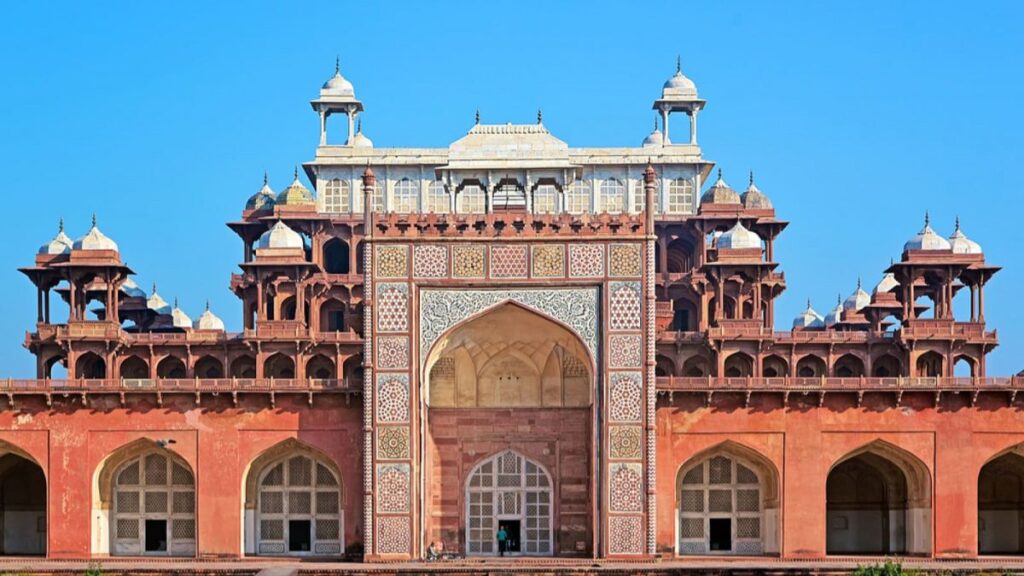
Akbar’s Tomb, located in Sikandra on the outskirts of the city, is one of the most significant places to visit in Agra for those interested in Mughal history and architecture.
This grand mausoleum was commissioned by Emperor Akbar himself and completed by his son, Jahangir, in 1613. The structure is a magnificent example of Indo-Islamic architecture, made of red sandstone and white marble, and adorned with intricate carvings and geometric patterns.
Set within a vast, serene garden, the tomb reflects Akbar’s vision of unity and inclusiveness, both in its design and in the emperor’s legacy.
Among the notable places to visit in Agra, Akbar’s Tomb stands out not just for its architectural beauty but also for its tranquil ambiance and historical relevance.
The surrounding gardens are home to deer and peacocks, adding to the peaceful environment that contrasts with the bustling city. Visitors can explore the various gates, pathways, and the main tomb chamber, which holds the remains of one of India’s greatest emperors.
A visit to Akbar’s Tomb offers a deeper understanding of the grandeur and philosophical ideals that defined the Mughal Empire.
Also Read: 30 Best Places to Visit in Delhi
Jama Masjid
Jama Masjid is one of the most prominent places to visit in Agra, showcasing the architectural brilliance of the Mughal era. Built in 1648 by Shah Jahan in honor of his daughter Jahanara Begum, this grand mosque is located opposite Agra Fort and stands as a fine example of Indo-Islamic architecture.
Constructed with red sandstone and adorned with white marble detailing, the mosque features a spacious courtyard, beautiful domes, and a striking prayer hall with intricate calligraphy. Its sheer size and artistic finesse make it a spiritual and cultural landmark in the heart of Agra.
Among the religious places to visit in Agra, Jama Masjid holds great historical and spiritual significance. It continues to serve as an active place of worship, drawing both devotees and tourists who come to admire its serene atmosphere and historic charm.
Despite being overshadowed by the more famous Taj Mahal and Agra Fort, Jama Masjid offers a more intimate glimpse into the religious life of the Mughal period. Its rich history and architectural elegance make it a worthwhile stop for anyone exploring Agra’s diverse heritage.
Chini Ka Rauza
Chini Ka Rauza is a unique and lesser-known gem among the many places to visit in Agra, renowned for its distinct Persian-influenced architecture and glazed tile work. This 17th-century tomb houses the remains of Allama Afzal Khan Mullah, a poet and the Prime Minister in the court of Emperor Shah Jahan.
What sets Chini Ka Rauza apart is its use of colorful glazed tiles—referred to as “chini” work—that decorate its facade, a style rarely seen in Mughal monuments. The tomb stands quietly on the banks of the Yamuna River, offering a peaceful setting away from the usual tourist crowds.
As one of the more offbeat places to visit in Agra, Chini Ka Rauza is perfect for travelers interested in exploring the artistic diversity of Mughal-era craftsmanship.
Though some parts of the structure have weathered over time, the remaining tile work and the overall design still speak volumes about the creativity and influence of Persian art during that period. Its tranquil ambiance and historical value make it an enriching stop for history enthusiasts, art lovers, and anyone seeking a quieter side of Agra’s rich heritage.
Wildlife SOS
Wildlife SOS is one of the most unique and meaningful places to visit in Agra, especially for those interested in wildlife conservation and ethical tourism.
Located near the Agra Bear Rescue Facility inside the Sur Sarovar Bird Sanctuary, this center is dedicated to rescuing and rehabilitating sloth bears that were once exploited in cruel street performances.
Visitors can take guided tours to learn about the history of the “dancing bears,” see the animals up close in a safe and natural environment, and gain insight into the ongoing efforts to protect India’s wildlife through education and sustainable practices.
What makes Wildlife SOS stand out among the places to visit in Agra is its mission-driven approach and the chance to witness real-time conservation work.
Beyond sloth bears, the organization is also involved in rescuing elephants, leopards, and other animals from abusive conditions across the country.
It’s an ideal destination for travelers seeking more than just architectural wonders, offering a deeper understanding of India’s biodiversity and the challenges faced in preserving it. A visit here adds a compassionate and educational dimension to your Agra itinerary.
The Shish Mahal (The Glass Palace)
The Shish Mahal, or “Palace of Mirrors,” is a stunning example of Mughal craftsmanship and one of the most enchanting places to visit in Agra.
Located within the grand Agra Fort complex, this exquisite chamber was designed during the reign of Shah Jahan as a royal retreat, adorned with countless tiny mirrors embedded into its walls and ceiling.
When light enters the room, the mirrored surfaces create a dazzling effect, making the entire space shimmer with reflections — a visual spectacle that captures the artistic brilliance of the Mughal era.
As one of the lesser-known gems among the places to visit in Agra, the Shish Mahal offers a glimpse into the luxurious lifestyle of the Mughal royalty. Its architectural finesse, combined with intricate mirror work and cool marble interiors, once provided both aesthetic beauty and comfort during the sweltering summers.
While parts of the structure are restricted to preserve its delicate artistry, visitors can still admire its design and imagine the opulence that once graced this sparkling hall.
Shahi Burj
The Shahi Burj, located within the magnificent Agra Fort complex, is a lesser-known yet historically significant structure that deserves a spot among the must-see places to visit in Agra.
This elegant tower served as the private working area of Emperor Shah Jahan and is believed to be the place where he planned some of his most iconic architectural projects, including the Taj Mahal.
The tower, though partially damaged over time, still showcases intricate Mughal architectural elements such as delicate carvings, arched windows, and a beautiful water cascade system used for natural cooling.
Among the many places to visit in Agra, the Shahi Burj offers a more intimate glimpse into the personal life of a Mughal emperor. From its vantage point, one can enjoy a scenic view of the Yamuna River and, on a clear day, even catch a glimpse of the Taj Mahal in the distance — a touching sight considering Shah Jahan spent his final years imprisoned in the fort, gazing at the monument he built for his beloved wife.
Visiting Shahi Burj allows travelers to connect emotionally with Agra’s imperial past while exploring a tranquil corner of the bustling fort complex.
Kalakriti Culture and Convention Centre
The Kalakriti Culture and Convention Centre is undeniably one of the most interesting places to visit in Agra, offering a cultural escape beyond the city’s famed Mughal monuments.
Built in 2006 by renowned artist Surendra Sharma, this striking red-sandstone and marble complex blends traditional and modern design, complete with intricate carvings that echo the region’s artistic legacy.
By day, guests can explore its handicraft showroom, featuring local marble inlay, brass, woodwork, and textiles—perfect for taking home a unique piece of Agra’s heritage.
In the evening, Kalakriti truly comes to life, establishing itself as one of the most memorable places to visit in Agra after sundown. The centerpiece is the spellbinding “Mohabbat – The Taj” musical drama, staged nightly in a 500–600 seat auditorium equipped with state‑of‑the‑art lighting, surround sound, and multilingual translation systems.
The grand finale features a hydraulic-lift Taj Mahal replica crafted from 70,000 pieces of marble rising on a lotus pedestal—an emotionally stirring homage to the love story behind the Taj .
Whether you’re after artistry, history, or evocative storytelling, Kalakriti provides a cultural experience that’s both heartfelt and enriching.
Frequently Asked Questions about Places to Visit in Agra
Is 1 day enough for Agra?
An early morning visit to the Taj Mahal (to avoid the crowds and catch the sunrise) followed by Agra Fort and later Mehtab Bagh at sunset gives a well-rounded experience of the city’s Mughal heritage.
However, if you’re interested in diving deeper into Agra’s lesser-known gems like Itimad-ud-Daulah (Baby Taj), Akbar’s Tomb, Fatehpur Sikri, or places like Wildlife SOS and Kalakriti Cultural Centre, then extending your trip to 2 days would allow for a more relaxed and enriching experience. So, while 1 day is enough for a highlight tour, 2 days are ideal for a fuller exploration.