Guwahati, the bustling city on the banks of the Brahmaputra River, offers a diverse range of experiences, making it one of the top places to visit in Guwahati.
Among the most revered spiritual sites is the Kamakhya Temple, a prominent Shakti Peeth that draws devotees from all over India.
Perched on Nilachal Hill, this ancient temple offers stunning views of the city and the river.
Another spiritual destination is the Umananda Temple, located on Peacock Island, which is considered the world’s smallest inhabited river island and can be reached via a scenic ferry ride.
For those interested in history and culture, Guwahati doesn’t disappoint. The Srimanta Sankardev Kalakshetra is a cultural complex dedicated to Assam’s art, music, and dance traditions, while the Assam State Museum showcases the state’s rich archaeological and ethnographic heritage.
One of the most educational places to visit in Guwahati is the Guwahati Planetarium, especially popular with children and astronomy enthusiasts. These destinations provide deep insight into Assam’s vibrant cultural landscape.
Nature lovers will find plenty of green escapes within the city. The Assam State Zoo cum Botanical Garden is home to diverse wildlife and rare plants, making it a great place for families.
For leisurely strolls or boating, Dighalipukhuri Lake offers a peaceful retreat in the middle of the city.
Don’t miss the Basistha Ashram and Nehru Park, both offering serene environments ideal for unwinding.
With such a variety of attractions, the city ensures there’s no shortage of amazing places to visit in Guwahati for every type of traveler.
Also Read:25 Best Places to Visit in Kolkata
Maa Kamakhya Temple
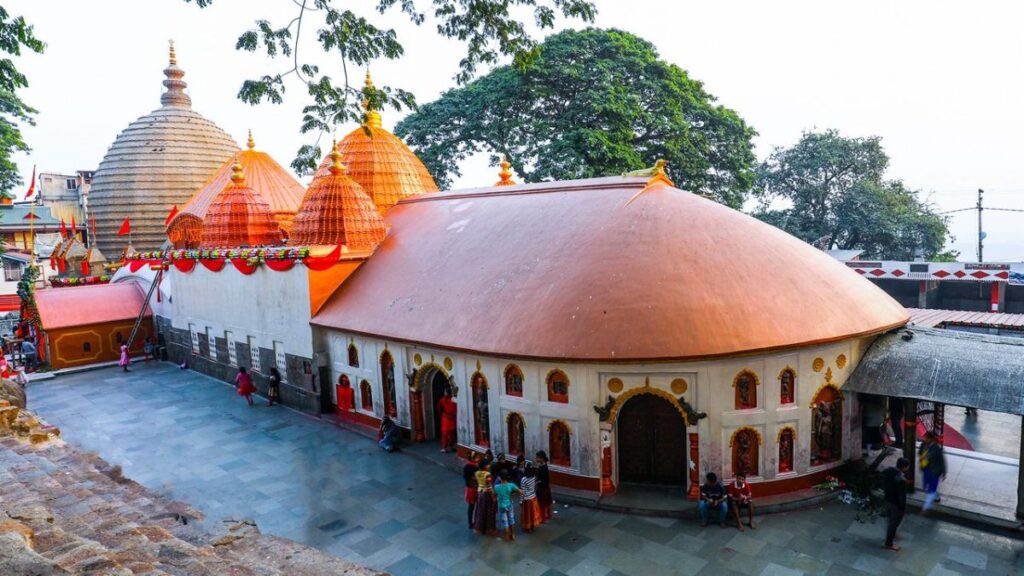
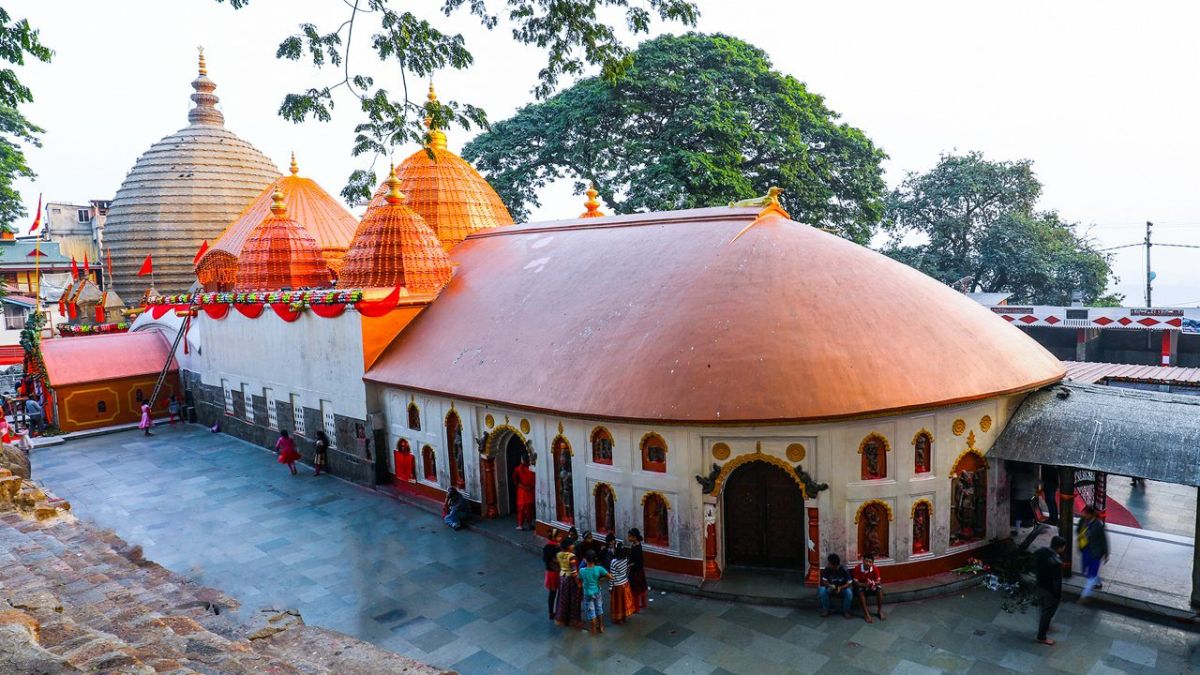
Maa Kamakhya Temple is one of the most iconic places to visit in Guwahati, perched atop Nilachal Hill overlooking the Brahmaputra River.
As one of the 51 revered Shakti Peethas, the temple is dedicated to Goddess Kamakhya—worshipped in the form of a yoni-shaped stone that is continuously nourished by a subterranean spring .
Its distinctive Nilachal-type architecture, featuring a bulbous dome and intricate brickwork, reflects centuries of devotional rebuilding by the Mlechchha, Koch, and Ahom dynasties.
Inside the temple complex, pilgrims can also explore shrines dedicated to the ten Mahavidyas and other forms of Shakti, as well as serene spots like Kamakhya View Point, Tortoise Pond, and sacred ponds such as Amrit and Soubhagya Kunds—ideal places to visit for spiritual insight and natural beauty.
What truly sets Kamakhya apart is the Ambubachi Mela, a widely respected annual festival in June that celebrates the Goddess’s menstrual cycle and symbolizes fertility and female power.
During this three‑day period, the temple remains closed to all, especially men, and reopens amid elaborate rituals, including the distribution of “Angodak” (holy water) and cloth—highly sought after by devotees.
Outside festival times, the temple welcomes visitors daily from 5:30 AM to 1 PM and 2:30 to 5:30 PM, offering both free darshan and VIP passes for an expedited experience.
Umananda Temple
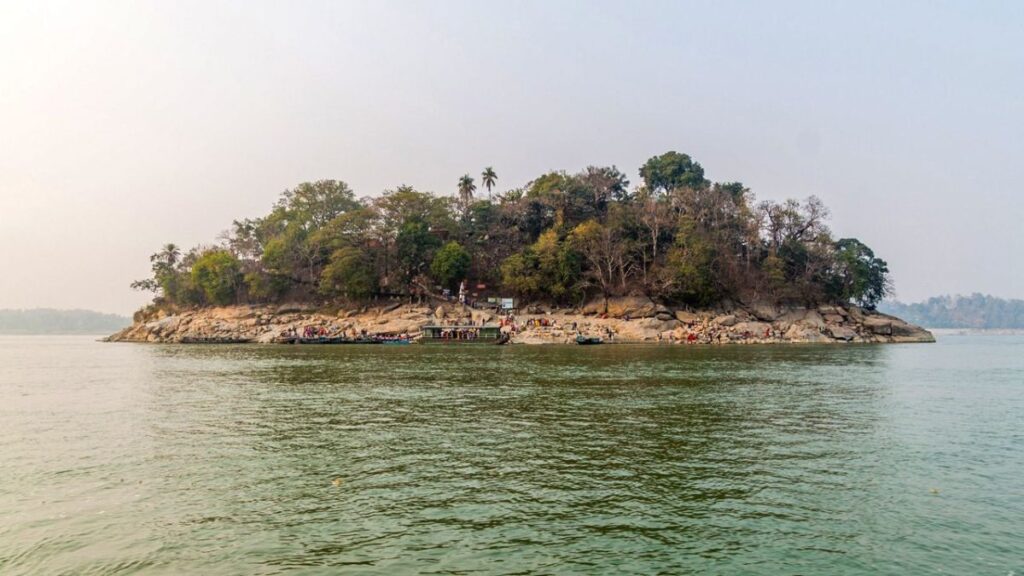
Umananda Temple is one of the most enchanting places to visit in Guwahati, uniquely located on Peacock Island—the smallest inhabited riverine island in the world—nestled in the middle of the mighty Brahmaputra River.
Built in 1694 on the orders of Ahom King Gadadhar Singha, this ancient Shiva temple sits atop Bhasmacala Hill, the very spot where legend says Lord Shiva burned Kamadeva to ashes, giving rise to the island’s name and spiritual aura.
Reached via a short 10‑minute ferry ride from Kachari Ghat (return fare ₹20 with generous private options), visitors must climb around 150–230 steep steps to reach the red-shikhara sanctum perched above serene riverbanks.
This scenic place to visit offers more than just spiritual solace—it’s a refreshing oasis away from city bustle, perfect for travellers seeking a mix of culture, legend, and natural beauty.
Inside the temple complex, in addition to the main Shiva linga, one finds rock-cut sculptures of Surya, Ganesha, Parvati, and the ten avatars of Vishnu, showcasing exquisite Assamese craftsmanship interwoven with Shaivaite and Vaishnavite heritage.
Best visited between October and March (or special festival days like Maha Shivaratri or Shiva Chaturdashi), the temple welcomes visitors from 5:30 AM to 6 PM with free darshan—all framed by tranquil river views and the whisper of Brahmaputra breezes
Srimanta Sankardev Kalakshetra
Srimanta Sankardev Kalakshetra is one of the most culturally enriching places to visit in Guwahati.
Named after the revered saint and cultural icon Srimanta Sankardev, this sprawling complex showcases Assam’s diverse heritage through museums, art galleries, and traditional architecture.
It offers visitors a glimpse into the region’s rich history, literature, and performing arts, making it a top destination for those interested in exploring Assamese culture.
Among the many places to visit in Guwahati, Kalakshetra stands out for its vibrant display of folk traditions and creative expressions.
The open-air theatre hosts cultural performances, while the heritage park and artist village replicate rural Assamese life.
Whether you’re a history enthusiast, an art lover, or simply exploring tourist places in the city, Srimanta Sankardev Kalakshetra promises a meaningful and memorable experience.
Assam State Museum
Assam State Museum is a prime place to visit in Guwahati, offering a window into the region’s rich past and vibrant culture. Located beside the historic Dighalipukhuri tank, the museum was founded in 1940 by the Kamarupa Anusandhan Samiti and later taken over by the Assam Government in 1953.
Its striking colonial-era building houses over 14,000 artifacts spread across 15 specialized galleries, including epigraphy, sculpture, textiles, tribal heritage, arms and ammunition, natural history, and folk arts.
Visitors to this must-visit cultural hub of Guwahati can expect to see everything from ancient stone inscriptions and Ahom dynasty relics to a taxidermied one-horned rhino and World War II memorabilia .
The facility also features reconstructed tribal huts, local handcraft exhibits, and a well-stocked library established in 1985, which includes rare manuscripts and periodicals on Assam’s art, culture, and history.
Whether you’re a history buff, a cultural enthusiast, or a curious traveler, Assam State Museum stands out among the top places to visit in Guwahati.
Guwahati Planetarium
The Guwahati Planetarium is an excellent place to visit in Guwahati, especially for families, students, and anyone curious about the night sky.
Opened in 1994, it’s the oldest and most advanced planetarium in Northeast India, featuring a distinctive dome and hybrid Chronos projection system for immersive stargazing experiences.
The dome theater seats about 140–150 visitors and showcases stunning visual journeys through space in Assamese, English, and Hindi, using high-resolution digital projectors and Dolby sound for a truly engaging experience .
Beyond the star shows, it’s a hands-on place to visit in Guwahati, offering astronomy workshops, sky-viewing sessions, and interactive exhibits. The facility includes a VR zone, a 3-D theater, and an astronomy gallery that traces humanity’s evolving understanding of the universe.
Telescopes are also available for real-time night-sky observation, often during celestial events. A new multi-activity center with a 15-D theater, auditorium, and observatory is underway, promising to enhance the experience even further.
Shows run regularly from around 11 AM to 4 PM (closed on the 1st of every month), with tickets priced at approximately ₹30–50 depending on the show or concession
Assam State Zoo cum Botanical Garden
The Assam State Zoo cum Botanical Garden is a popular place to visit in Guwahati, offering a lush natural escape in the heart of the city.
Established in 1957 and opened to the public in 1958, it spans 175 hectares (approximately 432 acres) within the Hengrabari Reserved Forest and is affectionately known as the “Green Lung” of Guwahati for its verdant surroundings.
Home to over 1,100 animals from more than 115 species—including iconic residents such as the one-horned Indian rhinoceros, Royal Bengal tiger, hoolock gibbon, Asiatic lion, clouded leopard, and exotic birds like hornbills and macaws—it offers an immersive wildlife experience for both families and nature enthusiasts.
In addition to its zoological exhibits, the garden features a serene botanical area showcasing rare orchids, medicinal plants, and native trees—ideal for relaxed nature walks and photography.
The zoo also offers numerous visitor-friendly amenities such as battery-operated carts, children’s play areas, food stalls, restrooms, and ample parking .
Open daily except Fridays—from 7 AM to 4:30 PM in summer and 8 AM to 4 PM in winter—entry is modestly priced at around ₹30 for adults and ₹10 for children, with higher rates for foreign visitors and camera permits.
Whether you’re traveling with family, interested in conservation, or simply seeking a refreshing break in Guwahati, the Assam State Zoo cum Botanical Garden is undoubtedly one of the top places to visit in the city.
Dighalipukhuri Lake
Dighalipukhuri Lake is one of the tranquil places to visit in Guwahati, nestled in the city’s heart near Assam State Museum.
This man-made, rectangular pond—roughly half a mile long—was reportedly excavated by King Bhagadatta of Pragjyotispura during his daughter’s svayamvara and later served as a naval dockyard under the Ahom rulers.
Its colonial-era canal was eventually sealed off, and parts filled to make way for the Circuit House and Gauhati High Court.
Today, Dighalipukhuri is a serene urban retreat, offering calm boat rides (at about ₹50 per person) and setting for rowing championships.
The surrounding park is perfect for evening strolls or morning jogs, with a children’s play area and nearby amusement facilities adding to family appeal .
Located within walking distance from major bus stops and rail stations, it’s one of the easily accessible places to visit in Guwahati .
Basistha Ashram
Basistha Ashram (also known as Basistha Temple) is one of the most peaceful places to visit in Guwahati, nestled on the outskirts of the city amid the Garbhanga Reserve Forest.
Constructed by Ahom King Rajeswar Singha around 1764, the octagonal brick temple is dedicated to Lord Shiva and stands at the banks of three mountain streams—Sandhya, Lalita, and Kanta—which later form the Basistha and Bharalu rivers.
The temple is built on the mythical hermitage of sage Vasistha, who is said to have meditated and spent his last days here; visitors can also find a cave deep within the ashram believed to be the spot of his penance.
Surrounded by lush greenery, a gentle waterfall, and a mountain stream, it’s both a spiritual retreat and a scenic picnic place to visit..
This is more than just a temple—it’s a serene natural getaway ideal for those seeking quiet reflection or a break from the city’s bustle.
The area is popular among locals for pilgrimage, Shivratri celebrations, and family outings . It’s approximately 10–14 km from Guwahati city center and is easily accessible by city bus, auto, or taxi via Beltola–Basistha Road.
The Ashram is open daily from around 6 AM to 9 PM, and entry is free—making it an accessible and rewarding place to visit in Guwahati.
Nehru Park
Nehru Park is one of the most delightful places to visit in Guwahati, nestled in the heart of Pan Bazaar opposite Cotton College.
Spanning approximately 24,120 m², this urban oasis—also known as “Church Field” in its past life—was transformed into a public park in 2004 and recently had a grand renovation in 2023.
The park is beautifully landscaped with lush lawns, vibrant flower beds, large trees, rock gardens, and a charming musical fountain that enchants visitors in the evenings .
This tranquil place to visit appeals to families, joggers, and art lovers alike. It features around 45 concrete statues depicting Assamese dance forms like Bihu, Deodhani, Ojapali, Bor Taal, and Jhumur—offering a cultural snapshot of the region.
Visitors can enjoy the open-air theatre, children’s play area (soon to include a toy train), jogging track, and water bodies enhanced by the recent.
It’s open from 10 AM to 8 PM (closed Thursday), and entry is super affordable: ₹30 (10–75 yrs), ₹10 (children 3–10), with free access for seniors, toddlers, and persons with disabilities.
Whether you’re seeking a peaceful retreat, cultural immersion, or a fun family outing, Nehru Park ranks high among places to visit in Guwahati. The freshly upgraded amenities and serene ambiance make it perfect any time of day or year.
Pobitora Wildlife Sanctuary
Pobitora Wildlife Sanctuary is a top place to visit near Guwahati, known for having the world’s highest density of the Indian one-horned rhinoceros—often referred to as the “Mini Kaziranga.”
Covering about 38.8 km², this sanctuary hosts over 100 rhinos within its 16 km² core rhino habitat, resulting in an astonishing density of roughly seven rhinos per square kilometre.
Situated just 30–40 km from Guwahati, Pobitora is highly accessible and frequently visited on day trips by road.
Beyond rhinos, the sanctuary is home to diverse wildlife including wild buffalo, golden jackal, barking deer, leopards, and hundreds of bird species—making it a haven for both wildlife and bird enthusiasts.
It’s an Important Bird Area, hosting over 2000 migratory and resident birds—earning it nicknames like “Bharatpur of the East”
Visitors can visit Pobitora using jeep safari, elephant safari, and even boat safari to explore the shelter-rich grasslands and wetlands.
Early morning safaris—jeep from 7 AM and elephant from 6:30 AM—offer the best chance to spot rhinos up close; boat safaris on the Brahmaputra may also let you catch glimpses of the Gangetic river dolphin.
Entry and safari permits are modestly priced (around ₹50–200, with safari costs varying for Indians/foreigners), with the season running from November to March—Pobitora closes during the monsoon.
A standout among places to visit, Pobitora offers accessible yet immersive wildlife experiences just a short drive from Guwahati.
Conservation efforts have led to zero rhino poaching for over a decade—making it a success story in eco-tourism.
Whether on safari, birdwatching, or boating, this sanctuary promises a memorable blend of adventure and nature right next to the city.
Navagraha Temple
Navagraha Temple is a unique and spiritually vibrant place to visit in Guwahati, perched atop Chitrachal (Navagraha) Hill just 3 km from the city.
Dedicated to the nine celestial bodies of Hindu Vedic astrology, the temple houses nine Shivalingams—each colorfully draped to represent Surya (Sun), Chandra (Moon), Mangala (Mars), Budha (Mercury), Brihaspati (Jupiter), Shukra (Venus), Shani (Saturn), Rahu, and Ketu—with the Sun’s linga placed centrally.
Built originally in the late 18th century by Ahom King Rajeswar Singha, the temple suffered significant damage in the 1897 earthquake but was carefully reconstructed, its brick sanctum intact and topped with a dome of corrugated iron sheets.
Regarded as both a sacred place to seek planetary blessings through Navagraha puja, homa, and shanti rituals, it also functions as a centre for astrology and astronomy, offering a library of ancient manuscripts and even a telescope for star observation.
Visiting this place in Guwahati offers more than just spiritual enrichment—it’s an experience of panoramic views over the city and the Brahmaputra, a mild trek up the hill, and a serene break from urban life.
Check-in times are generous (roughly 4 AM–9 PM), with the ideal period being winter mornings or late afternoons for comfortable weather and sweeping vistas.
All in all, the Navagraha Temple is one of the most distinctive places to visit in Guwahati, blending cosmic reverence, historical depth, and scenic beauty in one accessible hilltop sanctuary.
ISKCON Guwahati
ISKCON Guwahati, also known as Sri Sri Rukmini Krishna Temple, is one of the most spiritual places to visit in Guwahati.
Perched atop the Sarania hill in the Ulubari area—just about 2–3 km from Guwahati Railway Station—it offers serene views of the city and the Brahmaputra.
The gleaming white marble structure houses beautifully adorned deities of Lord Krishna and his consort Rukmini, creating a calming ambiance framed by lush greenery.
The temple organizes daily rituals like morning and evening aarti, chanting, bhajans, and Bhagavad Gita discourses, all open to everyone irrespective of caste or creed—making it a welcoming and peaceful place to visit for both pilgrims and tourists.
More than just a place of worship, ISKCON Guwahati is a vibrant cultural and community hub. It features a prasadam hall serving free sanctified vegetarian meals around 1:30 PM daily, a gift shop stocked with spiritual literature and souvenirs, and guesthouse accommodations.
The temple celebrates major festivals like Janmashtami, Holi, and the Jagannath Rath Yatra with great enthusiasm—particularly Janmashtami, which features week-long programs attracting large crowds.
Additionally, it hosts yoga, meditation, personality development, and stress-management workshops, along with outreach programs like Food for Life, making it a holistic, enriching place to visit in Guwahati.
Guwahati War Memorial
The Guwahati War Memorial is a poignant and inspirational place to visit in Guwahati, located on the northern bank of Dighalipukhuri in the Latasil–Uzan Bazar area.
Opened in late 2016, this memorial commemorates Assam’s brave martyrs from various conflicts, including World Wars, the Battle of Saraighat (1671), the 1962 Sino‑Indian War, the 1971 Indo‑Pakistan war, and the Kargil conflict.
Spread across landscaped lawns, the site features striking installations—a 43‑ton Vijayanta battle tank, a MiG‑27 jet, an Amar Jawan replica, and life‑sized sculptures depicting Ahom warriors on boats—that bring historical and modern military valor to life.
As one of the significant places to visit in Guwahati, the memorial blends reflection, education, and civic pride.
It houses relief panels, murals, plaques inscribed with soldiers’ names and stories, and a pavilion-style museum showcasing weapons, uniforms, medals, and Assam Regiment memorabilia.
Ideal for a contemplative morning or evening stroll, the site is calm, well-maintained, and free to enter.
Open 10 AM–11 AM and 1 PM–8 PM, it’s a meaningful stop for history enthusiasts or anyone seeking to honor Assam’s martial legacy.
Fancy Bazaar
Fancy Bazaar is one of the most lively places to visit in Guwahati, often described as the city’s commercial heart and the “Chandni Chowk of Guwahati”
Nestled just about 1 km from Guwahati railway station, this bustling market dates back to the colonial era—its name derived from “Phansi Bazaar,” the site of the city’s old gallows.
Today, its maze of narrow lanes is filled with shops selling everything from traditional Assamese silk sarees (Mekhela Chador), gamosas, tribal jewelry, handicrafts, and bamboo products to modern clothing, electronics, gadgets, and household goods.
Beyond shopping, Fancy Bazaar offers an authentic local atmosphere—and a street food haven to visit. Stalls serve momos, pani puri, jhal muri, chole bhature, and Assam tea, while well-known sweet shops like JB’s, Sharma Sweets, and Lakhi Cabin are popular pit-stops.
Whether you’re hunting for souvenirs, traditional crafts, or simply soaking in Guwahati’s vibrant street life, Fancy Bazaar is an unmissable place to visit in Guwahati—open roughly from 9 AM to 9 PM, with evenings especially lively on Fridays and weekends
Balaji Temple
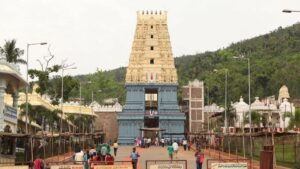
Purva Tirupati Sri Balaji Temple is a captivating place to visit in Guwahati, located approximately 9 km from the railway station in the Betkuchi/Garchuk area.
Built in 1998 as a replica of the famed Sri Venkateswara Temple in Tirupati, this pristine white south-Indian style temple sprawls across two acres and features an impressive 70-foot Rajagopuram, Maha Mandapam, Ardha Mandapam, and a sanctum sanctorum.
At its heart stands a majestic black granite idol of Lord Balaji, carved from a single stone that weighs four tonnes, with adjacent shrines for Goddess Padmavati, Lord Ganesh, Durga, and Garuda.
As one of the serene places to visit in Guwahati for both spiritual seekers and architecture lovers, the temple offers a rich schedule of rituals—morning and evening aartis, abhishekams, and festive celebrations like Brahmotsavam, Navaratri, Diwali, and Vaikunta Ekadashi.
The peaceful atmosphere is enhanced by beautiful gardens, a yagasala for homams, and a 300-seat auditorium hosting cultural events on Sundays and during festivals.
Open daily with timings typically from 7 AM to 11 AM and 3:30 PM to 8 PM (shorter evenings in winter), the site is easily accessible via buses, autos, or taxis—and includes facilities like parking, prasad distribution, and restrooms.