Ujjain, one of the seven sacred cities of Hinduism, is a treasure trove of spiritual and historical landmarks. Among the most iconic places to visit in Ujjain is the Mahakaleshwar Jyotirlinga, one of the twelve revered Jyotirlingas of Lord Shiva.
This temple is not only a religious centerpiece but also an architectural marvel. Devotees flock here especially for the early morning Bhasma Aarti, a unique ritual where sacred ash is offered to the deity.
The divine aura of the temple makes it a must-visit place in Ujjain for pilgrims and travelers alike.
Another important place to visit in Ujjain is the Kal Bhairav Temple, where the deity is offered liquor—a rare and fascinating ritual.
Nearby, Ram Ghat on the Shipra River offers a peaceful setting for evening aartis, attracting devotees and tourists alike.
Sandipani Ashram, believed to be the ancient learning center where Lord Krishna studied, is another serene and historically rich spot in the city. These places in Ujjain offer a perfect blend of mythology, devotion, and peaceful surroundings.
For those interested in heritage and science, the Vedh Shala or Ujjain Observatory, built by Maharaja Jai Singh, is a great place to visit.
It showcases ancient astronomical instruments and reflects Ujjain’s importance as a center of astronomy.
Other notable places to visit in Ujjain include the Harsiddhi Temple, Bade Ganeshji Ka Mandir, and ISKCON Temple, each adding a unique charm to your journey.
With its deep spiritual roots and timeless legacy, Ujjain offers visitors a soul-stirring experience.
Also Read: 9 Famous Temples in Ujjain You Must Visit
Mahakaleshwar Jyotirlinga Temple
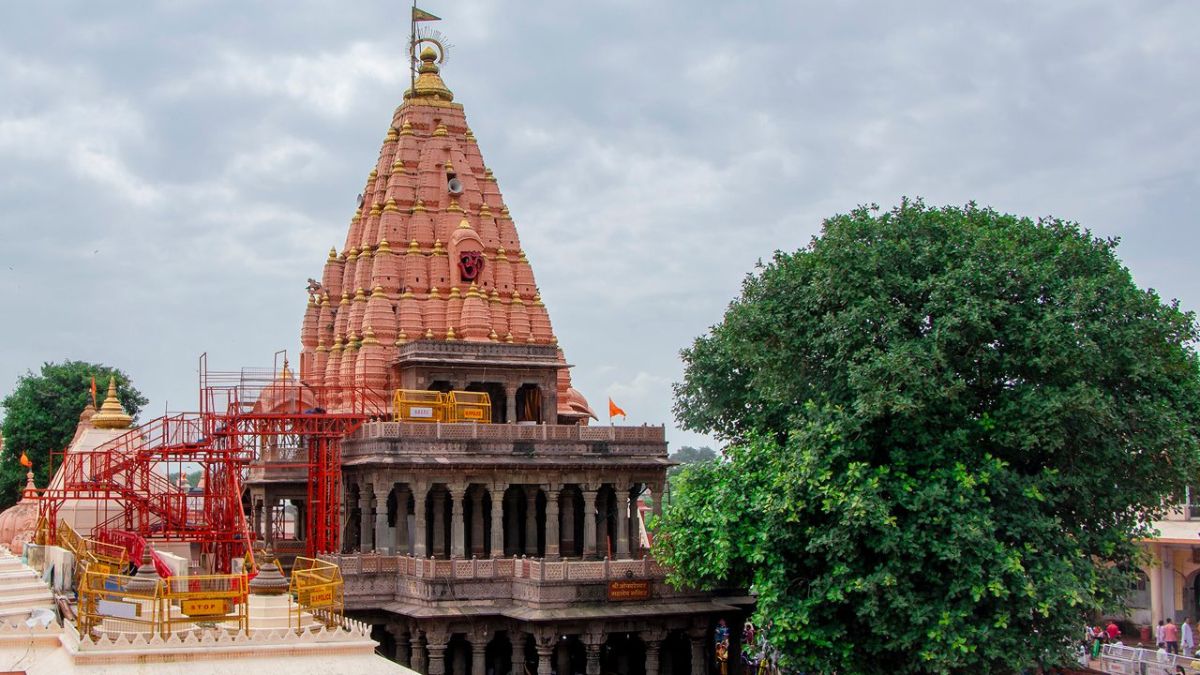
Mahakaleshwar Jyotirlinga Temple is one of the most sacred places to visit in Ujjain and stands as one of India’s twelve revered Jyotirlingas, dedicated to Lord Shiva. Uniquely, the lingam here is swayambhu—self-manifested—and faces south, symbolizing Shiva as Mahakal, the supreme destroyer of time and death .
Rich in architectural beauty, the temple showcases a blend of Maratha, Bhumija, and Chalukya styles across five stories, including an underground sanctum, and houses shrines to Ganesh, Parvati, Kartikeya, Nagchandreshwar, and Nandi.
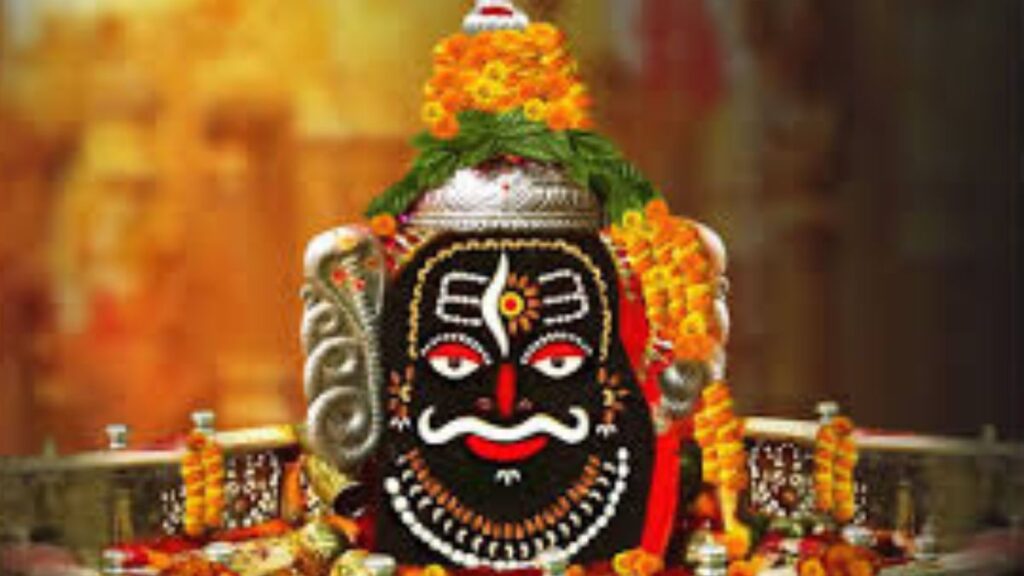
Visiting this temple offers a profound spiritual experience, highlighted by the world-famous Bhasma Aarti—a unique ritual at dawn where holy ash is applied to the lingam, signifying impermanence and devotion.
Open daily from 4 AM to 11 PM, the temple holds multiple aarti sessions, including morning, midday, evening, and night rituals.
Ideal times to visit Ujjain and witness the best spiritual ambiance are between October and March, spanning major festivals like Mahashivratri and Nag Panchami.
Conveniently located on the banks of the sacred Shipra River, it forms the heart of Ujjain’s pilgrimage circuit—surrounded by Ram Ghat, Harsiddhi Temple, Kal Bhairav Temple, and Sandipani Ashram.
Whether you’re drawn by its timeless Jyotirlinga sanctity or the mesmerizing Bhasma Aarti, Mahakaleshwar Temple is an unmissable place to visit in Ujjain, blending devotion, myth, and heritage into a single powerful experience.
Kal Bhairav Temple
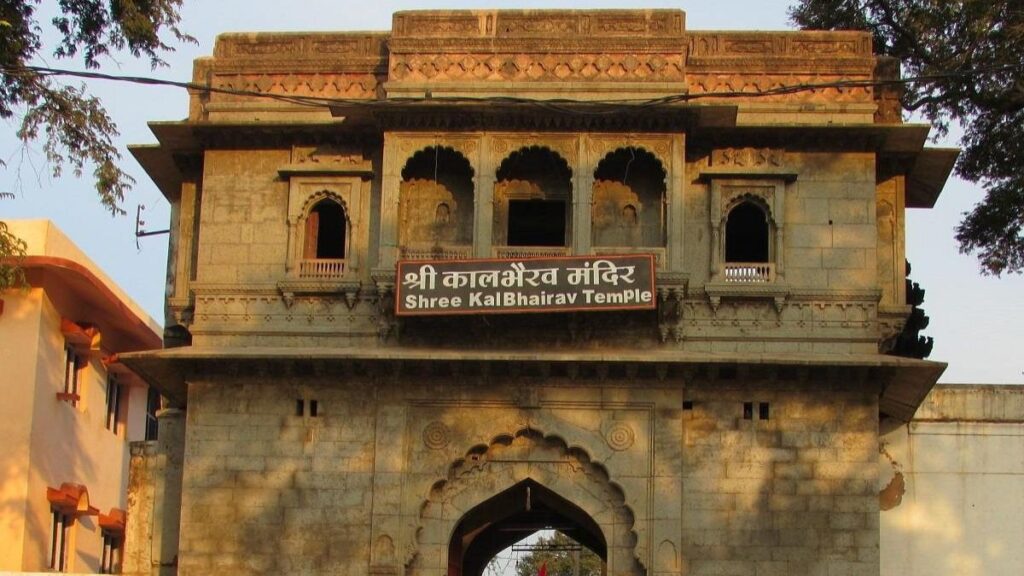
Kal Bhairav Temple is a compelling place to visit in Ujjain, dedicated to Kal Bhairav, a fierce form of Lord Shiva revered as the guardian deity of the city. Situated on the banks of the Shipra River in the Bhairavgarh area, this ancient temple draws hundreds of devotees daily .
Its origins trace back to an early temple reportedly built by King Bhadrasen, with surviving sculptures from the Paramara era (9th–13th century) and Maratha-era restorations led by Mahadaji Shinde, whose turban still adorns the idol.
What makes Kal Bhairav Temple truly unique is its ritual of offering liquor—a form of tantric worship known as madya—where devotees present bottles of alcohol to the deity, which are said to miraculously “disappear” when poured through a slit at the idol’s lips.
This striking tradition, combined with the temple’s intense spiritual atmosphere steeped in Shaivite tantra, offers an offbeat yet profound spiritual experience
Also Read: 20 Best Places to Visit in Gwalior
Ram Ghat
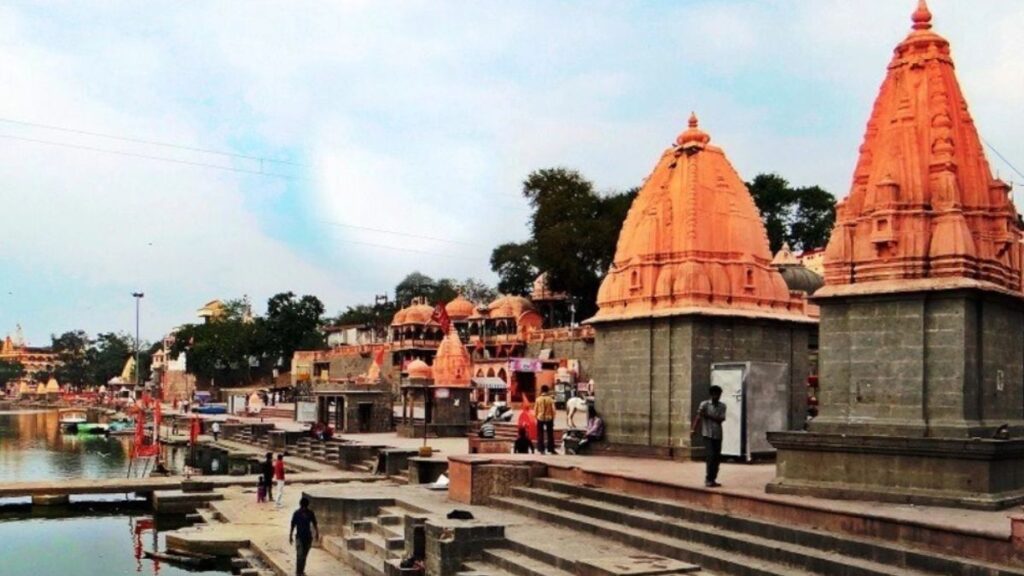
Ram Ghat is one of the most sacred and historic places to visit in Ujjain, nestled on the banks of the holy Shipra River near Harsiddhi Temple—just about 2–3 km from Ujjain Junction .
Believed to be the site where Lord Rama once performed sacred rites, Ram Ghat remains a central bathing ghat in Ujjain, traditionally used during the grand Simhastha Kumbh Mela every 12 years—drawing millions of pilgrims.
This is also the most enchanting spot in the evenings, when the Shipra aarti takes place. Priests lead a prayer ritual at sunset, offering lamps, flowers, conch shells, and incense—while the river reflects the glow and chant of mantras, creating a profoundly spiritual ambiance that resonates with visitors and locals alike
Sandipani Ashram
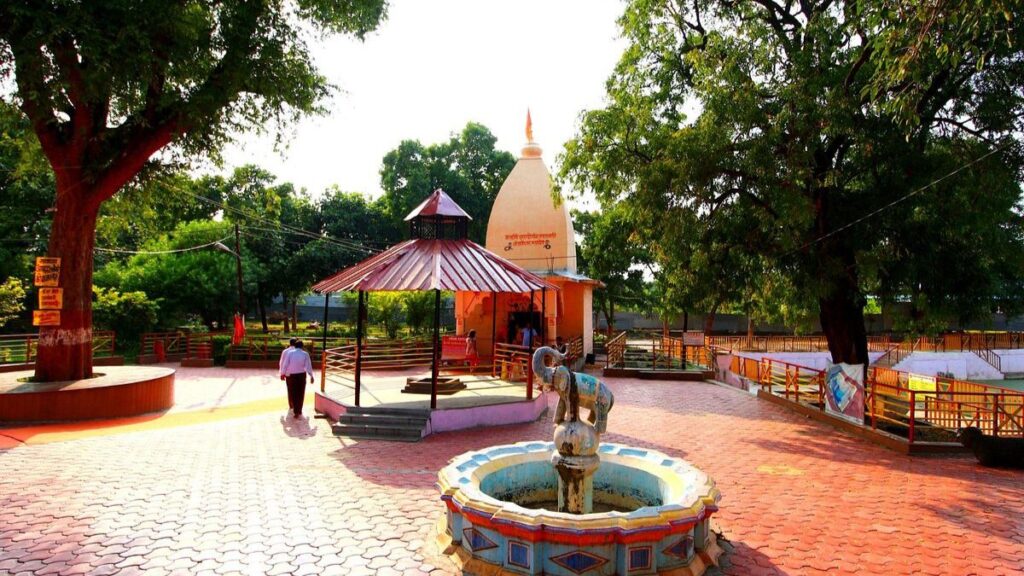
Sandipani Ashram is one of the deeply spiritual places to visit in Ujjain, revered as the ancient gurukul of Maharishi Sandipani where Lord Krishna, along with Balarama and Sudama, received their education nearly 5,000 years ago .
Situated about 5–6 km from Ujjain Junction on Mangalnath Road, this ashram overlooks the sacred Shipra River.
The spacious grounds—spanning roughly four acres—feature shrines to Sandipani Muni and his illustrious pupils, along with ancient teaching halls and serene gardens.
A highlight of the site is the Gomti Kund, a stepped tank said to have been miraculously filled by Krishna with waters from all holy rivers—its waters remain undrained and are believed to possess purifying and healing properties.
Visitors can also see a stone engraved with numerals from 1 to 100, attributed to Guru Sandipani, and the Sarveshwar Mahadev Temple, which houses a 6,000‑year‑old Shivling engulfed by a natural Sheshnag formation.
Open daily (typically 7‑9 AM to 6‑7 PM) with free entry, it offers a peaceful atmosphere ideal for reflection, meditation, and connecting with ancient Vedic learning.
Whether you’re drawn by mythology, history, or the pursuit of spiritual serenity, Sandipani Ashram stands out as a must‑visit place in Ujjain—where the echoes of Krishna’s early education still resonate centuries later.
Also Read: 15 Best Places to Visit in Bhopal
Harsiddhi Temple
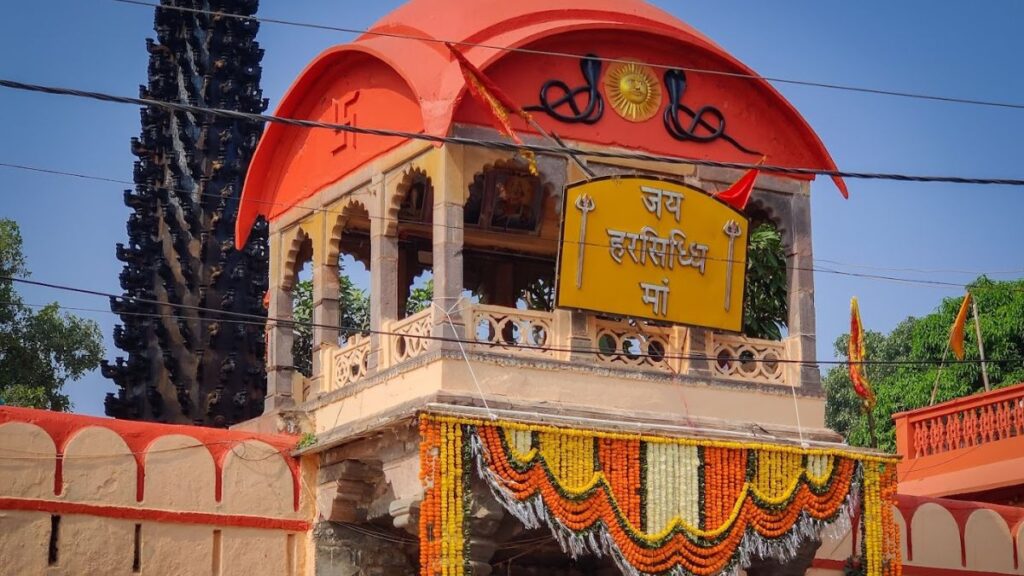
Harsiddhi Temple is one of the most revered places to visit in Ujjain, revered as a sacred Shakti Peetha—where Goddess Sati’s elbow is believed to have fallen, imbuing the site with divine power .
Nestled just around 600 m from Mahakaleshwar Temple and 2.5 km from the railway station, it’s ideally located in the heart of Ujjain’s spiritual circuit.
The temple, originally constructed by King Vikramaditya and later rebuilt during the Maratha era, exhibits classic Maratha-style architecture.
Its striking features include a vibrant vermilion idol of Goddess Harsiddhi flanked by Annapurna, Mahalakshmi, and Mahasaraswati, plus the iconic Sri Yantra and twin deep-stambh lamp towers that glow magnificently—especially during Navratri, when hundreds of lamps are lit.
Open daily from approximately 5 AM to 7 PM, with morning aarti around 7–8 AM and evening aarti around 6–7 PM, it offers free entry (though cards are accepted for donations).
Whether you’re drawn by its divine feminine energy, architectural charm, or enchanting rituals, visiting Harsiddhi Temple is an unmissable place to visit in Ujjain—especially during festive seasons like Navratri and Mahashivratri.
Bade Ganeshji Ka Mandir
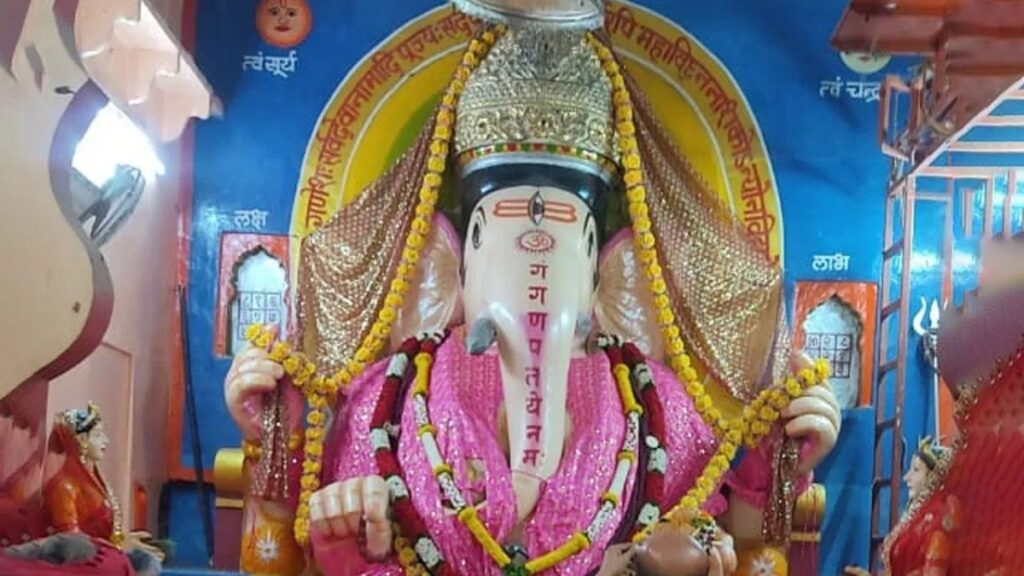
Bade Ganeshji Ka Mandir is one of the prominent spiritual places to visit in Ujjain, located near the famous Mahakaleshwar Temple.
The temple is renowned for its massive and beautifully crafted idol of Lord Ganesha, which stands as a symbol of wisdom, prosperity, and success. The statue, made using a rare combination of traditional materials like jaggery, fenugreek, and sacred soil, draws devotees and tourists alike.
Its majestic presence and unique architectural style make it a must-see destination for those exploring the religious heritage of Ujjain.
Among the many sacred places to visit in Ujjain, Bade Ganeshji Ka Mandir also holds significance as a center for learning astrology and Sanskrit. The temple complex includes a Panchmukhi Hanuman idol and reflects the deep-rooted devotion and cultural richness of the city.
With its peaceful atmosphere and spiritual aura, this temple offers visitors a serene experience and is an essential stop on any pilgrimage or sightseeing tour of Ujjain.
Vedh Shala (Ujjain Observatory)
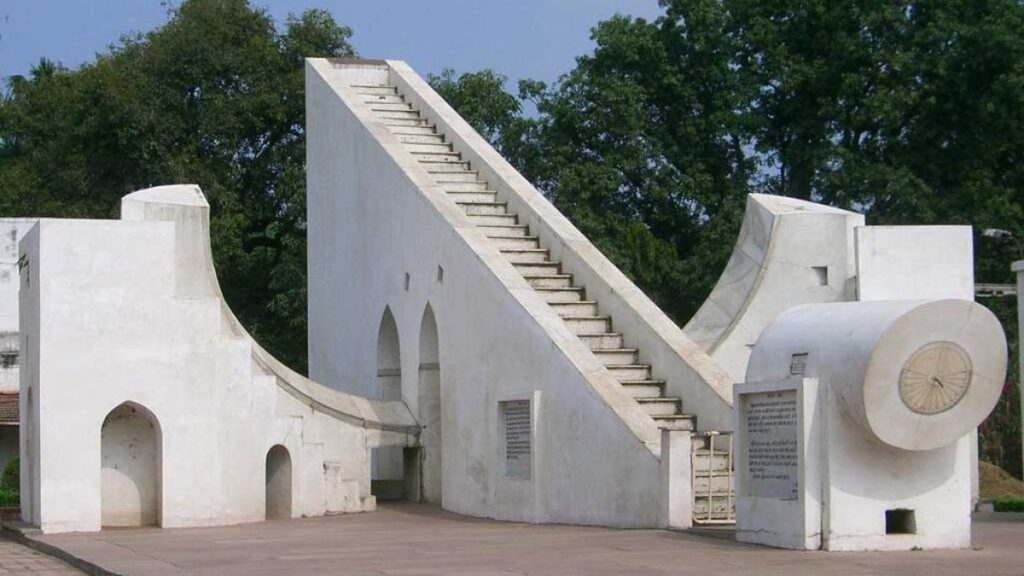
Vedh Shala, also known as the Ujjain Observatory or Jantar Mantar, is one of the most fascinating places to visit in Ujjain for those interested in astronomy and history. Built by Maharaja Jai Singh II around 1725–1730, it’s among the five famous observatories he constructed across India.
Situated precisely on the Tropic of Cancer and the traditional Hindu prime meridian, Ujjain was considered the “Greenwich of India”
The site features several large-scale stone instruments—such as the Samrat Yantra sundial, Nadi Valaya, Digansha, Bhitti, and Shanku Yantras—used to measure time, determine planetary positions, and predict eclipses.
This observatory remains one of the few in India still operational for astronomical observations and Panchang printing.
Visitors can walk among the monumental instruments and see how, centuries ago, scholars measured celestial movements with remarkable precision—without modern devices.
Timings are typically 10 AM to 5:30 PM (some sources note 7 AM–7 PM), with a small entry fee of ₹5–10 . As one of the top places to visit in Ujjain, Vedh Shala offers a unique blend of science, spirituality, and architectural beauty—perfectly complementing a pilgrimage or heritage tour in this ancient city.
Also Read: 15 Best Places to Visit in Orchha
ISKCON Temple
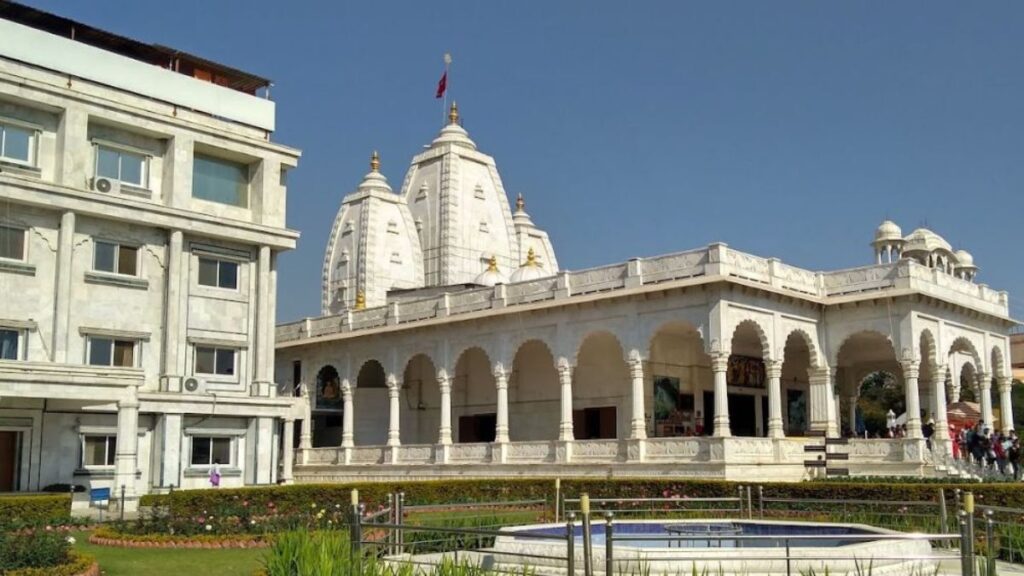
The ISKCON Temple, also known as the Radha Madhana Mohan Temple, is one of the most serene places to visit in Ujjain, located near the Nanakheda Bus Stand, about 5 km from Ujjain Junction. Constructed entirely of white Makrana marble and inaugurated in 2006 under the guidance of HH Bhakti Charu Swami, the temple embodies both spiritual depth and eco-conscious architecture—being the only fully solar-powered ISKCON temple in Ujjain.
The temple’s sanctum houses three deities—Radha Madhana Mohan, Krishna with Radha and the Gopis, and Gaura‑Nitai—offering a divine experience amid lush Tulsi and flower gardens.
A lively, constant echo of ‘Hare Krishna Hare Rama’ chants fills the air daylong, accompanied by six daily aartis, soulful kirtans, and aarti ceremonies that transport visitors into an uplifting devotional space.
Visiting this temple is a truly enriching experience among the places to visit in Ujjain, blending devotion, community service, and culture.
The temple complex includes a gaushala (cow shelter), free prasadam distribution, spiritual classes on the Bhagavad Gita, and a serene atmosphere perfect for meditation and kirtan.
With no entry fee, it welcomes devotees from early morning (around 4:30 AM) till the evening (approximately 8:30–9:15 PM), and major festivals like Janmashtami, Rathyatra, Radhashtami and Gaura Purnima are celebrated here with great joy and grandeur.
It’s a must-visit destination in Ujjain—for spiritual introspection, cultural engagement, and peaceful retreat.
Mangalnath Temple
Mangalnath Temple is one of the fascinating places to visit in Ujjain, perched on a hillock overlooking the tranquil Shipra River. Dedicated to Lord Shiva and revered as the mythical birthplace of Mars (Mangala), the temple draws pilgrims and astrology enthusiasts alike.
According to the Matsya Purana, this sanctified spot emerged where a drop of Lord Shiva’s sweat created the Shiva Linga during his battle with the demon Andhakasura.
Its unique positioning near the Tropic of Cancer offers an unobstructed view of the red planet, making it a rare celestial observatory in India.
This temple ranks among the top places to visit in Ujjain for both its religious importance and astrological rituals.
Thousands of devotees, especially those with “Mangal Dosh” in their horoscopes, visit on Tuesdays to perform remedies like Mangal Dosh Nivaran and Bhaat Puja—services believed to alleviate planetary afflictions.
Open daily from early morning till evening (roughly 5 AM–8 PM), entry is free, with nominal charges only for special pujas.
Its serene riverside location offers a peaceful escape and a scenic backdrop—ideal for spiritual reflection and capturing beautiful sunrise or sunset moments .
Gadkalika Temple
Gadkalika Temple is a revered spiritual place to visit in Ujjain, dedicated to Goddess Kalika (Mahakali).
Nestled near Bhartrihari Caves in Urdupura, about 4–5 km from Ujjain Junction, it is believed to be ancient—dating back to the Mahabharata era, with the idol said to originate in Satya Yuga, later renovated by King Harshvardhan in the 7th century and restored by Gwalior rulers.
The temple is considered a Shakti Peeth—or at least equivalent—with local tradition holding that Sati’s upper lip fell here, and it is famously linked to the legendary poet Kalidasa, who is believed to have gained his literary wisdom after worshipping Maa Gadkalika.
Architecturally, the temple showcases traditional design with a modest yet serene sanctum housing a striking stone idol of the fierce yet compassionate Goddess.
Intricate carvings, sacred symbols, twin oil lamp pillars (Deep Stambhas) that are lit especially during Navratri, and surrounding shrines all add to the spiritual ambiance.
Open daily from around 5 AM to 9 PM with free entry, it sees its highest footfall during Navratri when devotees flock to participate in vibrant aartis and rituals.
For students and seekers of knowledge, it is a powerful place to visit in Ujjain, offering blessings for intellect, courage, and literary skill—perfect as a spiritual stop while exploring Ujjain’s cultural circuit.
Chintaman Ganesh Temple
Chintaman Ganesh Temple is one of the top places to visit in Ujjain, located about 7 km southwest of the main city, across the Kshipra River on the Fatehabad railway line.
Dedicated to Lord Ganesha, known here as Chintaman or “Chintaharan” (remover of worries), this temple houses a rare swayambhu (self-manifested) idol, flanked by his consorts Riddhi and Siddhi.
Built between the 11th and 12th centuries during the Paramara dynasty and richly supported by legends linking it to Lord Rama, Sita, and Lakshmana, the temple features finely carved stone pillars and a sacred well called Banganga, associated with the Ramayana.
Visiting this temple is a deeply spiritual experience. Pilgrims come seeking relief from stress and obstacles, offering modaks, sesame sweets, and coconuts—especially during Ganesh Chaturthi, Sankashti Chaturthi, and the Chaitra Wednesday fair.
The temple is also a popular venue for couples who perform their marriage ceremonies here, believing Ganesha himself blesses their union.
Open daily from early morning (~6 AM) until evening (~10 PM), the temple offers peaceful aarti sessions around 7 AM and 7 PM.
Easily accessible via auto or taxi from Ujjain Junction, it’s a must-visit place that perfectly blends history, devotion, and calm within Ujjain’s sacred circuit.
Kaliadeh Palace
Kaliadeh Palace is one of the most captivating places to visit in Ujjain, gracefully situated on a small island surrounded by the Shipra River’s tranquil waters.
Constructed in 1458 AD by Sultan Mahmud Khilji of Mandu, this palace boasts exquisite Persian-style architecture—characterized by its grand central dome, ornate arches, and spacious galleries. Its scenic riverside setting, complete with man-made channels and sacred tanks like the Surya Kunda and Brahma Kunda, offers an enchanting blend of natural beauty and historical ambiance.
Over time, the structure suffered damage during the Pindari invasions but was meticulously restored in the 1920s by Maharaja Madho Rao Scindia, reestablishing its former glory.
The palace also holds royal significance—two Persian inscriptions within its corridors attest to visits by Mughal emperors Akbar and Jehangir.
Once housing a Sun temple, remnants of the original structure can still be found, rendering the site a fascinating mix of spiritual, historical, and architectural heritage.
Navagraha Mandir
Navagraha Mandir is a significant and captivating place to visit in Ujjain, located on the banks of the sacred Shipra River at the Triveni Ghat, about 6–8 km from the city center.
Dedicated to the nine celestial bodies of Hindu astrology—Surya, Chandra, Mangal, Budh, Guru, Shukra, Shani, Rahu, and Ketu—the temple attracts large gatherings, especially on Saturdays, new moon days, and during Shani Amavasya.
Architecturally, it features individual shrines under domes arranged around a central pavilion, with the red-domed Sun shrine at the heart of the complex.
Visiting this place to visit in Ujjain offers more than visual appeal—it provides spiritual solace and astrological remedies. Many come for Navagraha Shanti Poojas, Shani-related rituals, or specialized havans led by priests to mitigate planetary doshas in their horoscopes.
The serene riverside ambiance and opportunities for ritual parikrama, offerings like mustard oil to Shani, and personal consultations make it a peaceful yet potent spiritual retreat.
Open daily from around 5 AM to 9 PM with free entry, it’s a must-stop for those doing the temple circuit in Ujjain .
Pir Matsyendranath
Pir Matsyendranath Samadhi is a serene and historically rich place to visit in Ujjain, located about 5 km from Ujjain Junction on the banks of the sacred Shipra River, close to Bhartrihari Caves and Gadkalika Temple.
This shrine commemorates Matsyendranath (also called Machhindranath), a revered 10th-century saint and founder of the Natha sect who was the guru of Gorakshanath and part of the Navnath lineage. Known as a “Pir” in local tradition, he is venerated by both Hindus and Muslims—making the samadhi a symbol of syncretic devotion.
Although the structure is a modest white-domed tomb with small minarets, archaeological excavations at the site uncovered artifacts dating back to the 6th and 7th centuries BC, showing its ancient significance.
Open daily from about 5 AM to 7 PM, with free entry, this peaceful sanctuary offers a tranquil atmosphere ideal for meditation, spiritual reflection, and an appreciation of Ujjain’s diverse cultural heritage
As one of the notable places to visit in Ujjain, Pir Matsyendranath Samadhi adds a layer of mystical history and communal harmony to your spiritual journey along the banks of the Shipra.